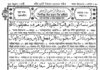
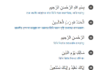
| 4:1 | Transliteration Ya ayyuha annasuittaqoo rabbakumu allathee khalaqakum min nafsin wahidatinwakhalaqa minha zawjaha wabaththa minhumarijalan katheeran wanisaan wattaqoo Allahaallathee tasaaloona bihi wal-arhamainna Allaha kana AAalaykum raqeeb Sahih International O mankind, fear your Lord, who created you from one soul and created from it its mate and dispersed from both of them many men and women. And fear Allah , through whom you ask one another, and the wombs. Indeed Allah is ever, over you, an Observer. Muhsin Khan O mankind! Be dutiful to your Lord, Who created you from a single person (Adam), and from him (Adam) He created his wife [Hawwa (Eve)], and from them both He created many men and women and fear Allah through Whom you demand your mutual (rights), and (do not cut the relations of) the wombs (kinship). Surely, Allah is Ever an All-Watcher over you. Yusuf Ali O mankind! reverence your Guardian-Lord, who created you from a single person, created, of like nature, His mate, and from them twain scattered (like seeds) countless men and women;- reverence Allah, through whom ye demand your mutual (rights), and (reverence) the wombs (That bore you): for Allah ever watches over you. Dr. Ghali O you mankind, be pious to your Lord, Who created you of one self, and created from it its spouse, and from the two disseminated many men and women; and be pious to Allah, about Whom you ask one another, and to the wombs; (i.e., be pious to the relatives) surely Allah has been Ever-Watchful over you. Tafsir al-Jalalayn O people, of Mecca, fear your Lord, that is, His punishment by being obedient to Him, Who created you of a single soul, Adam, and from it created its mate, Eve (Haww?’), from one of his left ribs, and from the pair of them, Adam and Eve, scattered, separated and spread, many men and, many, women; and fear God by whom you claim [your rights] from one another (tass?’al?na: the original t?’ [of tatas?’al?na] has been assimilated with the s?n; a variant reading has tas?’al?na), so that one of you says to the other, ‘I ask you, by God…’, or ‘For God’s sake…’; and, fear, kinship ties, lest you sever them (a variant reading [of wa’l-arh?ma, ‘and kinship ties’] is wa’l-arh?mi, as a supplement to the pronoun contained in bihi [sc. God]). They used to implore one another by ties of kinship. Surely God has been watchful over you, heedful of your deeds, for which He will requite you, that is to say, He is ever possessed of such an attribute. | | 4:2 | Transliteration Waatoo alyatama amwalahumwala tatabaddaloo alkhabeetha bittayyibiwala ta/kuloo amwalahum ila amwalikuminnahu kana hooban kabeera Sahih International And give to the orphans their properties and do not substitute the defective [of your own] for the good [of theirs]. And do not consume their properties into your own. Indeed, that is ever a great sin. Muhsin Khan And give unto orphans their property and do not exchange (your) bad things for (their) good ones; and devour not their substance (by adding it) to your substance. Surely, this is a great sin. Yusuf Ali To orphans restore their property (When they reach their age), nor substitute (your) worthless things for (their) good ones; and devour not their substance (by mixing it up) with your own. For this is indeed a great sin. Dr. Ghali And bring the orphans their riches, and do not exchange the wicked (you have) for the good (they own); and do not eat up their riches with your riches; surely that is a great outrage. Tafsir al-Jalalayn The following was revealed regarding an orphan who demanded his property from his guardian but was refused it: Give the orphans, the under-age ones that have no father, their property, when they have reached maturity, and do not exchange the evil, the unlawful, for the good, the lawful, that is, taking the one in place of the other, as you do when you take what is good from the orphan’s property, and leave him your faulty property instead; and absorb not their property, [by] adding it, into your property; surely that, the absorbing of it, is a great crime, a serious sin. When this was revealed they found it difficult to maintain guardianship over orphans, and some of them had ten or eight wives under their care, and did not treat them all equally, and so the following was revealed: | | 4:3 | Transliteration Wa-in khiftum alla tuqsitoo feealyatama fankihoo ma tabalakum mina annisa-i mathna wathulathawarubaAAa fa-in khiftum alla taAAdiloo fawahidatanaw ma malakat aymanukum thalika adnaalla taAAooloo Sahih International And if you fear that you will not deal justly with the orphan girls, then marry those that please you of [other] women, two or three or four. But if you fear that you will not be just, then [marry only] one or those your right hand possesses. That is more suitable that you may not incline [to injustice]. Muhsin Khan And if you fear that you shall not be able to deal justly with the orphan-girls, then marry (other) women of your choice, two or three, or four but if you fear that you shall not be able to deal justly (with them), then only one or (the captives and the slaves) that your right hands possess. That is nearer to prevent you from doing injustice. Yusuf Ali If ye fear that ye shall not be able to deal justly with the orphans, Marry women of your choice, Two or three or four; but if ye fear that ye shall not be able to deal justly (with them), then only one, or (a captive) that your right hands possess, that will be more suitable, to prevent you from doing injustice. Dr. Ghali And, in case you fear that you will not act equitably towards the orphans, then marry such women as is good to you, two, three, four, (Literally: in twos and threes and fours) then, in case you fear that you will not do justice, then one (only), or what your right hands possess. That (way) is likelier you will not be in want (Or: you will have too many dependents). Tafsir al-Jalalayn If you fear that you will not act justly, [that] you will [not] be equitable, towards the orphans, and are thus distressed in this matter, then also fear lest you be unjust towards women when you marry them; marry such (m? means man) women as seem good to you, two or three or four, that is, [each man may marry] two, or three, or four, but do not exceed this; but if you fear you will not be equitable, towards them in terms of [their] expenses and [individual] share; then, marry, only one, or, restrict yourself to, what your right hands own, of slavegirls, since these do not have the same rights as wives; thus, by that marrying of only four, or only one, or resorting to slavegirls, it is likelier, it is nearer [in outcome], that you will not be unjust, [that] you will [not] be inequitable. | | 4:4 | Transliteration Waatoo annisaa saduqatihinnanihlatan fa-in tibna lakum AAan shay-in minhunafsan fakuloohu hanee-an maree-a Sahih International And give the women [upon marriage] their [bridal] gifts graciously. But if they give up willingly to you anything of it, then take it in satisfaction and ease. Muhsin Khan And give to the women (whom you marry) their Mahr (obligatory bridal money given by the husband to his wife at the time of marriage) with a good heart, but if they, of their own good pleasure, remit any part of it to you, take it, and enjoy it without fear of any harm (as Allah has made it lawful). Yusuf Ali And give the women (on marriage) their dower as a free gift; but if they, of their own good pleasure, remit any part of it to you, Take it and enjoy it with right good cheer. Dr. Ghali And bring the women their dowries as an endowment, so in case they are good to you concerning any portion of it, (Literally: in case they feel good in themselves to you about anything of it) then eat it up rejoicing with wholesome appetite (i.e., take it and make use of it to your profit and advantage). Tafsir al-Jalalayn And give women their dowries (saduq?t, plural of sudqa), their bridal money (mahr, muh?r), as a free gift (nihlatan, is a verbal noun), a present given out of the kindness of one’s heart; but if they are pleased to offer you any of it of their own accord (nafsan, ‘of their own accord’, is for specification and is taken from the subject of the verb [thus, it refers back to ‘they’, the women]), meaning, [if] their own selves are pleased that you should have something of the dowry and they give it to you then, consume it with, good, wholesome appetite, a praiseworthy consequence, with no harm therein for you with regard to the Hereafter: this was revealed in response to those who were opposed to this [consumption]. | | 4:5 | Transliteration Wala tu/too assufahaaamwalakumu allatee jaAAala Allahu lakum qiyamanwarzuqoohum feeha waksoohum waqooloo lahumqawlan maAAroofa Sahih International And do not give the weak-minded your property, which Allah has made a means of sustenance for you, but provide for them with it and clothe them and speak to them words of appropriate kindness. Muhsin Khan And give not unto the foolish your property which Allah has made a means of support for you, but feed and clothe them therewith, and speak to them words of kindness and justice. Yusuf Ali To those weak of understanding Make not over your property, which Allah hath made a means of support for you, but feed and clothe them therewith, and speak to them words of kindness and justice. Dr. Ghali And do not bring the foolish ones your riches that Allah has made for keeping you up, (i.e., as a means of support) and provide for them out of it, and give them raiment, and speak to them beneficent words. Tafsir al-Jalalayn But do not, O guardians, give to the foolish, the squanderers from among men, women and children, your property, that is, the property that is theirs but held by you, which God has assigned to you as maintenance (qiy?man, ‘maintenance’, is the verbal noun from q?ma; a variant reading has qiyaman, the plural of q?ma, ‘value’, that is, that with which property is valued), meaning that the property which sustains your livelihoods and the well-being of your children, lest they expend it improperly; provide for them thereof, that is, feed them from it, and clothe them, and speak to them decent words, prepare for them a kind reception, by giving them their property when they reach maturity. | | 4:6 | Transliteration Wabtaloo alyatama hattaitha balaghoo annikaha fa-in anastumminhum rushdan fadfaAAoo ilayhim amwalahum walata/kulooha israfan wabidaran an yakbaroowaman kana ghaniyyan falyastaAAfif waman kanafaqeeran falya/kul bilmaAAroofi fa-itha dafaAAtumilayhim amwalahum faashhidoo AAalayhim wakafa billahihaseeba Sahih International And test the orphans [in their abilities] until they reach marriageable age. Then if you perceive in them sound judgement, release their property to them. And do not consume it excessively and quickly, [anticipating] that they will grow up. And whoever, [when acting as guardian], is self-sufficient should refrain [from taking a fee]; and whoever is poor - let him take according to what is acceptable. Then when you release their property to them, bring witnesses upon them. And sufficient is Allah as Accountant. Muhsin Khan And try orphans (as regards their intelligence) until they reach the age of marriage; if then you find sound judgement in them, release their property to them, but consume it not wastefully, and hastily fearing that they should grow up, and whoever amongst guardians is rich, he should take no wages, but if he is poor, let him have for himself what is just and reasonable (according to his work). And when you release their property to them, take witness in their presence; and Allah is All-Sufficient in taking account. Yusuf Ali Make trial of orphans until they reach the age of marriage; if then ye find sound judgment in them, release their property to them; but consume it not wastefully, nor in haste against their growing up. If the guardian is well-off, Let him claim no remuneration, but if he is poor, let him have for himself what is just and reasonable. When ye release their property to them, take witnesses in their presence: But all-sufficient is Allah in taking account. Dr. Ghali And try the orphans until they reach (the) marriageable age. So, in case you perceive in them right-mindedness then pay over to them their riches, and do not eat them up extravagantly and in anticipation of their (attaining) majority. And whoever is rich, then let him keep abstaining, (i.e. let him abstain generously) and whoever is poor, then let him eat (of it) with beneficence. So, when you pay over to them their riches, then take witnesses over them; and Allah suffices as Ever-Reckoner. Tafsir al-Jalalayn Try, test, well the orphans, before reaching maturity with regard [the duties of] religion and [before] they can [legally] manage their own affairs, until they reach the age of marrying, that is, until they have become eligible for it through puberty or [legal] age, which, according to al-Sh?fi‘?, is the completion of fifteen years; then, if you perceive in them maturity, that is, right [judgement] in matters of religion and their property, deliver their property to them; consume it not, O guardians, wastefully, without due merit, and in haste, that is, hastening to expend it, fearing, lest they should grow up, and become mature, at which time you will be obliged to hand it over to them. If any man, who is a guardian, is rich, let him be abstinent, that is, let him abstain from the orphan’s property and refrain from consuming it; if he is poor, let him consume, of it, honourably, that is, in line with the wage for his work. And when you deliver to them, the orphans, their property, take witnesses over them, that they have received it and that you are absolved [of the obligation], so that if any dispute occurs, you are able to refer to a clear proof: this is a command [intended] for guidance. God suffices as a reckoner, as a guardian of His creatures’ deeds and as a reckoner of these [deeds] (the b?’ [in bi’Ll?hi] is extra). | | 4:7 | Transliteration Lirrijali naseebun mimmataraka alwalidani wal-aqraboona walinnisa-inaseebun mimma taraka alwalidani wal-aqraboonamimma qalla minhu aw kathura naseeban mafrooda Sahih International For men is a share of what the parents and close relatives leave, and for women is a share of what the parents and close relatives leave, be it little or much - an obligatory share. Muhsin Khan There is a share for men and a share for women from what is left by parents and those nearest related, whether, the property be small or large - a legal share. Yusuf Ali From what is left by parents and those nearest related there is a share for men and a share for women, whether the property be small or large,-a determinate share. Dr. Ghali To the men is an assignment of whatever the parents and the nearest kin have left, and to the women is an assignment of whatever the parents and the nearest kin have left, of whatever it be, little or much, an ordained assignment. Tafsir al-Jalalayn The following was revealed as a repudiation of pre-Islamic practices in which women and children were not given any inheritance: To the men, young ones and kin, belongs a share, a portion, of what, deceased, parents and kinsmen leave, and to the women belongs a share of what parents and kinsmen leave, whether it, the property, be little or much. God has made it, an obligatory share, apportioned, to be given to them. | | 4:8 | Transliteration Wa-itha hadara alqismataoloo alqurba walyatama walmasakeenufarzuqoohum minhu waqooloo lahum qawlan maAAroofa Sahih International And when [other] relatives and orphans and the needy are present at the [time of] division, then provide for them [something] out of the estate and speak to them words of appropriate kindness. Muhsin Khan And when the relatives and the orphans and Al-Masakin (the poor) are present at the time of division, give them out of the property, and speak to them words of kindness and justice. Yusuf Ali But if at the time of division other relatives, or orphans or poor, are present, feed them out of the (property), and speak to them words of kindness and justice. Dr. Ghali And when the near of kin (Literally: endowed with kinship, "nearness) and the orphans and the indigent are present at the division, then provide for them out of it, and say to them beneficent saying. Tafsir al-Jalalayn And when the division, of the inheritance, is attended by kinsmen, those of kinship who cannot inherit, and orphans and the poor, grant them, something, out of it, before the division [is effected]; and, if the inheritors are young, speak to them, O guardians, honourable words, kindly, by apologising to them that it is not your possession [to divide as you wish], but that it is for the young [inheritors]. Some say that this [stipulation] was abrogated; others say that it was not, only that people were all too readily neglecting it, since it was encouraged [but not prescribed]. According to Ibn ‘Abb?s, however, it is a duty. | | 4:9 | Transliteration Walyakhsha allatheena law tarakoo minkhalfihim thurriyyatan diAAafan khafooAAalayhim falyattaqoo Allaha walyaqooloo qawlan sadeeda Sahih International And let those [executors and guardians] fear [injustice] as if they [themselves] had left weak offspring behind and feared for them. So let them fear Allah and speak words of appropriate justice. Muhsin Khan And let those (executors and guardians) have the same fear in their minds as they would have for their own, if they had left weak offspring behind. So let them fear Allah and speak right words. Yusuf Ali Let those (disposing of an estate) have the same fear in their minds as they would have for their own if they had left a helpless family behind: Let them fear Allah, and speak words of appropriate (comfort). Dr. Ghali And let the ones be apprehensive (of Allah), who, if ever they left behind them weak offspring, would fear (poverty) for them. So let them be pious to Allah, and let them say a befitting saying. Tafsir al-Jalalayn And let them fear, let them be concerned for the orphans, those who, if they, are about to, leave behind them, that is, after their death, weak offspring, young children, would be afraid for them; that they be ruined; let them fear God, in the matter concerning orphans, and let them give what they would love for their own offspring after their death; and speak, to the one approached by death, pertinent words, the right [words], by enjoining him to give as voluntary almsgiving no more than the third [of the inheritance], and leave the remainder for the ones inheriting, so that they do not end up as dependants. | | 4:10 | Transliteration Inna allatheena ya/kuloona amwalaalyatama thulman innamaya/kuloona fee butoonihim naran wasayaslawnasaAAeera Sahih International Indeed, those who devour the property of orphans unjustly are only consuming into their bellies fire. And they will be burned in a Blaze. Muhsin Khan Verily, those who unjustly eat up the property of orphans, they eat up only a fire into their bellies, and they will be burnt in the blazing Fire! Yusuf Ali Those who unjustly eat up the property of orphans, eat up a Fire into their own bodies: They will soon be enduring a Blazing Fire! Dr. Ghali Surely the ones who eat the riches of the orphans unjustly, they surely only eat (up) Fire in their bellies and will roast in a Blaze. Tafsir al-Jalalayn Those who consume the property of orphans unjustly, without any right, are only consuming, the whole of it as, fire in their bellies, because that is where such [action] leads, and they shall be exposed to (read active yaslawna, or passive yuslawna), that is, they shall enter, a blaze, an intense fire, in which they shall burn. | | 4:11 | Transliteration Yooseekumu Allahu fee awladikumliththakari mithlu haththialonthayayni fa-in kunna nisaan fawqa ithnatayni falahunnathulutha ma taraka wa-in kanat wahidatanfalaha annisfu wali-abawayhi likulli wahidinminhuma assudusu mimma taraka in kanalahu waladun fa-in lam yakun lahu waladun wawarithahu abawahufali-ommihi aththuluthu fa-in kana lahu ikhwatunfali-ommihi assudusu min baAAdi wasiyyatin yooseebiha aw daynin abaokum waabnaokum latadroona ayyuhum aqrabu lakum nafAAan fareedatan mina Allahiinna Allaha kana AAaleeman hakeema Sahih International Allah instructs you concerning your children: for the male, what is equal to the share of two females. But if there are [only] daughters, two or more, for them is two thirds of one's estate. And if there is only one, for her is half. And for one's parents, to each one of them is a sixth of his estate if he left children. But if he had no children and the parents [alone] inherit from him, then for his mother is one third. And if he had brothers [or sisters], for his mother is a sixth, after any bequest he [may have] made or debt. Your parents or your children - you know not which of them are nearest to you in benefit. [These shares are] an obligation [imposed] by Allah . Indeed, Allah is ever Knowing and Wise. Muhsin Khan Allah commands you as regards your children's (inheritance); to the male, a portion equal to that of two females; if (there are) only daughters, two or more, their share is two thirds of the inheritance; if only one, her share is half. For parents, a sixth share of inheritance to each if the deceased left children; if no children, and the parents are the (only) heirs, the mother has a third; if the deceased left brothers or (sisters), the mother has a sixth. (The distribution in all cases is) after the payment of legacies he may have bequeathed or debts. You know not which of them, whether your parents or your children, are nearest to you in benefit, (these fixed shares) are ordained by Allah. And Allah is Ever All-Knower, All-Wise. Yusuf Ali Allah (thus) directs you as regards your Children's (Inheritance): to the male, a portion equal to that of two females: if only daughters, two or more, their share is two-thirds of the inheritance; if only one, her share is a half. For parents, a sixth share of the inheritance to each, if the deceased left children; if no children, and the parents are the (only) heirs, the mother has a third; if the deceased Left brothers (or sisters) the mother has a sixth. (The distribution in all cases ('s) after the payment of legacies and debts. Ye know not whether your parents or your children are nearest to you in benefit. These are settled portions ordained by Allah; and Allah is All-knowing, Al-wise. Dr. Ghali Allah enjoins you concerning your children: to the male the like of the portion of two females; so in case they are women above two, then for them is two-thirds of whatever he has left; and in case she be one, then to her is the half. And to (both) his (i.e., the deceased's) parents, to each one of the two is the sixth of whatever he has left in case he has children; then in case he has no children, and his parents are his heirs, then a third is to his mother; (yet) in case he has brothers, then to his mother is the sixth, even after any bequest he may bequeath, or any debt. Your fathers and your sons (Or: children) - you do not realize which of them is nearer in profit to you. (This is) an ordinance from Allah; surely Allah has been Ever-Knowing, Ever-Wise. Tafsir al-Jalalayn God charges you, He commands you, concerning, the matter of, your children, with what He will mention: to the male, of them, the equivalent of the portion, the lot, of two females, if there are two [women] with him, so that half the property is his, and the other half is theirs; if there is only one female with him, then she has a third, and he receives two thirds; if he is the only one, he takes it all; and if they, the offspring, be, only, women more than two, then for them two-thirds of what he, the deceased, leaves; likewise if they be two women, since in the case of two sisters, more deserving of such a share, God says, They shall receive two-thirds of what he leaves [Q. 4:176]; and since a female is entitled to a third with a male, she is all the more deserving [of the same share] with a female. It is said that fawq, ‘more than’, introduces a relative clause; it is also said to guard against the wrong impression that the greater the number [of females] the greater the portion [they are entitled to], since, it is [mistakenly] thought that the entitlement of two females to two-thirds derives from the fact that a female is entitled to one third when with a male; but if she, the daughter, be one (w?hidatan, is also read w?hidatun, making the k?na [construction] syntactically complete) then to her a half; and to his parents, the deceased’s, to each one of the two (li-kulli w?hidin minhum?, substitutes for the previous li-abawayhi, ‘to his parents’) the sixth of what he leaves, if he has a child, male or female: the point of the substitution is to show that they do not share the sixth [but receive one each]. [The term] ‘child’ (walad) also applies to a grandchild, and likewise ‘parent’ (abb) to a grandparent; but if he has no child, and his heirs are his parents, alone or along with a spouse, then to his mother (read li-ummihi; also read, in both places [here and further down], li-immihi in order to avoid the cumbersome transition from a damma [‘u’] to a kasra [‘I’]) a third, of the property, or what remains after the spouse, the rest being for the father; or, if he has siblings, two or more, males or females, to his mother a sixth, and the rest for the father, and nothing for the siblings. | | 4:12 | Transliteration Walakum nisfu ma taraka azwajukumin lam yakun lahunna waladun fa-in kana lahunna waladunfalakumu arrubuAAu mimma tarakna min baAAdi wasiyyatinyooseena biha aw daynin walahunna arrubuAAumimma taraktum in lam yakun lakum waladun fa-in kanalakum waladun falahunna aththumunu mimma taraktummin baAAdi wasiyyatin toosoona biha awdaynin wa-in kana rajulun yoorathu kalalatan awiimraatun walahu akhun aw okhtun falikulli wahidin minhumaassudusu fa-in kanoo akthara min thalikafahum shurakao fee aththuluthi min baAAdi wasiyyatinyoosa biha aw daynin ghayra mudarrin wasiyyatanmina Allahi wallahu AAaleemun haleem Sahih International And for you is half of what your wives leave if they have no child. But if they have a child, for you is one fourth of what they leave, after any bequest they [may have] made or debt. And for the wives is one fourth if you leave no child. But if you leave a child, then for them is an eighth of what you leave, after any bequest you [may have] made or debt. And if a man or woman leaves neither ascendants nor descendants but has a brother or a sister, then for each one of them is a sixth. But if they are more than two, they share a third, after any bequest which was made or debt, as long as there is no detriment [caused]. [This is] an ordinance from Allah , and Allah is Knowing and Forbearing. Muhsin Khan In that which your wives leave, your share is a half if they have no child; but if they leave a child, you get a fourth of that which they leave after payment of legacies that they may have bequeathed or debts. In that which you leave, their (your wives) share is a fourth if you leave no child; but if you leave a child, they get an eighth of that which you leave after payment of legacies that you may have bequeathed or debts. If the man or woman whose inheritance is in question has left neither ascendants nor descendants, but has left a brother or a sister, each one of the two gets a sixth; but if more than two, they share in a third; after payment of lagacies he (or she) may have bequeathed or debts, so that no loss is caused (to anyone). This is a Commandment from Allah; and Allah is Ever All-Knowing, Most-Forbearing. Yusuf Ali In what your wives leave, your share is a half, if they leave no child; but if they leave a child, ye get a fourth; after payment of legacies and debts. In what ye leave, their share is a fourth, if ye leave no child; but if ye leave a child, they get an eighth; after payment of legacies and debts. If the man or woman whose inheritance is in question, has left neither ascendants nor descendants, but has left a brother or a sister, each one of the two gets a sixth; but if more than two, they share in a third; after payment of legacies and debts; so that no loss is caused (to any one). Thus is it ordained by Allah; and Allah is All-knowing, Most Forbearing. Dr. Ghali And for you is a half of whatever your spouses have left, in case they have no children; (yet) in case they have children, then for you is the fourth of whatever they have left, (only) after any bequest they may have bequeathed, (Literally: enjoined) or any debt. And for them is a fourth of whatever you have left, in case you have no children; yet in case you have children, then they have an eighth of whatever you have left, (only) after any bequest you may have bequeathed, or any debt. And in case a man or a woman has no heir direct, and has a brother or a sister, then to each one of the two is the sixth; yet in case they are more numerous than that, then they shall be sharers in the third, (only) after any bequest may have been bequeathed, or any debt, without harming (others). (This is) an injunction from Allah; and Allah is Ever-Knowing, Ever-Forbearing. Tafsir al-Jalalayn And for you a half of what your wives leave, if they have no children, from you or from another; but if they have children, then for you a fourth of what they leave, after any bequest they may bequeath, or any debt: the consensus is that the grandchild in this case is like the child. And for them, the wives, whether one or more, a fourth of what you leave, if you have no children; but if you have children, from them or from others, then for them an eighth of what you leave, after any bequest you may bequeath, or any debt; again the consensus is that the grandchild is as the child. If it be a man leaving an inheritance (y?rathu, ‘being inherited from’, is an adjectival qualification, the predicate of which is [the following kal?latan, ‘without direct heir’]) and not having a direct heir, that is, [having] neither a parent nor child, or it be a woman, leaving an inheritance and having no direct heir, but it be that such, a man leaving an inheritance with no direct heir, has a brother or a sister, from the same mother, as read by Ibn Mas‘?d and others, then to each of the two a sixth, of what he leaves; but if they, the siblings from the same mother, be more than that, that is, [more] than one, then they share a third, the male and female equally, after any bequest to be bequeathed or any debt without prejudice (ghayra mud?rrin, is a circumstantial qualifier referring to the person governing [the verb] y?s?, ‘to be bequeathed’) in other words, without causing any prejudice to the inheritors by bequeathing more than the third); a charge (wasiyyatan, a verbal noun reaffirming [the import of] y?s?kum, ‘He charges you’ [of the beginning of the previous verse]) from God. God is Knowing, of the obligations which He has ordained for His creatures, Forbearing, in deferring the punishment of those that disobey Him. The Sunna specifies that the individuals mentioned may receive the relevant inheritance provided that they are not barred from it on account of their having committed murder, or [their belonging to] a different religion or being slaves. | | 4:13 | Transliteration Tilka hudoodu Allahi waman yutiAAiAllaha warasoolahu yudkhilhu jannatin tajree min tahtihaal-anharu khalideena feeha wathalikaalfawzu alAAatheem Sahih International These are the limits [set by] Allah , and whoever obeys Allah and His Messenger will be admitted by Him to gardens [in Paradise] under which rivers flow, abiding eternally therein; and that is the great attainment. Muhsin Khan These are the limits (set by) Allah (or ordainments as regards laws of inheritance), and whosoever obeys Allah and His Messenger (Muhammad SAW) will be admitted to Gardens under which rivers flow (in Paradise), to abide therein, and that will be the great success. Yusuf Ali Those are limits set by Allah: those who obey Allah and His Messenger will be admitted to Gardens with rivers flowing beneath, to abide therein (for ever) and that will be the supreme achievement. Dr. Ghali Those are the bounds of Allah; and whoever obeys Allah and His Messenger, He will cause him to enter Gardens from beneath which Rivers run, eternally (abiding) therein; and that is the magnificent triumph. Tafsir al-Jalalayn Those, rulings mentioned with respect to orphans and what followed, are God’s bounds, His laws, which He has delimited for His servants, so that they may act in accordance with them and not infringe them. Whoever obeys God and His Messenger, in what He has ruled, He will admit him (yudkhilhu, or, as a shift [to the first person plural] read nudkhilhu, ‘We will admit him’) to Gardens underneath which rivers flow, abiding therein; that is the great triumph. | | 4:14 | Transliteration Waman yaAAsi Allahawarasoolahu wayataAAadda hudoodahu yudkhilhu narankhalidan feeha walahu AAathabun muheen Sahih International And whoever disobeys Allah and His Messenger and transgresses His limits - He will put him into the Fire to abide eternally therein, and he will have a humiliating punishment. Muhsin Khan And whosoever disobeys Allah and His Messenger (Muhammad SAW), and transgresses His limits, He will cast him into the Fire, to abide therein; and he shall have a disgraceful torment. Yusuf Ali But those who disobey Allah and His Messenger and transgress His limits will be admitted to a Fire, to abide therein: And they shall have a humiliating punishment. Dr. Ghali And whoever disobeys Allah and His Messenger and transgresses His bounds, He will cause him to enter a Fire, eternally (abiding) therein, and for him is a degrading torment. Tafsir al-Jalalayn But whoever disobeys God, and His Messenger; and transgresses His bounds, him He will admit ([read] in both ways [as above, yudkhilhu and nudkhilhu]) to a Fire, abiding therein, and for him, in it, there shall be a humbling chastisement, one of humiliation. (In both [of the last] verses, the [singular] person [of the suffixed pronouns and the verbs] accords with the [singular] form of [the particle] man, ‘whoever’, while [the plural person in] kh?lid?n, ‘abiding’, accords with its [general plural] import.) | | 4:15 | Transliteration Wallatee ya/teena alfahishatamin nisa-ikum fastashhidoo AAalayhinna arbaAAatanminkum fa-in shahidoo faamsikoohunna fee albuyooti hattayatawaffahunna almawtu aw yajAAala Allahu lahunnasabeela Sahih International Those who commit unlawful sexual intercourse of your women - bring against them four [witnesses] from among you. And if they testify, confine the guilty women to houses until death takes them or Allah ordains for them [another] way. Muhsin Khan And those of your women who commit illegal sexual intercourse, take the evidence of four witnesses from amongst you against them; and if they testify, confine them (i.e. women) to houses until death comes to them or Allah ordains for them some (other) way. Yusuf Ali If any of your women are guilty of lewdness, Take the evidence of four (Reliable) witnesses from amongst you against them; and if they testify, confine them to houses until death do claim them, or Allah ordain for them some (other) way. Dr. Ghali And (as for) the ones of your women who come up with the obscenity, (i.e., illegal sexual intercourse; abomination) so, call four of you to witness against them. Then in case they (bear) witness, then retain them (The pronoun is the feminine plural) in the homes until death takes them up, (i.e., they die) or Allah sets for them a way. Tafsir al-Jalalayn As for those of your women who commit lewdness, adultery, call four, Muslim men, of you to witness against them; and if they witness, against them such [lewdness], then detain them in their houses, and prevent them from mixing with people, until, the angels of, death take them or, until, God appoints for them a way, out of it. This was stipulated for them at the very beginning of Islam, but then a way out was appointed for them through [the stipulation] that the virgin should receive a hundred lashes and be banished for a year, and the married woman be stoned. The prescribed punishment was explained thus in the had?th, ‘Come listen to me! Come listen to me! God has now made a way out for them’, as reported by Muslim. | | 4:16 | Transliteration Wallathani ya/tiyanihaminkum faathoohuma fa-in taba waaslahafaaAAridoo AAanhuma inna Allaha kanatawwaban raheema Sahih International And the two who commit it among you, dishonor them both. But if they repent and correct themselves, leave them alone. Indeed, Allah is ever Accepting of repentance and Merciful. Muhsin Khan And the two persons (man and woman) among you who commit illegal sexual intercourse, punish them both. And if they repent (promise Allah that they will never repeat, i.e. commit illegal sexual intercourse and other similar sins) and do righteous good deeds, leave them alone. Surely, Allah is Ever the One Who accepts repentance, (and He is) Most Merciful. Yusuf Ali If two men among you are guilty of lewdness, punish them both. If they repent and amend, Leave them alone; for Allah is Oft-returning, Most Merciful. Dr. Ghali And (as for) the two of you who come up with (an obscenity), then hurt them both. Yet, in case they (both) repent and act righteously, then veer away from them (both); surely Allah has been Superbly Relenting, Ever-Merciful. Tafsir al-Jalalayn And when two of you (read wa’lladh?ni or wa’lladh?nni) men, commit it, that is, a lewd act, adultery or homosexual intercourse, punish them both, with insults and beatings with sandals; but if they repent, of this [lewd act], and make amends, through [good] action, then leave them be, and do not harm them. God ever turns [relenting], to those who repent, and is Merciful, to them. This [verse] is abrogated by the prescribed punishment if adultery is meant [by the lewd act], and similarly if homosexual intercourse is meant, according to al-Sh?fi‘?; but according to him, the person who is the object of the [penetrative] act is not stoned, even if he be married; rather, he is flogged and banished. Judging by the dual person pronoun, it seems more obvious that homosexual fornication is meant [by this verse], even though the former [sc. al-Sh?fi‘?] was of the opinion that it referred to an adulterer and an adulteress; but this [opinion of his] may be countered by the fact that [the reference to] the two [men] becomes clear on account of the particle min being attached to a masculine pronoun [minkum, ‘of you’], and by the fact that they suffer the same punishment, [both effect the action of] repentance and [are both granted] that they be left alone [thereafter], [all of] which applies specifically to men, given that for women detention is stipulated, as was stated before. | | 4:17 | Transliteration Innama attawbatu AAalaAllahi lillatheena yaAAmaloona assoo-abijahalatin thumma yatooboona min qareebin faola-ikayatoobu Allahu AAalayhim wakana AllahuAAaleeman hakeema Sahih International The repentance accepted by Allah is only for those who do wrong in ignorance [or carelessness] and then repent soon after. It is those to whom Allah will turn in forgiveness, and Allah is ever Knowing and Wise. Muhsin Khan Allah accepts only the repentance of those who do evil in ignorance and foolishness and repent soon afterwards; it is they to whom Allah will forgive and Allah is Ever All-Knower, All-Wise. Yusuf Ali Allah accept the repentance of those who do evil in ignorance and repent soon afterwards; to them will Allah turn in mercy: For Allah is full of knowledge and wisdom. Dr. Ghali Surely relenting from (Literally: upon, i.e.' Allah relents) Allah is only towards the ones who do any odious deed in ignorance (and) thereafter they repent shortly; so Allah relents towards those and Allah has been Ever-Knowing, Ever-Wise. Tafsir al-Jalalayn The repentance that God accepts, that is, the one which He has prescribed for Himself to accept, out of His bounty, is only of those who do evil, an act of disobedience, in ignorance (bi-jah?latin, a circumstantial qualifier, in other words, ‘they are ignorant’ while they are disobeying their Lord); then repent shortly thereafter, before the last gasps of death; God will relent to those, He will accept their repentance. And God is ever Knowing, of His creatures, Wise, in what He does with them. | | 4:18 | Transliteration Walaysati attawbatu lillatheenayaAAmaloona assayyi-ati hatta ithahadara ahadahumu almawtu qala inneetubtu al-ana wala allatheena yamootoonawahum kuffarun ola-ika aAAtadna lahum AAathabanaleema Sahih International But repentance is not [accepted] of those who [continue to] do evil deeds up until, when death comes to one of them, he says, "Indeed, I have repented now," or of those who die while they are disbelievers. For them We have prepared a painful punishment. Muhsin Khan And of no effect is the repentance of those who continue to do evil deeds until death faces one of them and he says: "Now I repent;" nor of those who die while they are disbelievers. For them We have prepared a painful torment. Yusuf Ali Of no effect is the repentance of those who continue to do evil, until death faces one of them, and he says, "Now have I repented indeed;" nor of those who die rejecting Faith: for them have We prepared a punishment most grievous. Dr. Ghali And relenting is not for the ones who do odious deeds until, when death is present to one of them, he says, "Surely now I repent, " neither (for) the ones who die (while) they are steadfast disbelievers; for those We have readied a painful torment. Tafsir al-Jalalayn Repentance is not for those who do evil deeds, sins, until, when death approaches one of them, and the pangs of death begin, he says, upon witnessing his predicament: ‘Indeed now I repent’, for this would not avail him and would not be accepted from him; neither for those who die disbelieving, if they repent in the Hereafter upon seeing the chastisement: it will not be accepted from them. Those — We have prepared for them a painful chastisement. | | 4:19 | Transliteration Ya ayyuha allatheena amanoola yahillu lakum an tarithoo annisaakarhan wala taAAduloohunna litathhaboobibaAAdi ma ataytumoohunna illa anya/teena bifahishatin mubayyinatin waAAashiroohunnabilmaAAroofi fa-in karihtumoohunna faAAasa antakrahoo shay-an wayajAAala Allahu feehi khayran katheera Sahih International O you who have believed, it is not lawful for you to inherit women by compulsion. And do not make difficulties for them in order to take [back] part of what you gave them unless they commit a clear immorality. And live with them in kindness. For if you dislike them - perhaps you dislike a thing and Allah makes therein much good. Muhsin Khan O you who believe! You are forbidden to inherit women against their will, and you should not treat them with harshness, that you may take away part of the Mahr you have given them, unless they commit open illegal sexual intercourse. And live with them honourably. If you dislike them, it may be that you dislike a thing and Allah brings through it a great deal of good. Yusuf Ali O ye who believe! Ye are forbidden to inherit women against their will. Nor should ye treat them with harshness, that ye may Take away part of the dower ye have given them,-except where they have been guilty of open lewdness; on the contrary live with them on a footing of kindness and equity. If ye take a dislike to them it may be that ye dislike a thing, and Allah brings about through it a great deal of good. Dr. Ghali O you who have believed, it is not lawful for you to inherit women against their will; (Literally: through compulsion) neither pose problems for them that you may go away with some (part) of what you have brought them except when they come up with a (demonstrably) evident obscenity. And consort with them with beneficence; so in case you hate them, then it is possible you may hate something, and Allah sets in it much charity (i.e. benefit). Tafsir al-Jalalayn O you who believe, it is not lawful for you to inherit women against their will (read either karhan or kurhan, as alternative forms) that is to say, coercing them into this. In pre-Islamic times, they used to inherit women from their kin, and if they so wished they could marry [a woman] without a dowry, or marry her off and take the dowry for themselves, or prevent her [from marriage] until she gave up what she had inherited, or until she died and they could inherit from her. They were thus forbidden such practices; neither debar them, your [former] wives from marrying others by retaining them while you have no desire for them yourselves, only to harm them; so that you may go off with part of what you have given them, of the dowry, except when they commit flagrant (read mubayyina, ‘making it clear’, or mubayyana, ‘clear’) lewdness, such as adultery or rebellion, then you have the right to coerce them until they redeem themselves to you or forfeit [their dowries]. Consort with them in kindness, that is, being decent in speaking [to them], with regard to [their] expenditure and lodging; for if you hate them, then be patient; it may happen that you hate a thing wherein God has set much good, that is to say, perhaps He does this when He provides you with a righteous child through them. | | 4:20 | Transliteration Wa-in aradtumu istibdala zawjin makanazawjin waataytum ihdahunna qintaranfala ta/khuthoo minhu shay-an ata/khuthoonahubuhtanan wa-ithman mubeena Sahih International But if you want to replace one wife with another and you have given one of them a great amount [in gifts], do not take [back] from it anything. Would you take it in injustice and manifest sin? Muhsin Khan But if you intend to replace a wife by another and you have given one of them a Cantar (of gold i.e. a great amount) as Mahr, take not the least bit of it back; would you take it wrongfully without a right and (with) a manifest sin? Yusuf Ali But if ye decide to take one wife in place of another, even if ye had given the latter a whole treasure for dower, Take not the least bit of it back: Would ye take it by slander and manifest wrong? Dr. Ghali And in case you are willing to exchange a spouse in place of (another) spouse, and you have brought one of them a hundredweight, (Literally: a Kantar) then do not take anything of it. Will you take it by way of all-malicious (calumny) and evident vice? Tafsir al-Jalalayn And if you desire to exchange a wife in place of another, by divorcing the one, and you have given to one, of the spouses, a hundredweight, that is, a large sum as dowry, take of it nothing. Would you take it by way of calumny, injustice, and manifest sin? (buht?nan, ‘calumny’, and ithman, ‘sin’, end in the accusative because they are circumstantial qualifiers); the interrogative here is meant as a rebuke, and as a disavowal where He says: | | 4:21 | Transliteration Wakayfa ta/khuthoonahu waqad afdabaAAdukum ila baAAdin waakhathnaminkum meethaqan ghaleetha Sahih International And how could you take it while you have gone in unto each other and they have taken from you a solemn covenant? Muhsin Khan And how could you take it (back) while you have gone in unto each other, and they have taken from you a firm and strong covenant? Yusuf Ali And how could ye take it when ye have gone in unto each other, and they have Taken from you a solemn covenant? Dr. Ghali And how should you take it, and each of you has already gone privily with the other, (Literally: some of you have been privily with (some) and they have taken from you a solemn compact? Tafsir al-Jalalayn How shall you take it, that is, by what right, when each of you has been privily with the other, through sexual intercourse, which validates the dowry, and they have taken from you a solemn covenant, a binding pledge, and that is what God commanded, namely, that they should be retained honourably or set free virtuously. | | 4:22 | Transliteration Wala tankihoo ma nakahaabaokum mina annisa-i illa maqad salafa innahu kana fahishatan wamaqtan wasaasabeela Sahih International And do not marry those [women] whom your fathers married, except what has already occurred. Indeed, it was an immorality and hateful [to Allah ] and was evil as a way. Muhsin Khan And marry not women whom your fathers married, except what has already passed; indeed it was shameful and most hateful, and an evil way. Yusuf Ali And marry not women whom your fathers married,- except what is past: It was shameful and odious,- an abominable custom indeed. Dr. Ghali And do not marry women that your fathers married, except what has already gone by; surely that is an obscenity and detestation, and an odious way. Tafsir al-Jalalayn And do not marry women whom (m? means man) your fathers married, unless it be a thing of the past, which is forgiven you; surely that, marrying them, is obscene, vile, and abominable (maqtan, means it results in maqt, ‘severe hate’, from God), an evil way, [an evil] path is this. | | 4:23 | Transliteration Hurrimat AAalaykum ommahatukumwabanatukum waakhawatukum waAAammatukum wakhalatukumwabanatu al-akhi wabanatu al-okhti waommahatukumuallatee ardaAAnakum waakhawatukum mina arradaAAatiwaommahatu nisa-ikum waraba-ibukumu allateefee hujoorikum min nisa-ikumu allateedakhaltum bihinna fa-in lam takoonoo dakhaltum bihinna falajunaha AAalaykum wahala-ilu abna-ikumuallatheena min aslabikum waan tajmaAAoobayna al-okhtayni illa ma qad salafa inna Allahakana ghafooran raheema Sahih International Prohibited to you [for marriage] are your mothers, your daughters, your sisters, your father's sisters, your mother's sisters, your brother's daughters, your sister's daughters, your [milk] mothers who nursed you, your sisters through nursing, your wives' mothers, and your step-daughters under your guardianship [born] of your wives unto whom you have gone in. But if you have not gone in unto them, there is no sin upon you. And [also prohibited are] the wives of your sons who are from your [own] loins, and that you take [in marriage] two sisters simultaneously, except for what has already occurred. Indeed, Allah is ever Forgiving and Merciful. Muhsin Khan Forbidden to you (for marriage) are: your mothers, your daughters, your sisters, your father's sisters, your mother's sisters, your brother's daughters, your sister's daughters, your foster mother who gave you suck, your foster milk suckling sisters, your wives' mothers, your step daughters under your guardianship, born of your wives to whom you have gone in - but there is no sin on you if you have not gone in them (to marry their daughters), - the wives of your sons who (spring) from your own loins, and two sisters in wedlock at the same time, except for what has already passed; verily, Allah is Oft-Forgiving, Most Merciful. Yusuf Ali Prohibited to you (For marriage) are:- Your mothers, daughters, sisters; father's sisters, Mother's sisters; brother's daughters, sister's daughters; foster-mothers (Who gave you suck), foster-sisters; your wives' mothers; your step-daughters under your guardianship, born of your wives to whom ye have gone in,- no prohibition if ye have not gone in;- (Those who have been) wives of your sons proceeding from your loins; and two sisters in wedlock at one and the same time, except for what is past; for Allah is Oft-forgiving, Most Merciful;- Dr. Ghali Prohibited to you are your mothers and your daughters, and your sisters, and your paternal aunts, and your maternal aunts, and (your) brother's daughters, and (your) sister's daughters, and your mothers who have given suck to you, and your suckling sisters, and your women's mothers, and your step-daughters who are in your laps (i.e. under your guardianship) being born of your women whom you have been into-yet, in case you have not been into them, (Literally: entered with) it is no fault in you-and the lawful (spouses) of your sons who are of your loins, and that you should take to you two sisters together, except what has already gone by. Surely Allah has been Ever-Forgiving, Ever-Merciful. Tafsir al-Jalalayn Forbidden to you are your mothers, in marriage, and this includes the paternal and maternal grandmothers; and daughters, including their children, if they should lower themselves [to such standards]; your sisters, from your fathers and mothers; your paternal aunts, that is, the sisters of your fathers and grandfathers; and maternal aunts, that is, the sisters of your mothers and grandmothers; your brother’s daughters, your sister’s daughters, including the children of these daughters; your foster mothers who have given you milk, five times within the first two years, as pointed out in a had?th; your foster sisters, and, according to the Sunna, the daughters of these; and these foster-sisters include those suckled by a woman with whom the man has had intercourse, those suckled by the man’s paternal aunts, or maternal aunts, or those suckled by his brother’s daughters, or his sister’s daughters, on account of the [Prophet’s] had?th that, ‘What kinship makes unlawful suckling also makes unlawful’, as reported by al-Bukh?r? and Muslim; your mothers-in-law, your step-daughters (rab?’ib, plural of rab?ba, the daughter of one’s wife from another husband), who are, being brought up, in your care (all?t? f? huj?rikum is an adjectival qualifier, reiterating the obvious, without any additional import); being born of your wives you have been in to, in sexual intercourse — but if you have not yet been in to them you are not at fault, if you leave them, to then marry their daughters — and the spouses of your sons who are of your loins, as opposed to those whom you have adopted, whose spouses, in contrast, you may marry; and that you should take to you, in marriage, two sisters together, [sisters] by kinship or by suckling: the Sunna adds that you may not marry her together with her paternal or maternal aunt; it is permissible to marry each of these separately or to own them [as handmaidens] together, but only have sexual intercourse with one of them; unless it be a thing of the past, from pre-Islamic times, when you may have married in one of the ways mentioned: you are not at fault. God is ever Forgiving, of what you have done in the past, prior to this prohibition, Merciful, to you in this matter. | | 4:24 | Transliteration Walmuhsanatu mina annisa-iilla ma malakat aymanukum kitaba AllahiAAalaykum waohilla lakum ma waraa thalikuman tabtaghoo bi-amwalikum muhsineena ghayra musafiheenafama istamtaAAtum bihi minhunna faatoohunnaojoorahunna fareedatan wala junaha AAalaykumfeema taradaytum bihi min baAAdi alfareedatiinna Allaha kana AAaleeman hakeema Sahih International And [also prohibited to you are all] married women except those your right hands possess. [This is] the decree of Allah upon you. And lawful to you are [all others] beyond these, [provided] that you seek them [in marriage] with [gifts from] your property, desiring chastity, not unlawful sexual intercourse. So for whatever you enjoy [of marriage] from them, give them their due compensation as an obligation. And there is no blame upon you for what you mutually agree to beyond the obligation. Indeed, Allah is ever Knowing and Wise. Muhsin Khan Also (forbidden are) women already married, except those (captives and slaves) whom your right hands possess. Thus has Allah ordained for you. All others are lawful, provided you seek (them in marriage) with Mahr (bridal money given by the husband to his wife at the time of marriage) from your property, desiring chastity, not committing illegal sexual intercourse, so with those of whom you have enjoyed sexual relations, give them their Mahr as prescribed; but if after a Mahr is prescribed, you agree mutually (to give more), there is no sin on you. Surely, Allah is Ever All-Knowing, All-Wise. Yusuf Ali Also (prohibited are) women already married, except those whom your right hands possess: Thus hath Allah ordained (Prohibitions) against you: Except for these, all others are lawful, provided ye seek (them in marriage) with gifts from your property,- desiring chastity, not lust, seeing that ye derive benefit from them, give them their dowers (at least) as prescribed; but if, after a dower is prescribed, agree Mutually (to vary it), there is no blame on you, and Allah is All-knowing, All-wise. Dr. Ghali And women in wedlock (are forbidden to you), except what your right hands possess. It is the prescribing (Literally: the book) of Allah for you. And lawful for you, beyond all that, is that you seek after (them) with your riches (i.e., that you pay them a dowry) in wedlock, other than in fornication. So (with) whomever of these (women) you enjoy the privilege of marriage, then bring them their rewards as an ordinance, and it is no fault in you in whatever you consented to among yourselves even after the ordinance. Surely Allah has been Ever-Knowing, Ever-Wise. Tafsir al-Jalalayn And, forbidden to you are, wedded women, those with spouses, that you should marry them before they have left their spouses, be they Muslim free women or not; save what your right hands own, of captured [slave] girls, whom you may have sexual intercourse with, even if they should have spouses among the enemy camp, but only after they have been absolved of the possibility of pregnancy [after the completion of one menstrual cycle]; this is what God has prescribed for you (kit?ba is in the accusative because it is the verbal noun). Lawful for you (read passive wa-uhilla, or active wa-ahalla), beyond all that, that is, except what He has forbidden you of women, is that you seek, women, using your wealth, by way of a dowry or a price, in wedlock and not, fornicating, in illicitly. Such wives as you enjoy thereby, and have had sexual intercourse with, give them their wages, the dowries that you have assigned them, as an obligation; you are not at fault in agreeing together, you and they, after the obligation, is waived, decreased or increased. God is ever Knowing, of His creatures, Wise, in what He has ordained for them. | | 4:25 | Transliteration Waman lam yastatiAA minkum tawlanan yankiha almuhsanati almu/minatifamin ma malakat aymanukum min fatayatikumualmu/minati wallahu aAAlamu bi-eemanikumbaAAdukum min baAAdin fankihoohunnabi-ithni ahlihinna waatoohunna ojoorahunna bilmaAAroofimuhsanatin ghayra masafihatin walamuttakhithati akhdanin fa-itha ohsinnafa-in atayna bifahishatin faAAalayhinna nisfu maAAala almuhsanati mina alAAathabi thalikaliman khashiya alAAanata minkum waan tasbiroo khayrunlakum wallahu ghafoorun raheem Sahih International And whoever among you cannot [find] the means to marry free, believing women, then [he may marry] from those whom your right hands possess of believing slave girls. And Allah is most knowing about your faith. You [believers] are of one another. So marry them with the permission of their people and give them their due compensation according to what is acceptable. [They should be] chaste, neither [of] those who commit unlawful intercourse randomly nor those who take [secret] lovers. But once they are sheltered in marriage, if they should commit adultery, then for them is half the punishment for free [unmarried] women. This [allowance] is for him among you who fears sin, but to be patient is better for you. And Allah is Forgiving and Merciful. Muhsin Khan And whoever of you have not the means wherewith to wed free, believing women, they may wed believing girls from among those (captives and slaves) whom your right hands possess, and Allah has full knowledge about your Faith, you are one from another. Wed them with the permission of their own folk (guardians, Auliya' or masters) and give them their Mahr according to what is reasonable; they (the above said captive and slave-girls) should be chaste, not adulterous, nor taking boy-friends. And after they have been taken in wedlock, if they commit illegal sexual intercourse, their punishment is half that for free (unmarried) women. This is for him among you who is afraid of being harmed in his religion or in his body; but it is better for you that you practise self-restraint, and Allah is Oft-Forgiving, Most Merciful. Yusuf Ali If any of you have not the means wherewith to wed free believing women, they may wed believing girls from among those whom your right hands possess: And Allah hath full knowledge about your faith. Ye are one from another: Wed them with the leave of their owners, and give them their dowers, according to what is reasonable: They should be chaste, not lustful, nor taking paramours: when they are taken in wedlock, if they fall into shame, their punishment is half that for free women. This (permission) is for those among you who fear sin; but it is better for you that ye practise self-restraint. And Allah is Oft-forgiving, Most Merciful. Dr. Ghali And whoever of you is unable to (provide) ample (means) for marrying (free) believing women in wedlock, then (let him take) from the believing handmaids that your right hands possess; and Allah knows best your belief, the ones of you are as the others (Literally: Some of you are from some others, i.e., you are equal). So marry them by the permission of their families, (i.e. their folk) and bring them their rewards with beneficence, as (women) in wedlock, other than in fornication or taking mates to themselves. (So) when they are in wedlock, (then) in case they come up with an obscenity, (5) they shall have then half the torment of free women in wedlock. That is for the ones of you who are apprehensive of distress; (i.e., sin) (and) to be patient is more charitable for you; and Allah is Ever-Forgiving, Ever-Merciful. Tafsir al-Jalalayn And whoever has not the means wherewith, [whoever] is not wealthy enough, to be able to marry believing (al-mu’min?t, ‘believing’, is in accordance with the prevalent practice, and does not add to the import), free, women in wedlock, let him take, in marriage, believing maids whom your right hands own. God knows very well your faith, so suffice yourself with its outward manifestation and leave the innermost matters to Him, for He is the One to know her [true] merit: many a slavegirl may be more excellent [in faith] than a free woman, and this is meant to encourage marriage with slavegirls; the one of you is as the other, being equal in religion, so do not disdain to marry with them. So marry them, with the permission of their folk, their guardians, and give them their wages, their dowries, honourably, without procrastination or diminution, as women in wedlock (muhsan?t, a circumstantial qualifier), in decency, not illicitly, openly fornicating, or taking lovers, companions fornicating in secret. But when they are given in wedlock, [when] they are married off (a variant reading [for the passive uhsinna, ‘they are given in wedlock’] has the active ahsanna, ‘they enter into wedlock’), if they commit lewdness, such as adultery, they shall be liable to half the chastisement, the legal punishment, of married, free, virgin, women, who commit adultery, and are thus given fifty lashes and banished for half a year; [male] slaves by analogy are liable to the same punishment. Here, God has not made wedlock the precondition for the prescribed punishment to show that stoning does not apply in their case [sc. slavegirls]. That, marrying of slavegirls on account of insufficient means, is for those of you who fear the distress of sin, fornication (al-‘anat originally means distress, but is used to mean zin?, ‘fornication’, because of the distress that it causes in the way of the punishment in this world and in the Hereafter), as opposed to those of you who might not have such a fear [of distress] with regard to their free women and for whom it is unlawful to marry her [the slavegirl]; likewise for one who has sufficient means to marry a free woman [it is unlawful for him to marry a slavegirl instead]: this is the opinion of al-Sh?fi‘?. Moreover, God’s words ‘believing maids’ precludes unbelieving women, whom it is unlawful to marry, even if one should find no believing women and fear [the distress of fornication]; yet it is better for you to be patient, and abstain from marrying slavegirls, lest the child should become enslaved also. God is Forgiving, Merciful, by allowing room for manoeuvre in these matters. | | 4:26 | Transliteration Yureedu Allahu liyubayyina lakumwayahdiyakum sunana allatheena min qablikum wayatoobaAAalaykum wallahu AAaleemun hakeem Sahih International Allah wants to make clear to you [the lawful from the unlawful] and guide you to the [good] practices of those before you and to accept your repentance. And Allah is Knowing and Wise. Muhsin Khan Allah wishes to make clear (what is lawful and what is unlawful) to you, and to show you the ways of those before you, and accept your repentance, and Allah is All-Knower, All-Wise. Yusuf Ali Allah doth wish to make clear to you and to show you the ordinances of those before you; and (He doth wish to) turn to you (In Mercy): And Allah is All-knowing, All-wise. Dr. Ghali Allah wills to make this evident to you and guide you into the enactments of the ones before you and to relent towards you; and Allah is Ever-Knowing, Ever-Wise. Tafsir al-Jalalayn God desires to make clear to you, the laws of your religion and what is in your best interests, and to guide you in the ways, the paths, of those, prophets, before you, in the way of what is lawful and what is unlawful, so that you might follow them, and to turn [in forgiveness] towards you, bringing you back from the disobedience which you practised, to obedience to Him; God is Knowing, of you, Wise, in what He has ordained for you. | | 4:27 | Transliteration Wallahu yureedu an yatoobaAAalaykum wayureedu allatheena yattabiAAoona ashshahawatian tameeloo maylan AAatheem Sahih International Allah wants to accept your repentance, but those who follow [their] passions want you to digress [into] a great deviation. Muhsin Khan Allah wishes to accept your repentance, but those who follow their lusts, wish that you (believers) should deviate tremendously away from the Right Path. Yusuf Ali Allah doth wish to Turn to you, but the wish of those who follow their lusts is that ye should turn away (from Him),- far, far away. Dr. Ghali And Allah wills to relent towards you, and (the ones) who closely follow (their) lusts would have you incline (Literally: tilt away a tremendous tilting) away a tremendous inclining. Tafsir al-Jalalayn And God desires to turn [forgivingly] towards you (He repeats this in order to expand upon it), but those who follow their passions, the Jews and Christians, or the Magians and adulterers, desire that you deviate with a terrible deviation, transgressing what is right by committing what has been forbidden you, so that you might be like them. | | 4:28 | Transliteration Yureedu Allahu an yukhaffifa AAankumwakhuliqa al-insanu daAAeefa Sahih International And Allah wants to lighten for you [your difficulties]; and mankind was created weak. Muhsin Khan Allah wishes to lighten (the burden) for you; and man was created weak (cannot be patient to leave sexual intercourse with woman). Yusuf Ali Allah doth wish to lighten your (difficulties): For man was created Weak (in flesh). Dr. Ghali Allah wills to lighten (things) for you, and man was created a weakling. Tafsir al-Jalalayn God desires to lighten things for you, and make the rulings of the Law easier for you; for man was created weak, unable to abstain from women and passions. | | 4:29 | Transliteration Ya ayyuha allatheena amanoola ta/kuloo amwalakum baynakum bilbatiliilla an takoona tijaratan AAan taradinminkum wala taqtuloo anfusakum inna Allaha kanabikum raheema Sahih International O you who have believed, do not consume one another's wealth unjustly but only [in lawful] business by mutual consent. And do not kill yourselves [or one another]. Indeed, Allah is to you ever Merciful. Muhsin Khan O you who believe! Eat not up your property among yourselves unjustly except it be a trade amongst you, by mutual consent. And do not kill yourselves (nor kill one another). Surely, Allah is Most Merciful to you. Yusuf Ali O ye who believe! Eat not up your property among yourselves in vanities: But let there be amongst you Traffic and trade by mutual good-will: Nor kill (or destroy) yourselves: for verily Allah hath been to you Most Merciful! Dr. Ghali O you who have believed, do not eat (up) your riches among you untruthfully, except there be commerce by your mutual consent. And do not kill yourselves (i.e. kill one another). Surely Allah has been Ever-Merciful to you. Tafsir al-Jalalayn O you who believe, consume not your goods between you wrongly, unlawfully according to the Law, through usury or usurpation, except it be trading (tij?ratan, also read tij?ratun), so that the goods be from trade effected, through mutual agreement, through mutual good-will: such [goods] you may consume. And kill not yourselves, by committing what leads towards destruction on account of some affiliation, be it in this world or the Hereafter. Surely God is ever Merciful to you, when He forbids you such things. | | 4:30 | Transliteration Waman yafAAal thalika AAudwananwathulman fasawfa nusleehi naran wakanathalika AAala Allahi yaseera Sahih International And whoever does that in aggression and injustice - then We will drive him into a Fire. And that, for Allah , is [always] easy. Muhsin Khan And whoever commits that through aggression and injustice, We shall cast him into the Fire, and that is easy for Allah. Yusuf Ali If any do that in rancour and injustice,- soon shall We cast them into the Fire: And easy it is for Allah. Dr. Ghali And whoever performs that in hostility and unjustly, then We will eventually roast him at (the) Fire; and that has been for Allah an easy (thing). Tafsir al-Jalalayn And whoever does that, which he has been forbidden, through aggression (‘udw?nan, a circumstantial qualifier), transgressing what is lawful, and injustice (zulman, [reiterated] for emphasis), him We shall certainly expose, admit, to a fire, wherein he shall burn; and that for God is an easy matter. | | 4:31 | Transliteration In tajtaniboo kaba-ira matunhawna AAanhu nukaffir AAankum sayyi-atikum wanudkhilkummudkhalan kareema Sahih International If you avoid the major sins which you are forbidden, We will remove from you your lesser sins and admit you to a noble entrance [into Paradise]. Muhsin Khan If you avoid the great sins which you are forbidden to do, We shall remit from you your (small) sins, and admit you to a Noble Entrance (i.e. Paradise). Yusuf Ali If ye (but) eschew the most heinous of the things which ye are forbidden to do, We shall expel out of you all the evil in you, and admit you to a gate of great honour. Dr. Ghali In case you avoid the great (sins) that are forbidden you, We will expiate for you your odious deeds and cause you to enter an honorable entrance. Tafsir al-Jalalayn If you avoid the grave sins that are forbidden you, those for which the threat of punishment has been prescribed, like murder, fornication or theft — according to Ibn ‘Abb?s, these number as much as seven hundred — We will absolve you of your, minor, evil deeds, on account of your acts of obedience, and admit you by an honourable gate (read mudkhalan or madkhalan), that is, [by an honourable] admittance or location, namely, Paradise. | | 4:32 | Transliteration Wala tatamannaw ma faddalaAllahu bihi baAAdakum AAala baAAdinlirrijali naseebun mimma iktasaboowalinnisa-i naseebun mimma iktasabnawas-aloo Allaha min fadlihi inna Allahakana bikulli shay-in AAaleema Sahih International And do not wish for that by which Allah has made some of you exceed others. For men is a share of what they have earned, and for women is a share of what they have earned. And ask Allah of his bounty. Indeed Allah is ever, of all things, Knowing. Muhsin Khan And wish not for the things in which Allah has made some of you to excel others. For men there is reward for what they have earned, (and likewise) for women there is reward for what they have earned, and ask Allah of His Bounty. Surely, Allah is Ever All-Knower of everything. Yusuf Ali And in no wise covet those things in which Allah Hath bestowed His gifts More freely on some of you than on others: To men is allotted what they earn, and to women what they earn: But ask Allah of His bounty. For Allah hath full knowledge of all things. Dr. Ghali And do not covet that whereby Allah has graced some of you over the others (Literally: some of you more gracious than some "others"). To the men is an assignment from what they have acquired, and to the women is an assignment from what they have acquired. And ask Allah of His Grace; surely Allah has been Ever-Knowing of everything. Tafsir al-Jalalayn Do not covet that in which God has preferred some of you above others, in the way of worldly affairs or religion, lest it lead to mutual envy and hatred. To men a share from, a reward for, what they have earned, for their acts in the struggle and so on, and to women a share from what they have earned, by way of being obedient to their spouses and guarding their private parts: this was revealed when Umm Salama said: ‘Would that we were men, so that we could join the struggle and receive the reward they receive!’ And ask (read wa-s’al? or wa-sal?) God of His bounty, what you need and He will give it to you; God is ever Knower of all things, including where merit is deserved and that for which you ask. | | 4:33 | Transliteration Walikullin jaAAalna mawaliyamimma taraka alwalidani wal-aqraboonawallatheena AAaqadat aymanukum faatoohumnaseebahum inna Allaha kana AAalakulli shay-in shaheeda Sahih International And for all, We have made heirs to what is left by parents and relatives. And to those whom your oaths have bound [to you] - give them their share. Indeed Allah is ever, over all things, a Witness. Muhsin Khan And to everyone, We have appointed heirs of that (property) left by parents and relatives. To those also with whom you have made a pledge (brotherhood), give them their due portion (by Wasiya - wills, etc.). Truly, Allah is Ever a Witness over all things. Yusuf Ali To (benefit) every one, We have appointed shares and heirs to property left by parents and relatives. To those, also, to whom your right hand was pledged, give their due portion. For truly Allah is witness to all things. Dr. Ghali And to everyone We have made patronized relatives (i.e. inheritors) of that (property) which parents and nearest-kin have left, and the ones with whom you contracted oaths, (Or: your right hands have made a pledge) (so) bring them their assignment by will (by wasiyyah); surely Allah has been Ever-Witnessing over everything. Tafsir al-Jalalayn To each, man and woman, We have appointed heirs, relations to be given, of that, property, which parents and kinsmen leave, for them, and to those to whom your right hands (aym?n, plural of yam?n, meaning ‘oath’ or ‘hand’) were pledged (read ‘?qadat or ‘aqadat), that is, those allies with whom before the coming of Islam you made covenants of mutual assitance and inheritance. So give them, now, their share, their portions of the inheritance, which is a sixth. God is ever Witness over everything, [ever] aware [of it], including your circumstances: this verse was abrogated by His words, But those related by blood are nearer to one another [Q. 8:75 and 33:6]. | | 4:34 | Transliteration Arrijalu qawwamoonaAAala annisa-i bima faddalaAllahu baAAdahum AAala baAAdin wabimaanfaqoo min amwalihim fassalihatu qanitatunhafithatun lilghaybi bima hafithaAllahu wallatee takhafoonanushoozahunna faAAithoohunna wahjuroohunnafee almadajiAAi wadriboohunna fa-in ataAAnakumfala tabghoo AAalayhinna sabeelan inna Allaha kanaAAaliyyan kabeera Sahih International Men are in charge of women by [right of] what Allah has given one over the other and what they spend [for maintenance] from their wealth. So righteous women are devoutly obedient, guarding in [the husband's] absence what Allah would have them guard. But those [wives] from whom you fear arrogance - [first] advise them; [then if they persist], forsake them in bed; and [finally], strike them. But if they obey you [once more], seek no means against them. Indeed, Allah is ever Exalted and Grand. Muhsin Khan Men are the protectors and maintainers of women, because Allah has made one of them to excel the other, and because they spend (to support them) from their means. Therefore the righteous women are devoutly obedient (to Allah and to their husbands), and guard in the husband's absence what Allah orders them to guard (e.g. their chastity, their husband's property, etc.). As to those women on whose part you see ill-conduct, admonish them (first), (next), refuse to share their beds, (and last) beat them (lightly, if it is useful), but if they return to obedience, seek not against them means (of annoyance). Surely, Allah is Ever Most High, Most Great. Yusuf Ali Men are the protectors and maintainers of women, because Allah has given the one more (strength) than the other, and because they support them from their means. Therefore the righteous women are devoutly obedient, and guard in (the husband's) absence what Allah would have them guard. As to those women on whose part ye fear disloyalty and ill-conduct, admonish them (first), (Next), refuse to share their beds, (And last) beat them (lightly); but if they return to obedience, seek not against them Means (of annoyance): For Allah is Most High, great (above you all). Dr. Ghali Men are the ever upright (managers) (of the affairs) of women for what Allah has graced some of them over (some) others and for what they have expended of their riches. So righteous women are devout, preservers of the Unseen for. And the ones whom you fear their non-compliance, then admonish them and forsake them in their beds, (Literally: a madajic= reeclining) and strike them, (i.e. hit them lightly) yet in case they obey you, then do not seek inequitably any way against them; surely Allah has been Ever-Exalted, Ever-Great. Tafsir al-Jalalayn Men are in charge of, they have authority over, women, disciplining them and keeping them in check, because of that with which God has preferred the one over the other, that is, because God has given them the advantage over women, in knowledge, reason, authority and otherwise, and because of what they expend, on them [the women], of their property. Therefore righteous women, among them, are obedient, to their husbands, guarding in the unseen, that is, [guarding] their private parts and otherwise during their spouses’ absence, because of what God has guarded, for them, when He enjoined their male spouses to look after them well. And those you fear may be rebellious, disobedient to you, when such signs appear, admonish them, make them fear God, and share not beds with them, retire to other beds if they manifest such disobedience, and strike them, but not violently, if they refuse to desist [from their rebellion] after leaving them [in separate beds]. If they then obey you, in what is desired from them, do not seek a way against them, a reason to strike them unjustly. God is ever High, Great, so beware of Him, lest He punish you for treating them unjustly. | | 4:35 | Transliteration Wa-in khiftum shiqaqa baynihimafabAAathoo hakaman min ahlihi wahakaman minahliha in yureeda islahan yuwaffiqiAllahu baynahuma inna Allaha kanaAAaleeman khabeera Sahih International And if you fear dissension between the two, send an arbitrator from his people and an arbitrator from her people. If they both desire reconciliation, Allah will cause it between them. Indeed, Allah is ever Knowing and Acquainted [with all things]. Muhsin Khan If you fear a breach between them twain (the man and his wife), appoint (two) arbitrators, one from his family and the other from her's; if they both wish for peace, Allah will cause their reconciliation. Indeed Allah is Ever All-Knower, Well-Acquainted with all things. Yusuf Ali If ye fear a breach between them twain, appoint (two) arbiters, one from his family, and the other from hers; if they wish for peace, Allah will cause their reconciliation: For Allah hath full knowledge, and is acquainted with all things. Dr. Ghali And in case you fear discord (Literally: opposition) between the two, then send forth a judge from his family and a judge from her family. in case they (both) are willing to act righteously, Allah will cause them to reach an agreement between them (two); surely Allah has been Ever-Knowing, Ever-Cognizant. Tafsir al-Jalalayn And if you fear, become aware of, a breach, a dispute, between the two, the married couple (the genitive construction shiq?qa baynihim?, ‘[any] breach between the two’, is for a range [of alternatives], in other words: shiq?qan baynihim? [is the normal construction]) send forth, for them with their consent, an arbiter, a just man, from his folk, his kinsmen, and an arbiter from her folk: the husband delegates to his arbiter the [matter of] divorce or the acceptance of compensation in its place, while she delegates to her arbiter the [matter of] separation. The two arbiters do their best and bid the one guilty of the injustice to desist, or they suggest separation if they see fit. God, exalted be He, says, if they, the two arbiters, desire to set things right, God will grant them, the married couple, success, determining for them what constitutes [an act of] obedience, be it reconciliation or separation. Surely God is ever Knower, of everything, Aware, of what is hidden and what is manifested. | | 4:36 | Transliteration WaAAbudoo Allaha walatushrikoo bihi shay-an wabilwalidayni ihsananwabithee alqurba walyatama walmasakeeniwaljari thee alqurba waljarialjunubi wassahibi biljanbi wabniassabeeli wama malakat aymanukum inna Allahala yuhibbu man kana mukhtalan fakhoora Sahih International Worship Allah and associate nothing with Him, and to parents do good, and to relatives, orphans, the needy, the near neighbor, the neighbor farther away, the companion at your side, the traveler, and those whom your right hands possess. Indeed, Allah does not like those who are self-deluding and boastful. Muhsin Khan Worship Allah and join none with Him in worship, and do good to parents, kinsfolk, orphans, Al-Masakin (the poor), the neighbour who is near of kin, the neighbour who is a stranger, the companion by your side, the wayfarer (you meet), and those (slaves) whom your right hands possess. Verily, Allah does not like such as are proud and boastful; Yusuf Ali Serve Allah, and join not any partners with Him; and do good- to parents, kinsfolk, orphans, those in need, neighbours who are near, neighbours who are strangers, the companion by your side, the wayfarer (ye meet), and what your right hands possess: For Allah loveth not the arrogant, the vainglorious;- Dr. Ghali And worship Allah and do not associate anything with Him. And (show) fairest (companionship) to parents, and to the near kinsman, and the orphans and the indigent, and the neighbor who is near kinsman, and the neighbor who is a stranger, (i.e. not of the family or creed or "nationality") and the companion at your side, and the wayfarer, and what your right hands possess. Surely Allah does not love whoever has been conceited (and) constantly boastful, Tafsir al-Jalalayn And worship God, declare His Oneness, and associate nothing with Him. Be kind to parents, being dutiful and gentle-mannered, and near kindred, and to orphans, and to the needy, and to the neighbour who is near, to you in terms of [physical] vicinity or kinship, and to the neighbour who is a stranger, the one far from you in terms of [physical] vicinity or kinship; and to the friend at your side, a travelling companion, or a colleague at work, and, it is also said, one’s wife; and to the wayfarer, the one cut off during a journey, and to what your right hands own, of bondsmen. Surely God loves not the conceited, the arrogant, and the boastful, [the one who boasts] before people of what he has been given. | | 4:37 | Transliteration Allatheena yabkhaloona waya/muroona annasabilbukhli wayaktumoona ma atahumuAllahu min fadlihi waaAAtadna lilkafireenaAAathaban muheena Sahih International Who are stingy and enjoin upon [other] people stinginess and conceal what Allah has given them of His bounty - and We have prepared for the disbelievers a humiliating punishment - Muhsin Khan Those who are miserly and enjoin miserliness on other men and hide what Allah has bestowed upon them of His Bounties. And We have prepared for the disbelievers a disgraceful torment. Yusuf Ali (Nor) those who are niggardly or enjoin niggardliness on others, or hide the bounties which Allah hath bestowed on them; for We have prepared, for those who resist Faith, a punishment that steeps them in contempt;- Dr. Ghali The ones who are miserly and bid (other) men (Literally: command mankind) to be miserly, and (who) keep back whatever Allah has brought them of His Grace. And We have readied for the disbelievers a degrading torment. Tafsir al-Jalalayn Those (alladh?na, the subject) who are niggardly, in their duty, and bid other people to be niggardly, in the same, and conceal what God has bestowed upon them of His bounty, in the way of knowledge and property: these are the Jews (the predicate of the [said] subject is [an implied] lahum wa‘?dun shad?d, ‘for them there is a promise of severe punishment’). And We have prepared for those that disbelieve, in this and other matters, a humbling chastisement, one of humiliation. | | 4:38 | Transliteration Wallatheena yunfiqoona amwalahumri-aa annasi wala yu/minoona billahiwala bilyawmi al-akhiri waman yakuni ashshaytanulahu qareenan fasaa qareena Sahih International And [also] those who spend of their wealth to be seen by the people and believe not in Allah nor in the Last Day. And he to whom Satan is a companion - then evil is he as a companion. Muhsin Khan And (also) those who spend of their substance to be seen of men, and believe not in Allah and the Last Day [they are the friends of Shaitan (Satan)], and whoever takes Shaitan (Satan) as an intimate; then what a dreadful intimate he has! Yusuf Ali Not those who spend of their substance, to be seen of men, but have no faith in Allah and the Last Day: If any take the Evil One for their intimate, what a dreadful intimate he is! Dr. Ghali And also (for) (the ones) who expend their riches showing off to (other) men, (Literally: mankind) and do not believe in Allah nor in the Last Day. And whoever has Ash-Shatan (The all-vicious, i.e., the Devil) for a comrade, then how odious is such a comrade! Tafsir al-Jalalayn And those (wa’lladh?na, a supplement to the previous alladh?na, ‘those’) who expend of their substance to show off to people, to be seen of them, and believe not in God and the Last Day, the likes of the hypocrites and the Meccans. Whoever has Satan for a comrade, for a companion, whose command he follows, as these do, then an evil comrade has he. | | 4:39 | Transliteration Wamatha AAalayhim law amanoobillahi walyawmi al-akhiriwaanfaqoo mimma razaqahumu Allahu wakana Allahubihim AAaleema Sahih International And what [harm would come] upon them if they believed in Allah and the Last Day and spent out of what Allah provided for them? And Allah is ever, about them, Knowing. Muhsin Khan And what loss have they if they had believed in Allah and in the Last Day, and they spend out of what Allah has given them for sustenance? And Allah is Ever All-Knower of them. Yusuf Ali And what burden Were it on them if they had faith in Allah and in the Last Day, and they spent out of what Allah hath given them for sustenance? For Allah hath full knowledge of them. Dr. Ghali And what would it (harm) them (Literally: how could it be "taken" against them) if they believed in Allah and the Last Day, and expended of whatever Allah has provided them? And of them Allah has been Ever-Knowing. Tafsir al-Jalalayn And what burden is on them if they were to believe in God and the Last Day, and expend of what God has provided them?, that is to say, what harm would this cause them? In other words, there is no harm therein. Rather, harm lies in what they follow (the interrogative is meant as a disavowal; the law [of law ?man?, ‘if they were to believe’] conveys the sense of the verbal noun [sc. m?dh? ‘alayhim ?m?nuhum, ‘what burden would their belief be upon them?’]). God is ever Aware of them, and will requite them for what they have done. | | 4:40 | Transliteration Inna Allaha la yathlimumithqala tharratin wa-in taku hasanatan yudaAAifhawayu/ti min ladunhu ajran AAatheema Sahih International Indeed, Allah does not do injustice, [even] as much as an atom's weight; while if there is a good deed, He multiplies it and gives from Himself a great reward. Muhsin Khan Surely! Allah wrongs not even of the weight of an atom (or a small ant), but if there is any good (done), He doubles it, and gives from Him a great reward. Yusuf Ali Allah is never unjust in the least degree: If there is any good (done), He doubleth it, and giveth from His own presence a great reward. Dr. Ghali Surely Allah does not do injustice so much as an atom's weight, and in case it is a fair deed, He will double it and bring from very close to Him a magnificent reward. Tafsir al-Jalalayn Surely God shall not wrong, anyone, so much as the weight of an atom, [the weight of] the smallest ant, by diminishing thereby a person’s good deeds or increase thereby his evil deeds; and if it, the atom, be a good deed (in taku hasanatan, ‘if it be a good deed’, is also read in taku hasanatun, in which case the k?na [construction] is [syntactically] complete), from a believer, He will double it (yud?‘ifuh?, also read yuda‘‘ifuh?), from ten times up to more than seven hundred times, and give from Himself, in addition to the doubling, a great wage, that no one can estimate. | | 4:41 | Transliteration Fakayfa itha ji/na min kulliommatin bishaheedin waji/na bika AAala haola-ishaheeda Sahih International So how [will it be] when We bring from every nation a witness and we bring you, [O Muhammad] against these [people] as a witness? Muhsin Khan How (will it be) then, when We bring from each nation a witness and We bring you (O Muhammad SAW) as a witness against these people? Yusuf Ali How then if We brought from each people a witness, and We brought thee as a witness against these people! Dr. Ghali How then will it be when We cause to come from every nation a witness and cause you to come as a witness against these? Tafsir al-Jalalayn So how shall it be, the predicament of the disbelievers, when We bring forward from every community a witness, to testify against it regarding its deeds, and this shall be its prophet; and We bring you, O Muhammad (s), as witness against these? | | 4:42 | Transliteration Yawma-ithin yawaddu allatheenakafaroo waAAasawoo arrasoola law tusawwabihimu al-ardu wala yaktumoona Allaha hadeetha Sahih International That Day, those who disbelieved and disobeyed the Messenger will wish they could be covered by the earth. And they will not conceal from Allah a [single] statement. Muhsin Khan On that day those who disbelieved and disobeyed the Messenger (Muhammad SAW) will wish that they were buried in the earth, but they will never be able to hide a single fact from Allah. Yusuf Ali On that day those who reject Faith and disobey the messenger will wish that the earth Were made one with them: But never will they hide a single fact from Allah! Dr. Ghali Upon that Day, (the ones) who have disbelieved and disobeyed the Messenger do like that the earth were leveled with them; and they will not keep back from Allah any discourse (i.e. about any happening). Tafsir al-Jalalayn Upon that day, the day of bringing forward; the disbelievers, those who have disobeyed the Messenger, will wish that (law, ‘if’, means an, ‘that’) the earth might be levelled with them (read passive tusaww?, or active tasaww?, or tassaww?), so that like it they might also become dust, [and this is] because of the terror of that day, as is stated in another verse: The disbeliever shall say, ‘O would that I were dust!’ [Q. 78:40]. And they will not hide from God any talk, of what they did, although at another stage they do actually hide it and say, ‘By God, our Lord, we never associated anything with You’ [Q. 6:23]. | | 4:43 | Transliteration Ya ayyuha allatheena amanoola taqraboo assalata waantum sukarahatta taAAlamoo ma taqooloona walajunuban illa AAabiree sabeelin hattataghtasiloo wa-in kuntum marda aw AAala safarin awjaa ahadun minkum mina algha-iti aw lamastumuannisaa falam tajidoo maan fatayammamoo saAAeedantayyiban famsahoo biwujoohikum waaydeekuminna Allaha kana AAafuwwan ghafoora Sahih International O you who have believed, do not approach prayer while you are intoxicated until you know what you are saying or in a state of janabah, except those passing through [a place of prayer], until you have washed [your whole body]. And if you are ill or on a journey or one of you comes from the place of relieving himself or you have contacted women and find no water, then seek clean earth and wipe over your faces and your hands [with it]. Indeed, Allah is ever Pardoning and Forgiving. Muhsin Khan O you who believe! Approach not As-Salat (the prayer) when you are in a drunken state until you know (the meaning) of what you utter, nor when you are in a state of Janaba, (i.e. in a state of sexual impurity and have not yet taken a bath) except when travelling on the road (without enough water, or just passing through a mosque), till you wash your whole body. And if you are ill, or on a journey, or one of you comes after answering the call of nature, or you have been in contact with women (by sexual relations) and you find no water, perform Tayammum with clean earth and rub therewith your faces and hands (Tayammum). Truly, Allah is Ever Oft-Pardoning, Oft-Forgiving. Yusuf Ali O ye who believe! Approach not prayers with a mind befogged, until ye can understand all that ye say,- nor in a state of ceremonial impurity (Except when travelling on the road), until after washing your whole body. If ye are ill, or on a journey, or one of you cometh from offices of nature, or ye have been in contact with women, and ye find no water, then take for yourselves clean sand or earth, and rub therewith your faces and hands. For Allah doth blot out sins and forgive again and again. Dr. Ghali O you who have believed, do not draw near to prayer (when) you are drunken until you know what you are saying, nor (when) you are ritually unclean, (i.e. unclean through the emission of semen, or sexual discharge "in woman") except when you are traversing a way, until you have washed yourselves. And in case you are sick, or on a journey, or (in case) any of you comes from the privy, or you have had contact with women, yet you have not found water, so have recourse to good soil, (i.e. a high dry place, a mounting place) then wipe (most of) your faces and hands. Surely Allah has been Ever-Clement, Ever-Forgiving. Tafsir al-Jalalayn O you who believe, draw not near to prayer, that is, do not perform prayer, whilst you are inebriated, by a drink: this was revealed concerning being drunk during the congregational prayer; until you know what you are saying, when you have sobered up; nor whilst you are defiled, as a result of [sexual] penetration or ejaculation (junuban, ‘defiled’, is in the accusative because it is a circumstantial qualifier, and may be used to refer to the singular or plural) — unless you are traversing, crossing, a way, a route, that is, [unless] you are travelling — until you have washed yourselves, in which case you may perform prayer: a proviso is made for the traveller because a different stipulation applies to him, as will follow. It is said that the purpose [of this verse] is to prohibit the approach to places of prayer, that is, mosques, the exception being if one were merely passing through and not staying. But if you are sick, with an illness made worse by [contact with] water, or on a journey, that is, [or] travelling whilst you are [ritually] defiled or impure, or if any of you comes from the privy (al-gh?’it), a place designated for relieving nature, that is to say, [or if any of you] have defecated, or you have touched women (l?mastum, a variant reading has lamastum: both mean lams, that is, ‘touching with the hand’, as stated by Ibn ‘Umar; this is also the opinion of al-Sh?fi‘?, and it extends to touching with other parts of the skin; according to Ibn ‘Abb?s, however, it is [referring to] sexual intercourse); and you can find no water, with which to purify yourselves for prayer, having made the effort to seek it out and search for it — the sick being exempt in this case — then resort to, seek, when the time [for the prayer] has commenced, wholesome soil, clean earth, strike it twice, and wipe your faces and your hands, with it, up to the elbows (the verb masaha, ‘to wipe’, may stand on its own with a direct object or take a particle [before the direct object, sc. masaha bi-]). God is ever Pardoning, Forgiving. | | 4:44 | Transliteration Alam tara ila allatheena ootoonaseeban mina alkitabi yashtaroona addalalatawayureedoona an tadilloo assabeel Sahih International Have you not seen those who were given a portion of the Scripture, purchasing error [in exchange for it] and wishing you would lose the way? Muhsin Khan Have you not seen those who were given a portion of the book (the Jews), purchasing the wrong path, and wish that you should go astray from the Right Path? Yusuf Ali Hast thou not turned Thy vision to those who were given a portion of the Book? they traffic in error, and wish that ye should lose the right path. Dr. Ghali Have you not regarded (the ones) who were brought an assignment of the Book trading errancy, and would (like) you (also) to err from the way? Tafsir al-Jalalayn Have you not seen those who were given a share, a portion, of the Book, namely, the Jews, purchasing error, with guidance, and desiring that you should err from the way?, that you should stray from the path of truth and be like them. | | 4:45 | Transliteration Wallahu aAAlamu bi-aAAda-ikumwakafa billahi waliyyan wakafa billahinaseera Sahih International And Allah is most knowing of your enemies; and sufficient is Allah as an ally, and sufficient is Allah as a helper. Muhsin Khan Allah has full knowledge of your enemies, and Allah is Sufficient as a Wali (Protector), and Allah is Sufficient as a Helper. Yusuf Ali But Allah hath full knowledge of your enemies: Allah is enough for a protector, and Allah is enough for a Helper. Dr. Ghali And Allah knows best your enemies, and Allah suffices as an Ever-Patronizing Patron, and Allah suffices as an Ever-Ready Vindicator. Tafsir al-Jalalayn God has better knowledge of your enemies, than you do, and He informs you of them in order that you avoid them. God suffices as a Protector, a Preserver of you from them, God suffices as a Helper, defending you against their plotting. | | 4:46 | Transliteration Mina allatheena hadoo yuharrifoonaalkalima AAan mawadiAAihi wayaqooloona samiAAnawaAAasayna wasmaAA ghayra musmaAAin waraAAinalayyan bi-alsinatihim wataAAnan fee addeeni walawannahum qaloo samiAAna waataAAna wasmaAAwanthurna lakana khayranlahum waaqwama walakin laAAanahumu Allahubikufrihim fala yu/minoona illa qaleela Sahih International Among the Jews are those who distort words from their [proper] usages and say, "We hear and disobey" and "Hear but be not heard" and "Ra'ina," twisting their tongues and defaming the religion. And if they had said [instead], "We hear and obey" and "Wait for us [to understand]," it would have been better for them and more suitable. But Allah has cursed them for their disbelief, so they believe not, except for a few. Muhsin Khan Among those who are Jews, there are some who displace words from (their) right places and say: "We hear your word (O Muhammad SAW ) and disobey," and "Hear and let you (O Muhammad SAW) hear nothing." And Ra'ina with a twist of their tongues and as a mockery of the religion (Islam). And if only they had said: "We hear and obey", and "Do make us understand," it would have been better for them, and more proper, but Allah has cursed them for their disbelief, so they believe not except a few. Yusuf Ali Of the Jews there are those who displace words from their (right) places, and say: "We hear and we disobey"; and "Hear what is not Heard"; and "Ra'ina"; with a twist of their tongues and a slander to Faith. If only they had said: "What hear and we obey"; and "Do hear"; and "Do look at us"; it would have been better for them, and more proper; but Allah hath cursed them for their Unbelief; and but few of them will believe. Dr. Ghali (Some) of (the ones) who have Judaized pervert the Wordings from their (original) meanings (Literally: positions) and say, "We have heard and we disobey, " and, "Give ear without being made to hear, " and "Racina, " (This from of the Arabic word was used by the Jews, and in Hebrew it had a derisive connotation Here it means "Heed us.") twisting with their tongues and discrediting the religion. And if they had said, "We have heard and we obey, " and, "Give ear, " and, "Look at us, " it would have been more charitable for them and more upright; but Allah has cursed them for their disbelief, so they do not believe except a few. Tafsir al-Jalalayn Some, group, from among the Jews distort, alter, the words, that God revealed in the Torah pertaining to the descriptions of Muhammad (s), from their contexts, those [contexts] in which they were placed, and they say, to the Prophet (s), when he commands them something, ‘We have heard, your words, and we disobey, your command; and hear as one who does not hear’ (wa’sma‘ ghayr musma‘in is a circumstantial qualifier, functioning as an invocation, in other words, ‘And may you not hear!’) and, they say to him, ‘Mind us’ (r?‘in?), [a term] with which it had been forbidden to address him, being a curse word in their language; twisting, distorting, with their tongues and slandering, defaming, religion, Islam. If they had said, ‘We have heard and obey’, instead of ‘And we disobey’, and, only, ‘Hear’, and ‘Consider us,’ (unzur ilayn?) instead of r?‘in?, it would have been better for them, than what they said, and more upright, more just than that, but God has cursed them, removing them from His mercy, for their unbelief, so they believe not except a few, among them, such as ‘Abd All?h b. Sal?m and his companions. | | 4:47 | Transliteration Ya ayyuha allatheenaootoo alkitaba aminoo bima nazzalnamusaddiqan lima maAAakum min qabli an natmisawujoohan fanaruddaha AAala adbarihaaw nalAAanahum kama laAAanna as-habaassabti wakana amru Allahi mafAAoola Sahih International O you who were given the Scripture, believe in what We have sent down [to Muhammad], confirming that which is with you, before We obliterate faces and turn them toward their backs or curse them as We cursed the sabbath-breakers. And ever is the decree of Allah accomplished. Muhsin Khan O you who have been given the Scripture (Jews and Christians)! Believe in what We have revealed (to Muhammad SAW) confirming what is (already) with you, before We efface faces (by making them like the back of necks; without nose, mouth, eyes, etc.) and turn them hindwards, or curse them as We cursed the Sabbath-breakers. And the Commandment of Allah is always executed. Yusuf Ali O ye People of the Book! believe in what We have (now) revealed, confirming what was (already) with you, before We change the face and fame of some (of you) beyond all recognition, and turn them hindwards, or curse them as We cursed the Sabbath-breakers, for the decision of Allah Must be carried out. Dr. Ghali O you who were brought the Book, believe in what We have been sending down sincerely (verifying) what is with you, before We obliterate faces, (and) so turn them upon their backs, (Literally: hind parts) or curse them as We cursed the Sabbathmen; (i.e. the Sabbath-breakers) and the Command of Allah has (to be) performed. Tafsir al-Jalalayn O you who have been given the Scripture, believe in what We have revealed, of the Qur’?n, confirming what is with you, of the Torah, before We obliterate faces, erasing the eyes, noses and eyebrows in them, and turn them inside out, and make them like the napes of the neck, a flat plate, or curse them, by transforming them into apes, as We cursed, [as] We transformed, those of the Sabbath, among them, and God’s command, His decree, is done: after this was revealed, ‘Abd All?h b. Sal?m converted to Islam, and so it was said that this had been a conditional threat of punishment, so that when some of them converted to Islam, it [the threat] was lifted. It is also said that obliteration and transformation will take place before the rising of the Hour. | | 4:48 | Transliteration Inna Allaha la yaghfiru anyushraka bihi wayaghfiru ma doona thalika limanyashao waman yushrik billahi faqadi iftaraithman AAatheema Sahih International Indeed, Allah does not forgive association with Him, but He forgives what is less than that for whom He wills. And he who associates others with Allah has certainly fabricated a tremendous sin. Muhsin Khan Verily, Allah forgives not that partners should be set up with him in worship, but He forgives except that (anything else) to whom He pleases, and whoever sets up partners with Allah in worship, he has indeed invented a tremendous sin. Yusuf Ali Allah forgiveth not that partners should be set up with Him; but He forgiveth anything else, to whom He pleaseth; to set up partners with Allah is to devise a sin Most heinous indeed. Dr. Ghali Surely Allah does not forgive that (anything) should be associated with Him, and He forgives (anything) whatever apart from that for (Literally: to) whomever He decides; and whoever associates (anything) with Allah, then he has readily fabricated a tremendous vice. Tafsir al-Jalalayn God forgives not that anything should be associated with Him. But He forgives other than, save, that, of sins, to whomever He wills, forgiveness for, by admitting him into Paradise without punishment. And whomever He wills of the believers He punishes for their sins, and then admits them into Paradise. Whoever associates anything with God, then he has indeed invented a tremendous, a great, sin. | | 4:49 | Transliteration Alam tara ila allatheenayuzakkoona anfusahum bali Allahu yuzakkee man yashaowala yuthlamoona fateela Sahih International Have you not seen those who claim themselves to be pure? Rather, Allah purifies whom He wills, and injustice is not done to them, [even] as much as a thread [inside a date seed]. Muhsin Khan Have you not seen those who claim sanctity for themselves. Nay - but Allah sanctifies whom He pleases, and they will not be dealt with injustice even equal to the extent of a Fatila (A scalish thread in the long slit of a date-stone). Yusuf Ali Hast thou not turned Thy vision to those who claim sanctity for themselves? Nay-but Allah Doth sanctify whom He pleaseth. But never will they fail to receive justice in the least little thing. Dr. Ghali Have you not regarded (the ones) who consider themselves cleansed? No indeed, Allah cleanses whomever He decides, and they will not be done an injustice even as (much as) a (single) date-plaiting (i.e., not even a small amount). Tafsir al-Jalalayn Have you not seen those who praise themselves for purity? namely, the Jews, when they say, ‘We are God’s children and His beloved’, in other words, it is not a matter of their purifying themselves. Nay, God purifies whom He will, through faith, and they shall not be wronged, they shall not be diminished of their deeds, a single date-thread, as much as the peel on a date-stone. | | 4.50 | Transliteration Onthur kayfa yaftaroona AAalaAllahi alkathiba wakafa bihi ithman mubeena Sahih International Look how they invent about Allah untruth, and sufficient is that as a manifest sin. Muhsin Khan Look, how they invent a lie against Allah, and enough is that as a manifest sin. Yusuf Ali Behold! how they invent a lie against Allah! but that by itself is a manifest sin! Dr. Ghali Look how they fabricate lies against Allah, and that suffices for an evident vice. Tafsir al-Jalalayn Consider, in amazement, how they invent falsehood against God, in that way, and that suffices for a clear, an evident, sin. | | 4:51 | Transliteration Alam tara ila allatheena ootoonaseeban mina alkitabi yu/minoona biljibtiwattaghooti wayaqooloona lillatheenakafaroo haola-i ahda mina allatheena amanoosabeela Sahih International Have you not seen those who were given a portion of the Scripture, who believe in superstition and false objects of worship and say about the disbelievers, "These are better guided than the believers as to the way"? Muhsin Khan Have you not seen those who were given a portion of the Scripture? They believe in Jibt and Taghut and say to the disbelievers that they are better guided as regards the way than the believers (Muslims). Yusuf Ali Hast thou not turned Thy vision to those who were given a portion of the Book? they believe in sorcery and Evil, and say to the Unbelievers that they are better guided in the (right) way Than the believers! Dr. Ghali Have you not regarded (how) the ones to whom was brought an assignment of the Book believe in Jibt and Taghut (Two idols that were worshiped by the pagan Arabs) and say to (the ones) who have disbelieved, "These are more (rightly) guided on the way than the ones who have believed." Tafsir al-Jalalayn The following was revealed regarding Ka‘b b. al-Ashraf and other such scholars from among the Jews, when they came to Mecca and saw those killed at Badr, and began to incite the idolaters to avenge them [their dead] by waging war against the Prophet (s): Have you not seen those who were given a share of the Book, how they believe in al-Jibt and al-T?gh?t, two idols belonging to Quraysh, and say to the disbelievers, to Ab? Sufy?n and his companions, when they [the latter] said to them: ‘Are we, who are the guardians of the House, who give drink to the pilgrim, offer hospitality to the guest, set free the captive, and do such and such … not more rightly guided than Muhammad, he who has contravened the religion of his forefathers, severed the ties of kinship, and abandoned the Sanctuary?’, ‘These, in other words, you, are more rightly guided, upon a more upright way, than the believers’? | | 4:52 | Transliteration Ola-ika allatheena laAAanahumuAllahu waman yalAAani Allahu falan tajida lahu naseera Sahih International Those are the ones whom Allah has cursed; and he whom Allah curses - never will you find for him a helper. Muhsin Khan They are those whom Allah has cursed, and he whom Allah curses, you will not find for him (any) helper, Yusuf Ali They are (men) whom Allah hath cursed: And those whom Allah Hath cursed, thou wilt find, have no one to help. Dr. Ghali Those are they whom Allah has cursed; and whomever Allah has cursed, then you will not find for him a ready vindicator. Tafsir al-Jalalayn Those are the ones whom God has cursed; and he whom God has cursed, you will never find for him any helper, anyone to protect him from His chastisement. | | 4:53 | Transliteration Am lahum naseebun mina almulki fa-ithanla yu/toona annasa naqeera Sahih International Or have they a share of dominion? Then [if that were so], they would not give the people [even as much as] the speck on a date seed. Muhsin Khan Or have they a share in the dominion? Then in that case they would not give mankind even a Naqira (speck on the back of a date-stone). Yusuf Ali Have they a share in dominion or power? Behold, they give not a farthing to their fellow-men? Dr. Ghali Or even do they have an assignment in the Kingdom? Then, lo, they do not bring mankind even a groove in a datestone. Tafsir al-Jalalayn Or have they a share in the Kingdom?, that is to say, they have no share in it whatever, and even if they did, then they would not give the people a single date-spot, that is, [not even] something as worthless as the tiny spot on the back of a date-pit, because of the extent of their niggardliness. | | 4:54 | Transliteration Am yahsudoona annasaAAala ma atahumu Allahu min fadlihifaqad atayna ala ibraheema alkitabawalhikmata waataynahum mulkan AAatheema Sahih International Or do they envy people for what Allah has given them of His bounty? But we had already given the family of Abraham the Scripture and wisdom and conferred upon them a great kingdom. Muhsin Khan Or do they envy men (Muhammad SAW and his followers) for what Allah has given them of His Bounty? Then We had already given the family of Ibrahim (Abraham) the Book and Al-Hikmah (As-Sunnah - Divine Inspiration to those Prophets not written in the form of a book), and conferred upon them a great kingdom. Yusuf Ali Or do they envy mankind for what Allah hath given them of his bounty? but We had already given the people of Abraham the Book and Wisdom, and conferred upon them a great kingdom. Dr. Ghali Or even do they envy mankind (i.e. Muhammad and the believers) for whatever Allah has brought them of His Grace? Then We have brought the house of Ibrahim (Abraham) the Book and (the) Wisdom, and We have brought them a magnificent Kingdom. Tafsir al-Jalalayn Or, nay, are they jealous of people, namely, of the Prophet (s), for the bounty that God has bestowed upon them, in the way of prophethood and abundance of women? In other words, they wish that he be deprived of such things, saying, ‘If he were truly a prophet, he would not be concerned with women’. For We gave the House of Abraham, his forefather, the likes of Moses, David and Solomon, the Book and wisdom, and prophethood, and We gave them a mighty kingdom: David had ninety–nine women, and Solomon had a thousand, free women and slavegirls. | | 4:55 | Transliteration Faminhum man amana bihi waminhum man saddaAAanhu wakafa bijahannama saAAeera Sahih International And some among them believed in it, and some among them were averse to it. And sufficient is Hell as a blaze. Muhsin Khan Of them were (some) who believed in him (Muhammad SAW), and of them were (some) who averted their faces from him (Muhammad SAW); and enough is Hell for burning (them). Yusuf Ali Some of them believed, and some of them averted their faces from him: And enough is Hell for a burning fire. Dr. Ghali Then of them there were (some) who believed therein, and there were (some) who barred from it; and Hell suffices for a Blaze. Tafsir al-Jalalayn And there are some of them who believe in him, in Muhammad (s), and some of them who bar from him, [who] reject [him] and do not believe. Hell suffices for a blaze, as a chastisement for those who do not believe. | | 4:56 | Transliteration Inna allatheena kafaroo bi-ayatinasawfa nusleehim naran kullama nadijatjulooduhum baddalnahum juloodan ghayraha liyathooqooalAAathaba inna Allaha kana AAazeezan hakeema Sahih International Indeed, those who disbelieve in Our verses - We will drive them into a Fire. Every time their skins are roasted through We will replace them with other skins so they may taste the punishment. Indeed, Allah is ever Exalted in Might and Wise. Muhsin Khan Surely! Those who disbelieved in Our Ayat (proofs, evidences, verses, lessons, signs, revelations, etc.) We shall burn them in Fire. As often as their skins are roasted through, We shall change them for other skins that they may taste the punishment. Truly, Allah is Ever Most Powerful, All-Wise. Yusuf Ali Those who reject our Signs, We shall soon cast into the Fire: as often as their skins are roasted through, We shall change them for fresh skins, that they may taste the penalty: for Allah is Exalted in Power, Wise. Dr. Ghali Surely the ones who have disbelieved in Our signs, We will eventually roast them at a Fire; whenever their skins are maturated, (Literally: ripened) We give them in exchange other skins that they may taste the torment. Surely Allah has been Ever-Mighty, Ever-Wise. Tafsir al-Jalalayn Surely those who disbelieve in Our signs — We shall expose them, We shall admit them, to a Fire, wherein they shall burn; as often as their skins are consumed, burnt, We shall replace them with other skins, restoring them to their initial unburnt state, that they may taste the chastisement, that they may suffer its severity. Surely God is ever Mighty, nothing being beyond His power, Wise, in His creation. | | 4:57 | Transliteration Wallatheena amanoowaAAamiloo assalihati sanudkhiluhum jannatintajree min tahtiha al-anharu khalideenafeeha abadan lahum feeha azwajun mutahharatunwanudkhiluhum thillan thaleela Sahih International But those who believe and do righteous deeds - We will admit them to gardens beneath which rivers flow, wherein they abide forever. For them therein are purified spouses, and We will admit them to deepening shade. Muhsin Khan But those who believe (in the Oneness of Allah - Islamic Monotheism) and do deeds of righteousness, We shall admit them to Gardens under which rivers flow (Paradise), abiding therein forever. Therein they shall have Azwajun Mutahharatun [purified mates or wives (having no menses, stools, urine, etc.)] and We shall admit them to shades wide and ever deepening (Paradise). Yusuf Ali But those who believe and do deeds of righteousness, We shall soon admit to Gardens, with rivers flowing beneath,- their eternal home: Therein shall they have companions pure and holy: We shall admit them to shades, cool and ever deepening. Dr. Ghali And (the ones) who have believed and done deeds of righteousness, We will soon cause them to enter Gardens from beneath which Rivers run, eternally (abiding) therein forever; they have therein purified spouses and We cause them therein plenteous shade (literally: a very shady shade). Tafsir al-Jalalayn And those that believe, and perform righteous deeds, We shall admit them to Gardens underneath which rivers flow, wherein they abide: they shall have therein spouses purified, of menstruation and every impurity, and We shall admit them to plenteous shade, that is everlasting [shade], never replaced by any sun, and this is the shade of Paradise. | | 4:58 | Transliteration Inna Allaha ya/murukum an tu-addooal-amanati ila ahliha wa-itha hakamtumbayna annasi an tahkumoo bilAAadliinna Allaha niAAimma yaAAithukum bihiinna Allaha kana sameeAAan baseera Sahih International Indeed, Allah commands you to render trusts to whom they are due and when you judge between people to judge with justice. Excellent is that which Allah instructs you. Indeed, Allah is ever Hearing and Seeing. Muhsin Khan Verily! Allah commands that you should render back the trusts to those, to whom they are due; and that when you judge between men, you judge with justice. Verily, how excellent is the teaching which He (Allah) gives you! Truly, Allah is Ever All-Hearer, All-Seer. Yusuf Ali Allah doth command you to render back your Trusts to those to whom they are due; And when ye judge between man and man, that ye judge with justice: Verily how excellent is the teaching which He giveth you! For Allah is He Who heareth and seeth all things. Dr. Ghali Surely Allah commands you to pay deposits back to their qualified family (i.e. the owners) and, when you judge among mankind, that you judge with justice. How favorable is that to which Allah surely admonishes you; surely Allah has been Ever-Hearing, Ever-Beholding. Tafsir al-Jalalayn Verily, God commands you to restore trusts, that is, the rights entrusted [to you by others], back to their owners: this was revealed when ‘Al?, may God be pleased with him, took the key of the Ka‘ba from its keeper, ‘Uthm?n b. Talha al-Hajab?, by force, upon the arrival of the Prophet (s) in Mecca in the year of the Conquest, after he [‘Uthm?n] had tried to prevent him [‘Al? from taking it] saying, ‘If I had known that he was the Messenger of God, I would not have prevented him’. The Messenger of God (s) then ordered him [‘Al?] to give it back to him [‘Uthm?n] saying to him, ‘Here you are, [it is yours] now and always’. He [‘Uthm?n] was amazed by this, whereupon ‘Al? recited to him this verse, and he accepted Islam. Upon his death, he [‘Uthm?n] gave it [the key] to his brother, Shayba, and thus it remained in [the keep of] his descendants. Although the verse was revealed regarding a specific occasion, it holds true in general on account of the plural person [to which it is addressed]. And when you judge between people, He commands, that you judge with justice. Excellent is (ni‘imm?, the m?m of ni‘ima has been assimilated with the indefinite particle m?, which is the object described, in other words, na‘ima shay’an, ‘an excellent thing [is]’) the admonition God gives you, to restore a trust and to judge with justice. God is ever Hearer, of what is said, Seer, of what is done. | | 4:59 | Transliteration Ya ayyuha allatheena amanooateeAAoo Allaha waateeAAoo arrasoolawaolee al-amri minkum fa-in tanazaAAtum fee shay-infaruddoohu ila Allahi warrasooli in kuntumtu/minoona billahi walyawmi al-akhirithalika khayrun waahsanu ta/weela Sahih International O you who have believed, obey Allah and obey the Messenger and those in authority among you. And if you disagree over anything, refer it to Allah and the Messenger, if you should believe in Allah and the Last Day. That is the best [way] and best in result. Muhsin Khan O you who believe! Obey Allah and obey the Messenger (Muhammad SAW), and those of you (Muslims) who are in authority. (And) if you differ in anything amongst yourselves, refer it to Allah and His Messenger (SAW), if you believe in Allah and in the Last Day. That is better and more suitable for final determination. Yusuf Ali O ye who believe! Obey Allah, and obey the Messenger, and those charged with authority among you. If ye differ in anything among yourselves, refer it to Allah and His Messenger, if ye do believe in Allah and the Last Day: That is best, and most suitable for final determination. Dr. Ghali O you who have believed, obey Allah and obey the Messenger, and the ones endowed with the command (i.e. those in authority) among you. So in case you contend together about anything, then refer it to Allah and the Messenger, in case you believe in Allah and the Last Day; that is most charitable (i.e. most beneficial) and fairest in interpretation. Tafsir al-Jalalayn O you who believe, obey God, and obey the Messenger and those in authority among you, that is, rulers, when they command you to obey God and His Messenger. If you should quarrel, disagree, about anything, refer it to God, that is, to His Book, and the Messenger, while he lives, and thereafter [refer] to his Sunna: in other words examine these [disputes] with reference to these two [sources], if you believe in God and the Last Day; that, reference to the two [sources], is better, for you than quarrelling or [adhering to] personal opinions, and more excellent in interpretation, in the end. | | 4:60 | Transliteration Alam tara ila allatheenayazAAumoona annahum amanoo bima onzila ilayka wamaonzila min qablika yureedoona an yatahakamoo ila attaghootiwaqad omiroo an yakfuroo bihi wayureedu ashshaytanuan yudillahum dalalan baAAeeda Sahih International Have you not seen those who claim to have believed in what was revealed to you, [O Muhammad], and what was revealed before you? They wish to refer legislation to Taghut, while they were commanded to reject it; and Satan wishes to lead them far astray. Muhsin Khan Have you seen those (hyprocrites) who claim that they believe in that which has been sent down to you, and that which was sent down before you, and they wish to go for judgement (in their disputes) to the Taghut (false judges, etc.) while they have been ordered to reject them. But Shaitan (Satan) wishes to lead them far astray. Yusuf Ali Hast thou not turned Thy vision to those who declare that they believe in the revelations that have come to thee and to those before thee? Their (real) wish is to resort together for judgment (in their disputes) to the Evil One, though they were ordered to reject him. But Satan's wish is to lead them astray far away (from the right). Dr. Ghali Have you not regarded (the ones) who assert that they have believed in what has been sent down to you and what was sent down before you, (that they) would (go) for judgment to Taghut, (An idol worshiped by pagan Arabs) and they have already been commanded to disbelieve in it? And Ash-Shaytan (The all-vicious, i.e., the Devil) would (like) would (like) to lead them into far error. Tafsir al-Jalalayn The following verse was revealed when a Jew and a hypocrite fell into a dispute. The hypocrite called on Ka‘b b. al-Ashraf, to arbitrate between them, while the Jew called on the Prophet (s). When they came to him, the Prophet ruled in favour of the Jew. But the hypocrite was not satisfied, and so they went before ‘Umar. The Jew told him what had happened, whereupon he [‘Umar] turned to the hypocrite and asked him, ‘Is this true?’, and when he replied, ‘Yes’, he [‘Umar] killed him. Have you not seen those who claim that they believe in what has been revealed to you, and what was revealed before you, desiring to take their disputes to a false deity (t?gh?t), one excessive in tempting [others] to falsehood (tughy?n), namely, Ka‘b b. al-Ashraf, when they have been commanded to renounce him?, and not to associate with him. But Satan desires to mislead them, far astray, from the truth. | | 4:61 | Transliteration Wa-itha qeela lahum taAAalawila ma anzala Allahu wa-ila arrasooliraayta almunafiqeena yasuddoona AAanka sudooda Sahih International And when it is said to them, "Come to what Allah has revealed and to the Messenger," you see the hypocrites turning away from you in aversion. Muhsin Khan And when it is said to them: "Come to what Allah has sent down and to the Messenger (Muhammad SAW)," you (Muhammad SAW) see the hypocrites turn away from you (Muhammad SAW) with aversion. Yusuf Ali When it is said to them: "Come to what Allah hath revealed, and to the Messenger": Thou seest the Hypocrites avert their faces from thee in disgust. Dr. Ghali And when it is said to them, "Come to what Allah has sent down and to the Messenger, " you see the hypocrites barring (the way) to you forbiddingly (Literally: in a (complete) barring). Tafsir al-Jalalayn And when it is said to them, ‘Come to what God has revealed, as regards rulings in the Qur’?n, and the Messenger’, that he may judge between you, you see the hypocrites turn away from you vehemently, to others. | | 4:62 | Transliteration Fakayfa itha asabat-hum museebatunbima qaddamat aydeehim thumma jaooka yahlifoonabillahi in aradna illa ihsananwatawfeeqa Sahih International So how [will it be] when disaster strikes them because of what their hands have put forth and then they come to you swearing by Allah , "We intended nothing but good conduct and accommodation." Muhsin Khan How then, when a catastrophe befalls them because of what their hands have sent forth, they come to you swearing by Allah, "We meant no more than goodwill and conciliation!" Yusuf Ali How then, when they are seized by misfortune, because of the deeds which they hands have sent forth? Then their come to thee, swearing by Allah: "We meant no more than good-will and conciliation!" Dr. Ghali So (how will it be) when an affliction alights upon (Literally: afflicts) them for what their hands have forwarded? Thereafter they come to you swearing by Allah, " "Decidedly we willingly intend (nothing) except fairness and successful conciliation. Tafsir al-Jalalayn How would it be, [what] would they do, when an affliction, a punishment, befalls them for what their own hands have sent before them, of unbelief and acts of disobedience, that is to say, would they then be able to turn away and escape it? No! They then come to you (thumma j?’?ka, a supplement to yasudd?n, ‘they turn away’ [of the previous verse]), swearing by God that, in turning to other than you for arbitration, ‘We sought only virtue, settlement, and harmony’, reconciliation between the disputing parties by [any] approximate judgement without regard for the painful truth. | | 4:63 | Transliteration Ola-ika allatheena yaAAlamuAllahu ma fee quloobihim faaAArid AAanhumwaAAithhum waqul lahum fee anfusihim qawlan baleegha Sahih International Those are the ones of whom Allah knows what is in their hearts, so turn away from them but admonish them and speak to them a far-reaching word. Muhsin Khan They (hypocrites) are those of whom Allah knows what is in their hearts; so turn aside from them (do not punish them) but admonish them, and speak to them an effective word (i.e. to believe in Allah, worship Him, obey Him, and be afraid of Him) to reach their innerselves. Yusuf Ali Those men,-Allah knows what is in their hearts; so keep clear of them, but admonish them, and speak to them a word to reach their very souls. Dr. Ghali Those (are they) whom Allah knows whatever is in their hearts; so veer away from them, and admonish them, and say to them consummate words (Literally: saying) about themselves. Tafsir al-Jalalayn Those — God knows what is in their hearts, in the way of hypocrisy and the mendacity of their excuses; so turn away from them, with forgiveness, and admonish them, make them fear God, and say to them regarding, the issue of, their souls penetrating words, affecting them, in other words, reprimand them so that they repent of their unbelief. | | 4:64 | Transliteration Wama arsalna min rasoolin illaliyutaAAa bi-ithni Allahi walaw annahum iththalamoo anfusahum jaooka fastaghfarooAllaha wastaghfara lahumu arrasoolulawajadoo Allaha tawwaban raheema Sahih International And We did not send any messenger except to be obeyed by permission of Allah . And if, when they wronged themselves, they had come to you, [O Muhammad], and asked forgiveness of Allah and the Messenger had asked forgiveness for them, they would have found Allah Accepting of repentance and Merciful. Muhsin Khan We sent no Messenger, but to be obeyed by Allah's Leave. If they (hypocrites), when they had been unjust to themselves, had come to you (Muhammad SAW) and begged Allah's Forgiveness, and the Messenger had begged forgiveness for them: indeed, they would have found Allah All-Forgiving (One Who accepts repentance), Most Merciful. Yusuf Ali We sent not a messenger, but to be obeyed, in accordance with the will of Allah. If they had only, when they were unjust to themselves, come unto thee and asked Allah's forgiveness, and the Messenger had asked forgiveness for them, they would have found Allah indeed Oft-returning, Most Merciful. Dr. Ghali And in no way have We sent any Messenger except that he should be obeyed, by the permission of Allah; and if, as they have done an injustice to themselves, they had come to you, so (had) asked forgiveness from Allah, and the Messenger (had) asked forgiveness for them, indeed they would have found Allah Superbly Relenting, Ever-Merciful. Tafsir al-Jalalayn We never sent any Messenger, but that he should be obeyed, in what he commands and judges, by the leave, by the command, of God, and not that he should be disobeyed or opposed. If, when they had wronged themselves, by seeking the judgement of the false idol, they had come to you, repentant, and asked forgiveness from God, and the Messenger had asked forgiveness for them (there is a shift from the second [to the third] person in this address, in deference to his [the Prophet’s (s)] status); they would have found God Relenting, to them, Merciful, to them. | | 4:65 | Transliteration Fala warabbika la yu/minoona hattayuhakkimooka feema shajara baynahum thumma layajidoo fee anfusihim harajan mimma qadaytawayusallimoo tasleema Sahih International But no, by your Lord, they will not [truly] believe until they make you, [O Muhammad], judge concerning that over which they dispute among themselves and then find within themselves no discomfort from what you have judged and submit in [full, willing] submission. Muhsin Khan But no, by your Lord, they can have no Faith, until they make you (O Muhammad SAW) judge in all disputes between them, and find in themselves no resistance against your decisions, and accept (them) with full submission. Yusuf Ali But no, by the Lord, they can have no (real) Faith, until they make thee judge in all disputes between them, and find in their souls no resistance against Thy decisions, but accept them with the fullest conviction. Dr. Ghali (Yet) no, by your Lord, they will not believe till they make you judge regarding what they controvert among themselves. Thereafter they should not find in themselves any restriction about whatever you have decreed, and should submit in full submission. Tafsir al-Jalalayn But no, (fa-l?, the l? is extra) by your Lord! They will not believe until they make you judge over what has broken out, has become mixed up, between them and find in themselves no inhibition, [no] constraint or doubt, regarding what you decide, but submit, [but] comply with your ruling, in full submission, without objection. | | 4:66 | Transliteration Walaw anna katabna AAalayhimani oqtuloo anfusakum awi okhrujoo min diyarikum mafaAAaloohu illa qaleelun minhum walaw annahum faAAaloo mayooAAathoona bihi lakana khayran lahumwaashadda tathbeeta Sahih International And if We had decreed upon them, "Kill yourselves" or "Leave your homes," they would not have done it, except for a few of them. But if they had done what they were instructed, it would have been better for them and a firmer position [for them in faith]. Muhsin Khan And if We had ordered them (saying), "Kill yourselves (i.e. the innnocent ones kill the guilty ones) or leave your homes," very few of them would have done it; but if they had done what they were told, it would have been better for them, and would have strengthened their (Faith); Yusuf Ali If We had ordered them to sacrifice their lives or to leave their homes, very few of them would have done it: But if they had done what they were (actually) told, it would have been best for them, and would have gone farthest to strengthen their (faith); Dr. Ghali And if We had prescribed for them (saying), "Kill yourselves, " or "Go out of your residences, " in no way would they have performed (it) except a few of them. And if they had performed what they were admonished, it would have been more charitable for them and more strict in confirming them. Tafsir al-Jalalayn And had We prescribed for them: (the particle an, ‘that’, is explicative) ‘Slay yourselves’ or ‘Leave your habitations’, as We did for the Children of Israel, they would not have done it, that is, what has been prescribed for them, save a few (read nominative qal?lun, as a substitution; or read accusative qal?lan, as an exceptive clause) of them; yet if they had done what they were admonished to do, of obedience to the Messenger (s), it would have been better for them, and stronger in establishing, [a stronger] confirmation of their faith. | | 4:67 | Transliteration Wa-ithan laataynahummin ladunna ajran AAatheema Sahih International And then We would have given them from Us a great reward. Muhsin Khan And indeed We should then have bestowed upon them a great reward from Ourselves. Yusuf Ali And We should then have given them from our presence a great reward; Dr. Ghali And indeed, We would have brought them from very close to Us a magnificent reward. Tafsir al-Jalalayn And then, that is, had they confirmed themselves, We would have surely given them from Us a great wage, that is, Paradise. | | 4:68 | Transliteration Walahadaynahum siratanmustaqeema Sahih International And We would have guided them to a straight path. Muhsin Khan And indeed We should have guided them to a Straight Way. Yusuf Ali And We should have shown them the Straight Way. Dr. Ghali And indeed We would have guided them to a straight Path. Tafsir al-Jalalayn And We would have guided them to a straight path. Some Companions said to the Prophet (s): ‘How will we be able to see you in Paradise, when you will be in the highest stations and we will be lower than you?’, and so the following was revealed: | | 4:69 | Transliteration Waman yutiAAi Allaha warrasoolafaola-ika maAAa allatheena anAAama AllahuAAalayhim mina annabiyyeena wassiddeeqeenawashshuhada-i wassaliheenawahasuna ola-ika rafeeqa Sahih International And whoever obeys Allah and the Messenger - those will be with the ones upon whom Allah has bestowed favor of the prophets, the steadfast affirmers of truth, the martyrs and the righteous. And excellent are those as companions. Muhsin Khan And whoso obeys Allah and the Messenger (Muhammad SAW), then they will be in the company of those on whom Allah has bestowed His Grace, of the Prophets, the Siddiqun (those followers of the Prophets who were first and foremost to believe in them, like Abu Bakr As-Siddiq), the martyrs, and the righteous. And how excellent these companions are! Yusuf Ali All who obey Allah and the messenger are in the company of those on whom is the Grace of Allah,- of the prophets (who teach), the sincere (lovers of Truth), the witnesses (who testify), and the Righteous (who do good): Ah! what a beautiful fellowship! Dr. Ghali And whoever obeys Allah and the Messenger, then those are with the ones whom Allah has favored of the Prophets, and the ones constantly sincere and the martyr-witnesses, and the righteous; and the fairest escorts those are! Tafsir al-Jalalayn Whoever obeys God and the Messenger, in what he commands, they are with those whom God has blessed of the prophets and the truthful, that is, the most excellent of the Prophet’s Companions, because of the fullness of their truthfulness and their affirmation of the truth; and the martyrs, those slain in the path of God; and the righteous, [all those] other than the ones mentioned. What fine companions they are!, in Paradise, since in it one will enjoy seeing them, visiting them and being in their presence, even though they will be in the highest stations in relation to others. | | 4:70 | Transliteration Thalika alfadlu mina Allahiwakafa billahi AAaleema Sahih International That is the bounty from Allah , and sufficient is Allah as Knower. Muhsin Khan Such is the Bounty from Allah, and Allah is Sufficient as All-Knower. Yusuf Ali Such is the bounty from Allah: And sufficient is it that Allah knoweth all. Dr. Ghali That is the Grace from Allah; and Allah suffices as (The One) Ever-Knowing. Tafsir al-Jalalayn That, namely, their being with those mentioned (dh?lika, ‘that’, is the subject, the predicate of which is [the following]) is bounty from God, with which He has favoured them, and not because they have earned it through their obedience. God suffices as Knower, of the reward of the Hereafter, in other words, trust in what He has told you: None can tell you like One Who is aware [Q. 35:14]. | | 4:71 | Transliteration Ya ayyuha allatheena amanookhuthoo hithrakum fanfiroo thubatinawi infiroo jameeAAa Sahih International O you who have believed, take your precaution and [either] go forth in companies or go forth all together. Muhsin Khan O you who believe! Take your precautions, and either go forth (on an expedition) in parties, or go forth all together. Yusuf Ali O ye who believe! Take your precautions, and either go forth in parties or go forth all together. Dr. Ghali O you who have believed, take your wary (precautions); so march out in detachments, or march out altogether. Tafsir al-Jalalayn O you who believe, take your precautions, against your enemy, that is, be wary of him and be vigilant against him; then move forward, prepare to fight him, in companies, in separate groups, one raiding party followed by the next; or move forward all together, in one assembly. | | 4:72 | Transliteration Wa-inna minkum laman layubatti-annafa-in asabatkum museebatun qala qad anAAamaAllahu AAalayya ith lam akun maAAahum shaheeda Sahih International And indeed, there is among you he who lingers behind; and if disaster strikes you, he says, " Allah has favored me in that I was not present with them." Muhsin Khan There is certainly among you he who would linger behind (from fighting in Allah's Cause). If a misfortune befalls you, he says, "Indeed Allah has favoured me in that I was not present among them." Yusuf Ali There are certainly among you men who would tarry behind: If a misfortune befalls you, they say: "Allah did favour us in that we were not present among them." Dr. Ghali And surely among you there is indeed the one who definitely tarries behind. Then in case an affliction afflicts you, he would say, " Allah has readily favored me, as I was not a martyr-witness with them." Tafsir al-Jalalayn Verily, there are some of you who tarry, who indeed hesitate to join the fighting, such as ‘Abd All?h b. Ubayy, the hypocrite, and his companions — counting him [the one who tarries] as one of them [the Muslims] is from the perspective of outward appearances — (the l?m in the verb [la-yubatti’anna, ‘verily … who tarry’] is for oaths); then, if an affliction befalls you, such as slaughter or defeat, he says, ‘God has been gracious to me, for I was not a witness with them’, present [at the fighting], lest I should be hurt. | | 4:73 | Transliteration Wala-in asabakum fadlun minaAllahi layaqoolanna kaan lam takun baynakum wabaynahumawaddatun ya laytanee kuntu maAAahum faafooza fawzan AAatheema Sahih International But if bounty comes to you from Allah , he will surely say, as if there had never been between you and him any affection. "Oh, I wish I had been with them so I could have attained a great attainment." Muhsin Khan But if a bounty (victory and booty) comes to you from Allah, he would surely say - as if there had never been ties of affection between you and him - "Oh! I wish I had been with them; then I would have achieved a great success ( a good share of booty)." Yusuf Ali But if good fortune comes to you from Allah, they would be sure to say - as if there had never been Ties of affection between you and them - "Oh! I wish I had been with them; a fine thing should I then have made of it!" Dr. Ghali And indeed, in case a Grace from Allah alights (Literally: afflicts) upon you, indeed he would definitely say, as if there had not been any amity between you and him, "Oh, would that I had been with them, then should I have achieved (Literally: triumphed) a magnificent triumph." Tafsir al-Jalalayn But if (wa-la-in, the l?m is for oaths) a bounty from God befalls you, such as a conquest or booty, he will surely cry, in regret, as if (ka’an is softened, its subject having been omitted, in other words [it should be] ka’annahu) there had never been (read lam yakun, or lam takun) any affection, any acquaintance or friendship, between you and him: this [statement] refers back to the words [in the previous verse] ‘God has been gracious to me’, and comes as a parenthesis between the statement ‘that he will cry’ and the very words he cries, which are: ‘Oh (y?, is for exclamation), would that I had been with them, so that I might have won a great triumph!’, that is, [that] I might have taken a good share of the booty. | | 4:74 | Transliteration Falyuqatil fee sabeeli Allahiallatheena yashroona alhayata addunyabil-akhirati waman yuqatil fee sabeeli Allahifayuqtal aw yaghlib fasawfa nu/teehi ajran AAatheema Sahih International So let those fight in the cause of Allah who sell the life of this world for the Hereafter. And he who fights in the cause of Allah and is killed or achieves victory - We will bestow upon him a great reward. Muhsin Khan Let those (believers) who sell the life of this world for the Hereafter fight in the Cause of Allah, and whoso fights in the Cause of Allah, and is killed or gets victory, We shall bestow on him a great reward. Yusuf Ali Let those fight in the cause of Allah Who sell the life of this world for the hereafter. To him who fighteth in the cause of Allah,- whether he is slain or gets victory - Soon shall We give him a reward of great (value). Dr. Ghali So, let the ones fight in the way of Allah, (the ones) who barter the present life (Literally: the lowly life, i.e., the life of this world) (seeking) the Hereafter. And whoever fights in the way of Allah (and) is killed or overcomes, then We will eventually bring him a magnificent reward. Tafsir al-Jalalayn God, exalted be He, says: So let them fight in the way of God, to elevate His religion, those who sell the life of this world for the Hereafter; and whoever fights in the way of God and is slain, dies a martyr, or conquers, overcomes his enemy, We shall give him a great wage, a plentiful reward. | | 4:75 | Transliteration Wama lakum la tuqatiloonafee sabeeli Allahi walmustadAAafeena mina arrijaliwannisa-i walwildani allatheenayaqooloona rabbana akhrijna min hathihialqaryati aththalimi ahluhawajAAal lana min ladunka waliyyan wajAAallana min ladunka naseera Sahih International And what is [the matter] with you that you fight not in the cause of Allah and [for] the oppressed among men, women, and children who say, "Our Lord, take us out of this city of oppressive people and appoint for us from Yourself a protector and appoint for us from Yourself a helper?" Muhsin Khan And what is wrong with you that you fight not in the Cause of Allah, and for those weak, ill-treated and oppressed among men, women, and children, whose cry is: "Our Lord! Rescue us from this town whose people are oppressors; and raise for us from You one who will protect, and raise for us from You one who will help." Yusuf Ali And why should ye not fight in the cause of Allah and of those who, being weak, are ill-treated (and oppressed)?- Men, women, and children, whose cry is: "Our Lord! Rescue us from this town, whose people are oppressors; and raise for us from thee one who will protect; and raise for us from thee one who will help!" Dr. Ghali And what is it with you, that you do not fight in the way of Allah, (the way) and of the ones deemed weak among the men, women and newborns, who say, "Our Lord, bring us out of this town (i.e. Makkah, where Muslims were persecuted after Hijrah) whose population is unjust, and set for us a constant patron from very close to You, and set for us from very close to You a ready vindicator." Tafsir al-Jalalayn What is wrong with you, that you do not fight: this is an interrogative of rebuke, in other words, there is nothing to prevent you from fighting, in the way of God, and for, the deliverance of, the oppressed men, women, and children, whom the disbelievers persecuted and prevented from emigrating. Ibn ‘Abb?s, may God be pleased with him and his father, said, ‘My mother and I were among them’; who say, supplicating, ‘O, our Lord, bring us forth from this town, Mecca, whose people are evildoers, through unbelief, and appoint for us a protector from You, to take charge of our affair, and appoint for us from You a helper’, to defend us against them. God responded to their supplication and facilitated escape for some of them, while others remained behind until Mecca was conquered — in charge of them the Prophet (s) placed ‘Att?b b. As?d, who proceeded to seek justice for the wronged from those that had wronged them. | | 4:76 | Transliteration Allatheena amanoo yuqatiloonafee sabeeli Allahi wallatheena kafaroo yuqatiloonafee sabeeli attaghooti faqatiloo awliyaaashshaytani inna kayda ashshaytanikana daAAeefa Sahih International Those who believe fight in the cause of Allah , and those who disbelieve fight in the cause of Taghut. So fight against the allies of Satan. Indeed, the plot of Satan has ever been weak. Muhsin Khan Those who believe, fight in the Cause of Allah, and those who disbelieve, fight in the cause of Taghut (Satan, etc.). So fight you against the friends of Shaitan (Satan); Ever feeble indeed is the plot of Shaitan (Satan). Yusuf Ali Those who believe fight in the cause of Allah, and those who reject Faith Fight in the cause of Evil: So fight ye against the friends of Satan: feeble indeed is the cunning of Satan. Dr. Ghali (The ones) who have believed fight in the way of Allah, and (the ones) who have disbelieved fight in the way of the Taghut (An idol worshiped by the Arab pagans). So fight (the ones) patronized by Ash-Shaytan (The all-vicious, i.e., the Devil). Surely the plotting of Ash-Shaytan has (always) been weak. Tafsir al-Jalalayn Those who believe fight in the way of God, and those who disbelieve fight in the way of a false deity, Satan. Fight therefore against the friends of Satan, the supporters of his religion and you will defeat them with the strength you draw from God; surely the plotting of Satan, against believers, is ever feeble, of no substance, and cannot stand up to God’s plotting against the disbelievers. | | 4:77 | Transliteration Alam tara ila allatheena qeelalahum kuffoo aydiyakum waaqeemoo assalatawaatoo azzakata falamma kutibaAAalayhimu alqitalu itha fareequn minhum yakhshawnaannasa kakhashyati Allahi aw ashaddakhashyatan waqaloo rabbana lima katabta AAalaynaalqitala lawla akhkhartana ila ajalinqareebin qul mataAAu addunya qaleelun wal-akhiratukhayrun limani ittaqa wala tuthlamoonafateela Sahih International Have you not seen those who were told, "Restrain your hands [from fighting] and establish prayer and give zakah"? But then when fighting was ordained for them, at once a party of them feared men as they fear Allah or with [even] greater fear. They said, "Our Lord, why have You decreed upon us fighting? If only You had postponed [it for] us for a short time." Say, The enjoyment of this world is little, and the Hereafter is better for he who fears Allah . And injustice will not be done to you, [even] as much as a thread [inside a date seed]." Muhsin Khan Have you not seen those who were told to hold back their hands (from fighting) and perform As-Salat (Iqamat-as-Salat), and give Zakat, but when the fighting was ordained for them, behold! a section of them fear men as they fear Allah or even more. They say: "Our Lord! Why have you ordained for us fighting? Would that you had granted us respite for a short period?" Say: "Short is the enjoyment of this world. The Hereafter is (far) better for him who fears Allah, and you shall not be dealt with unjustly even equal to the Fatila (a scalish thread in the long slit of a date-stone). Yusuf Ali Hast thou not turned Thy vision to those who were told to hold back their hands (from fight) but establish regular prayers and spend in regular charity? When (at length) the order for fighting was issued to them, behold! a section of them feared men as - or even more than - they should have feared Allah: They said: "Our Lord! Why hast Thou ordered us to fight? Wouldst Thou not Grant us respite to our (natural) term, near (enough)?" Say: "Short is the enjoyment of this world: the Hereafter is the best for those who do right: Never will ye be dealt with unjustly in the very least! Dr. Ghali Have you not regarded the ones to whom it was said, "Restrain your hands and keep up prayer and bring the Zakat?" (i.e., pay the poor-dues) Then, as soon as fighting was prescribed for them, behold, a group of them are apprehensive of the multitude (Literally: mankind) as they would have apprehension of Allah, or with stronger apprehension; and they said, "Our Lord, why have You prescribed fighting for us? Had You (only) deferred us to a near term!" Say, "The enjoyment of the present (life) (Literally: the lowly "life; i.e., the life of this world) is little, and the Hereafter is most charitable for him who is pious, and you will not be done an injustice even as (much as) a single date-plaiting (i.e., not even a little). Tafsir al-Jalalayn Have you not seen those to whom it was said, ‘Restrain your hands, from fighting the disbelievers when they desired it at Mecca, because of the harm the disbelievers had inflicted upon them — and these were a group from among the Companions — and establish the prayer, and pay the alms’? Then, as soon as fighting was prescribed, was made obligatory, for them, lo, a party of them fear people, the disbelievers, that is, [they fear] punishment at their hands through death, as they would fear, the punishment of, God, or with more fear, than their fear of Him (ashadda, ‘more’, is in the accusative because it is a circumstantial qualifier; the response to the lamm?, ‘as soon as’, is indicated by idh?, ‘lo’, and what follows), in other words, they are taken aback by fear, and they said, frightened of death, ‘Our Lord, why have You prescribed fighting for us? Why not (lawl? is [to be understood as] hall?) defer us to a near term?’ Say, to them: ‘The enjoyment of this world, that which is enjoyed therein, or enjoying it [the world], is trifling, it will end up by perishing; and the Hereafter, Paradise, is better for him who fears God’s punishment by avoiding disobedience to Him; and you shall not be wronged (l? tuzlam?na, may also be read l? yuzlam?na, ‘they shall not be wronged’) you shall not be diminished of your deeds, a single date-thread, as much as the peel on a date-stone, so struggle [in the way of God]. | | 4:78 | Transliteration Aynama takoonoo yudrikkumu almawtuwalaw kuntum fee buroojin mushayyadatin wa-in tusibhum hasanatunyaqooloo hathihi min AAindi Allahi wa-in tusibhumsayyi-atun yaqooloo hathihi min AAindika qul kullun minAAindi Allahi famali haola-i alqawmila yakadoona yafqahoona hadeetha Sahih International Wherever you may be, death will overtake you, even if you should be within towers of lofty construction. But if good comes to them, they say, "This is from Allah "; and if evil befalls them, they say, "This is from you." Say, "All [things] are from Allah ." So what is [the matter] with those people that they can hardly understand any statement? Muhsin Khan "Wheresoever you may be, death will overtake you even if you are in fortresses built up strong and high!" And if some good reaches them, they say, "This is from Allah," but if some evil befalls them, they say, "This is from you (O Muhammad SAW)." Say: "All things are from Allah," so what is wrong with these people that they fail to understand any word? Yusuf Ali "Wherever ye are, death will find you out, even if ye are in towers built up strong and high!" If some good befalls them, they say, "This is from Allah"; but if evil, they say, "This is from thee" (O Prophet). Say: "All things are from Allah." But what hath come to these people, that they fail to understand a single fact? Dr. Ghali Wherever you may be, death will overtake you, (even) if you were in imposingly constructed towers." And in case a fair (thing) alights upon (Literally: afflicts) them, they say, "This is from the Providence of Allah." And in case an odious thing afflicts them, they say, "This is from your presence." Say, All is from the Providence of Allah." What is it then with these people! They almost do not comprehend any discourse. Tafsir al-Jalalayn Wherever you may be, death will overtake you, though you should be in raised-up, lofty, towers’, forts, so do not shrink from fighting for fear of death. And if a good thing, such as fertility and abundance, befalls them, the Jews, they say, ‘This is from God’; but if an evil thing, such as drought or misfortune, befalls them, as it did with them when the Prophet (s) arrived in Medina, they say, ‘This is from you’, O Muhammad (s), that is, from the bad luck [you bring]. Say, to them: ‘Everything, good and evil, is from God.’ What is wrong with this people that they do not understand, that is, they do not come close to comprehending, any words, delivered to them (the m?, ‘what’ [of m? li-h?’?l?’, ‘what is wrong with these’] is an interrogative intended to provoke amazement at their extreme ignorance; to state that one cannot even come close to doing something is [rhetorically] more intense than saying that he cannot do it). | | 4:79 | Transliteration Ma asabaka min hasanatinfamina Allahi wama asabaka min sayyi-atinfamin nafsika waarsalnaka linnasi rasoolanwakafa billahi shaheedan Sahih International What comes to you of good is from Allah , but what comes to you of evil, [O man], is from yourself. And We have sent you, [O Muhammad], to the people as a messenger, and sufficient is Allah as Witness. Muhsin Khan Whatever of good reaches you, is from Allah, but whatever of evil befalls you, is from yourself. And We have sent you (O Muhammad SAW) as a Messenger to mankind, and Allah is Sufficient as a Witness. Yusuf Ali Whatever good, (O man!) happens to thee, is from Allah; but whatever evil happens to thee, is from thy (own) soul. and We have sent thee as a messenger to (instruct) mankind. And enough is Allah for a witness. Dr. Ghali Whatever fair (thing) alights upon (Literally: afflicts) you, then it is from Allah, and whatever odious (thing) afflicts you, then it is from yourself; and We have sent you to mankind (as) a Messenger; and Allah suffices as Ever-Witnessing. Tafsir al-Jalalayn Whatever good (hasana means khayr) befalls you, O man, it is from God, it has come to you from His bounty; whatever evil, misfortune, befalls you is from yourself, it has come to you as a necessary consequence of sins you have committed. We have sent you, O Muhammad (s), to people as a messenger (ras?lan, is a circumstantial qualifier for emphasis), and God suffices as Witness, of your Mission. | | 4:80 | Transliteration Man yutiAAi arrasoola faqad ataAAaAllaha waman tawalla fama arsalnakaAAalayhim hafeetha Sahih International He who obeys the Messenger has obeyed Allah ; but those who turn away - We have not sent you over them as a guardian. Muhsin Khan He who obeys the Messenger (Muhammad SAW), has indeed obeyed Allah, but he who turns away, then we have not sent you (O Muhammad SAW) as a watcher over them. Yusuf Ali He who obeys the Messenger, obeys Allah: But if any turn away, We have not sent thee to watch over their (evil deeds). Dr. Ghali Whoever obeys the Messenger, then he has already obeyed Allah; and whoever turns away, then in no way have We sent you (as) an ever-preserver over them. Tafsir al-Jalalayn Whoever obeys the Messenger, verily obeys God; and whoever turns his back, [whoever] avoids obedience to you, do not be concerned with them: We have not sent you as a watcher over them, to keep watch over their deeds, but as a warner. Their affair is Ours [to deal with] and We will requite them. This [statement] was before the command to fight [them was revealed]. | | 4:81 | Transliteration Wayaqooloona taAAatun fa-ithabarazoo min AAindika bayyata ta-ifatun minhum ghayra allatheetaqoolu wallahu yaktubu ma yubayyitoonafaaAArid AAanhum watawakkal AAala Allahiwakafa billahi wakeela Sahih International And they say, "[We pledge] obedience." But when they leave you, a group of them spend the night determining to do other than what you say. But Allah records what they plan by night. So leave them alone and rely upon Allah . And sufficient is Allah as Disposer of affairs. Muhsin Khan They say: "We are obedient," but when they leave you (Muhammad SAW), a section of them spend all night in planning other than what you say. But Allah records their nightly (plots). So turn aside from them (do not punish them), and put your trust in Allah. And Allah is Ever All-Sufficient as a Disposer of affairs. Yusuf Ali They have "Obedience" on their lips; but when they leave thee, a section of them Meditate all night on things very different from what thou tellest them. But Allah records their nightly (plots): So keep clear of them, and put thy trust in Allah, and enough is Allah as a disposer of affairs. Dr. Ghali And they say, "Obdience." Then when they go forth from your presence, a section of them brood (by night) on other than what you say. And Allah writes down whatever they brood on; so veer away from them, and put your trust in Allah; and Allah suffices as an Ever-Trusted Trustee. Tafsir al-Jalalayn They say, that is, the hypocrites [say] when they come to you, ‘Our affair is [all about] Obedience, to you’; but when they sally forth, [when] they depart, from you, a party of them harbour (the [final] t?’ [of the feminine-ending in bayyatat, ‘harbour’] can either be elided with the following t?’ [of t?’ifa, ‘a party’] or simply omitted) they entertain secretly [feelings], other than what they say, to you in your presence in the way of [their] obedience, in other words, [they hide] disobedience to you. God writes down, He commands that it be written, what they harbour, in their scrolls [of deeds], so that they will be requited for it. So turn away from them, in forgiveness, rely on God, put your trust in Him, for He will suffice you; and God suffices as a Guardian, to Whom matters are entrusted. | | 4:82 | Transliteration Afala yatadabbaroona alqur-anawalaw kana min AAindi ghayri Allahi lawajadoo feehiikhtilafan katheera Sahih International Then do they not reflect upon the Qur'an? If it had been from [any] other than Allah , they would have found within it much contradiction. Muhsin Khan Do they not then consider the Quran carefully? Had it been from other than Allah, they would surely have found therein much contradictions. Yusuf Ali Do they not consider the Qur'an (with care)? Had it been from other Than Allah, they would surely have found therein Much discrepancy. Dr. Ghali Will they not then contemplate the Qur'an? And if it had been from (any where) other than the Providence of Allah, indeed they would have found in it many difference (s). Tafsir al-Jalalayn What, do they not ponder, do they [not] contemplate, the Qur’?n?, and the marvellous truths contained in it. If it had been from other than God surely they would have found therein much inconsistency, [much] contradiction in meaning and irregularity in arrangement. | | 4:83 | Transliteration Wa-itha jaahum amrun minaal-amni awi alkhawfi athaAAoo bihi walaw raddoohu ilaarrasooli wa-ila olee al-amri minhum laAAalimahuallatheena yastanbitoonahu minhum walawla fadluAllahi AAalaykum warahmatuhu lattabaAAtumuashshaytana illa qaleela Sahih International And when there comes to them information about [public] security or fear, they spread it around. But if they had referred it back to the Messenger or to those of authority among them, then the ones who [can] draw correct conclusions from it would have known about it. And if not for the favor of Allah upon you and His mercy, you would have followed Satan, except for a few. Muhsin Khan When there comes to them some matter touching (public) safety or fear, they make it known (among the people), if only they had referred it to the Messenger or to those charged with authority among them, the proper investigators would have understood it from them (directly). Had it not been for the Grace and Mercy of Allah upon you, you would have followed Shaitan (Satan), save a few of you. Yusuf Ali When there comes to them some matter touching (Public) safety or fear, they divulge it. If they had only referred it to the Messenger, or to those charged with authority among them, the proper investigators would have Tested it from them (direct). Were it not for the Grace and Mercy of Allah unto you, all but a few of you would have fallen into the clutches of Satan. Dr. Ghali And when there comes to them a command (i.e., the matter, the affair) of security or fear, they divulge it; and if they had referred it to the Messenger and to the ones endowed with the command (i.e., those in authority) among them, the ones among them who investigate would indeed know it. And had it not been for the Grace of Allah upon you and His mercy, you would indeed have closely followed Ash-Shytan, (the all-vicious, i.e., the Devil) except a few. Tafsir al-Jalalayn And when there comes to them an issue, [news] concerning the raiding parties sent by the Prophet (s) and what has happened to them, be it of security, through victory, or of fear, through defeat, they broadcast it, they make it widely-known: this was revealed regarding a group from among the hypocrites, or from among the feeble believers, who used to do this, and so the hearts of the believers would lose courage and the Prophet (s) would become distressed. If they had referred it, the news, to the Messenger and to those in authority among them, that is, the judicious elders among the Companions, in other words, if they had kept quiet about it until they were fully informed; those among them who are able to think it out, [those who] follow it up and seek knowledge of it, the ones who broadcast it, would have known it, and whether it is a matter that ought be broadcast or not, from them, from the Prophet (s) and those of authority. And but for the bounty of God to you, through Islam, and His mercy, to you through the Qur’?n, you would surely have followed Satan, in the abominations to which he commands you, except a few [of you]. | | 4:84 | Transliteration Faqatil fee sabeeli Allahi latukallafu illa nafsaka waharridialmu/mineena AAasa Allahu an yakuffa ba/sa allatheenakafaroo wallahu ashaddu ba/san waashaddu tankeela Sahih International So fight, [O Muhammad], in the cause of Allah ; you are not held responsible except for yourself. And encourage the believers [to join you] that perhaps Allah will restrain the [military] might of those who disbelieve. And Allah is greater in might and stronger in [exemplary] punishment. Muhsin Khan Then fight (O Muhammad SAW) in the Cause of Allah, you are not tasked (held responsible) except for yourself, and incite the believers (to fight along with you), it may be that Allah will restrain the evil might of the disbelievers. And Allah is Stronger in Might and Stronger in punishing. Yusuf Ali Then fight in Allah's cause - Thou art held responsible only for thyself - and rouse the believers. It may be that Allah will restrain the fury of the Unbelievers; for Allah is the strongest in might and in punishment. Dr. Ghali So fight in the way of Allah. You are not charged with (anyone) except yourself. And exhort the believers; it may be that Allah would restrain the violence of (the ones) who have disbelieved. And Allah is more strict in violence and more strict in torture. Tafsir al-Jalalayn So fight, O Muhammad (s), in the way of God; you are charged only with yourself, so do not be concerned with their failing to join you, the meaning being: fight, even if you are on your own, for you have been promised victory. And urge on the believers, incite them to fight and make them desire it; maybe God will restrain the might, the war, of the disbelievers; God is mightier, than them, and more severe in castigation, in punishment, than them. And so the Messenger of God (s) said: ‘By Him in Whose Hand is my soul, I shall sally forth [to fight], even if [I go] alone’. Thereupon, he sallied forth with seventy cavalrymen to the first [battle at] Badr, where God restrained the might of the disbelievers by casting terror into their hearts and preventing Ab? Sufy?n from sallying forth, as has already been mentioned in [s?rat] ?l ‘Imr?n [Q. 3:151]. | | 4:85 | Transliteration Man yashfaAA shafaAAatan hasanatanyakun lahu naseebun minha waman yashfaAA shafaAAatansayyi-atan yakun lahu kiflun minha wakana AllahuAAala kulli shay-in muqeeta Sahih International Whoever intercedes for a good cause will have a reward therefrom; and whoever intercedes for an evil cause will have a burden therefrom. And ever is Allah , over all things, a Keeper. Muhsin Khan Whosoever intercedes for a good cause will have the reward thereof, and whosoever intercedes for an evil cause will have a share in its burden. And Allah is Ever All-Able to do (and also an All-Witness to) everything. Yusuf Ali Whoever recommends and helps a good cause becomes a partner therein: And whoever recommends and helps an evil cause, shares in its burden: And Allah hath power over all things. Dr. Ghali Whoever intercedes with a fair intercession will have an assignment of it and whoever intercedes with an odious intercession will have a share of it, and Allah has been Supreme Nourisher (Or: Supreme Overseer) for everything. Tafsir al-Jalalayn Whoever intercedes, between people, with a good intercession, one in accordance with the Law, shall receive a share of, the reward for, it, because of it; and whoever intercedes with an evil intercession, one in contravention of it [the Law], shall receive the like, the share of the sin, from it, because of it. God conserves, He has power over, all things, and so requites every person according to his deeds. | | 4:86 | Transliteration Wa-itha huyyeetum bitahiyyatinfahayyoo bi-ahsana minha aw ruddoohainna Allaha kana AAala kulli shay-in haseeba Sahih International And when you are greeted with a greeting, greet [in return] with one better than it or [at least] return it [in a like manner]. Indeed, Allah is ever, over all things, an Accountant. Muhsin Khan When you are greeted with a greeting, greet in return with what is better than it, or (at least) return it equally. Certainly, Allah is Ever a Careful Account Taker of all things. Yusuf Ali When a (courteous) greeting is offered you, meet it with a greeting still more courteous, or (at least) of equal courtesy. Allah takes careful account of all things. Dr. Ghali And when you are greeted with a greeting, then greet a fairer one than it, or give it back again; surely Allah has been Ever-Reckoner over everything. Tafsir al-Jalalayn And when you are greeted with a greeting, as when it is said to you, ‘Peace be upon you’, greet, the one that greeted you, with better than it, by responding to him with, ‘Peace be upon you, and God’s mercy and blessings’, or return it, by saying back to him what he said; in other words, it is a duty to greet in one of these two ways, the former being the preferred one. Surely God keeps count of, He holds [you] accountable for, all things, and requites accordingly, including things such as returning a greeting. The Sunna specifies that one should not return the greeting of an disbeliever, an innovator, a wicked person, and of the one that greets a person who is in the act of relieving himself, or one in the bath, or one eating — indeed it is actually disapproved with the exception of the last. To the disbeliever [who says ‘peace be upon you’] one should simply say, ‘And upon you’. | | 4:87 | Transliteration Allahu la ilaha illahuwa layajmaAAannakum ila yawmi alqiyamati larayba feehi waman asdaqu mina Allahi hadeetha Sahih International Allah - there is no deity except Him. He will surely assemble you for [account on] the Day of Resurrection, about which there is no doubt. And who is more truthful than Allah in statement. Muhsin Khan Allah! La ilaha illa Huwa (none has the right to be worshipped but He). Surely, He will gather you together on the Day of Resurrection about which there is no doubt. And who is truer in statement than Allah? Yusuf Ali Allah! There is no god but He: of a surety He will gather you together against the Day of Judgment, about which there is no doubt. And whose word can be truer than Allah's? Dr. Ghali Allah, there is no god except He. Indeed He will definitely gather you to the Day of the Resurrection; there is no suspicion about it. And who is more sincere in discourse than Allah? Tafsir al-Jalalayn God — there is no god except Him, and by God, He will surely gather you, from your graves, to, on, the Day of Resurrection whereof there is no doubt, no uncertainty. And who is truer in statement, in speech, than God?, that is, no one is. | | 4:88 | Transliteration Fama lakum fee almunafiqeenafi-atayni wallahu arkasahum bima kasabooatureedoona an tahdoo man adalla Allahu waman yudliliAllahu falan tajida lahu sabeela Sahih International What is [the matter] with you [that you are] two groups concerning the hypocrites, while Allah has made them fall back [into error and disbelief] for what they earned. Do you wish to guide those whom Allah has sent astray? And he whom Allah sends astray - never will you find for him a way [of guidance]. Muhsin Khan Then what is the matter with you that you are divided into two parties about the hypocrites? Allah has cast them back (to disbelief) because of what they have earned. Do you want to guide him whom Allah has made to go astray? And he whom Allah has made to go astray, you will never find for him any way (of guidance). Yusuf Ali Why should ye be divided into two parties about the Hypocrites? Allah hath upset them for their (evil) deeds. Would ye guide those whom Allah hath thrown out of the Way? For those whom Allah hath thrown out of the Way, never shalt thou find the Way. Dr. Ghali So, what is it with you that you are two communities regarding the hypocrites, and Allah has cast them back for what they earned? Would you (like) to guide him whom Allah has led into error? And whomever Allah leads into error, then you will never find for him a way. Tafsir al-Jalalayn When a group retreated from Uhud, people were at variance over their status. Some said, ‘Let us slay them’, while others said, ‘No!’ So the following was revealed: What is wrong with you, what is the matter with you, that you have become two parties, two groups, regarding the hypocrites, when God has overthrown them, He has turned them back [to disbelief], for what they earned?, in the way of disbelief and acts of disobedience. What, do you desire to guide him whom God has sent astray?, that is, to count them among the guided (the interrogative in both places is for disapproval). And he whom God sends astray, you will never find for him a way, a path to guidance. | | 4:89 | Transliteration Waddoo law takfuroona kama kafaroofatakoonoona sawaan fala tattakhithoo minhumawliyaa hatta yuhajiroo fee sabeeliAllahi fa-in tawallaw fakhuthoohum waqtuloohumhaythu wajadtumoohum wala tattakhithoominhum waliyyan wala naseera Sahih International They wish you would disbelieve as they disbelieved so you would be alike. So do not take from among them allies until they emigrate for the cause of Allah . But if they turn away, then seize them and kill them wherever you find them and take not from among them any ally or helper. Muhsin Khan They wish that you reject Faith, as they have rejected (Faith), and thus that you all become equal (like one another). So take not Auliya' (protectors or friends) from them, till they emigrate in the Way of Allah (to Muhammad SAW). But if they turn back (from Islam), take (hold) of them and kill them wherever you find them, and take neither Auliya' (protectors or friends) nor helpers from them. Yusuf Ali They but wish that ye should reject Faith, as they do, and thus be on the same footing (as they): But take not friends from their ranks until they flee in the way of Allah (From what is forbidden). But if they turn renegades, seize them and slay them wherever ye find them; and (in any case) take no friends or helpers from their ranks;- Dr. Ghali They would like you to disbelieve as they have disbelieved; then you would be equal. So do not take for yourselves patrons from them until they emigrate in the way of Allah. Yet in case they turn away, then take them and kill them where you find them; and do not take to yourselves from among them a constant patron or a ready vindicator. Tafsir al-Jalalayn They long, they wish, that you should disbelieve as they disbelieve, so then you, and they, would be equal, in unbelief; therefore do not take friends from among them, associating with them, even if they should [outwardly] manifest belief, until they emigrate in the way of God, a proper emigration that would confirm their belief; then, if they turn away, and remain upon their ways, take them, as captives, and slay them wherever you find them; and do not take any of them as a patron, to associate with, or as a helper, to assist you against your enemy. | | 4:90 | Transliteration Illa allatheena yasiloonaila qawmin baynakum wabaynahum meethaqun aw jaookumhasirat sudooruhum an yuqatilookum awyuqatiloo qawmahum walaw shaa Allahu lasallatahumAAalaykum falaqatalookum fa-ini iAAtazalookum falam yuqatilookumwaalqaw ilaykumu assalama fama jaAAala Allahulakum AAalayhim sabeela Sahih International Except for those who take refuge with a people between yourselves and whom is a treaty or those who come to you, their hearts strained at [the prospect of] fighting you or fighting their own people. And if Allah had willed, He could have given them power over you, and they would have fought you. So if they remove themselves from you and do not fight you and offer you peace, then Allah has not made for you a cause [for fighting] against them. Muhsin Khan Except those who join a group, between you and whom there is a treaty (of peace), or those who approach you with their breasts restraining from fighting you as well as fighting their own people. Had Allah willed, indeed He would have given them power over you, and they would have fought you. So if they withdraw from you, and fight not against you, and offer you peace, then Allah has opened no way for you against them. Yusuf Ali Except those who join a group between whom and you there is a treaty (of peace), or those who approach you with hearts restraining them from fighting you as well as fighting their own people. If Allah had pleased, He could have given them power over you, and they would have fought you: Therefore if they withdraw from you but fight you not, and (instead) send you (Guarantees of) peace, then Allah Hath opened no way for you (to war against them). Dr. Ghali Except the ones who are related to a people between whom and you is a compact, or come to you with their breasts beleaguered from fighting you or fighting their people. And if Allah had (so) decided, He would indeed have given them authority over you; then they would indeed have fought you. So, in case they keep apart from you; (and) so did not fight you, and offer (Literally: cast forth) you submissiveness, then in no way does Allah allow (Literally: in no way makes any way for you) you a way against them. Tafsir al-Jalalayn Except those who attach themselves to, [who] seek refuge with, a people between whom and you there is a covenant, a pledge of security for them and for whoever attaches himself to them, in the manner of the Prophet’s (s) covenant with Hil?l b. ‘Uwaymir al-Aslam?; or, those who, come to you with their breasts constricted, dejected, about the prospect of fighting you, [being] on the side of their people, or fighting their people, siding with you, in other words, [those who come to you] refraining from fighting either you or them, then do not interfere with them, neither taking them as captives nor slaying them: this statement and what follows was abrogated by the ‘sword’ verse. Had God willed, to give them sway over you, He would have given them sway over you, by strengthening their hearts, so that assuredly they would have fought you: but God did not will it and so He cast terror into their hearts. And so if they stay away from you and do not fight you, and offer you peace, reconciliation, that is, [if] they submit, then God does not allow you any way against them, [He does not allow you] a means to take them captive or to slay them. | | 4:91 | Transliteration Satajidoona akhareena yureedoona anya/manookum waya/manoo qawmahum kulla ma ruddoo ilaalfitnati orkisoo feeha fa-in lam yaAAtazilookum wayulqooilaykumu assalama wayakuffoo aydiyahum fakhuthoohumwaqtuloohum haythu thaqiftumoohum waola-ikumjaAAalna lakum AAalayhim sultanan mubeena Sahih International You will find others who wish to obtain security from you and [to] obtain security from their people. Every time they are returned to [the influence of] disbelief, they fall back into it. So if they do not withdraw from you or offer you peace or restrain their hands, then seize them and kill them wherever you overtake them. And those - We have made for you against them a clear authorization. Muhsin Khan You will find others that wish to have security from you and security from their people. Every time they are sent back to temptation, they yield thereto. If they withdraw not from you, nor offer you peace, nor restrain their hands, take (hold) of them and kill them wherever you find them. In their case, We have provided you with a clear warrant against them. Yusuf Ali Others you will find that wish to gain your confidence as well as that of their people: Every time they are sent back to temptation, they succumb thereto: if they withdraw not from you nor give you (guarantees) of peace besides restraining their hands, seize them and slay them wherever ye get them: In their case We have provided you with a clear argument against them. Dr. Ghali You will soon find others willing to be secure from you, and secure from their people; so, whenever they are turned back to temptation, they are cast back in it. So, in case they do not keep apart from you, and offer you submissiveness, and restrain their hands, then take them and kill them where you catch them; and against those ones We have appointed for you an evident all-binding authority. Tafsir al-Jalalayn You will find others desiring to have security from you, by manifesting belief before you, and security from their own people, through unbelief, when they return to them, and these were [the tribes of] Asad and Ghataf?n; yet whenever they are returned to sedition, [whenever] they are summoned to idolatry, they are overwhelmed by it, falling into it in the worst of ways. So, if they do not stay away from you, by refraining from fighting you, and, do not, offer you peace, and, do not, restrain their hands, from you, then take them, as captives, and slay them wherever you come upon them, [wherever] you find them; against them We have given you clear warrant, a clear and manifest proof for you to slay them and capture them, on account of their treachery. | | 4:92 | Transliteration Wama kana limu/minin anyaqtula mu/minan illa khataan waman qatala mu/minankhataan fatahreeru raqabatin mu/minatin wadiyatunmusallamatun ila ahlihi illa an yassaddaqoofa-in kana min qawmin AAaduwwin lakum wahuwa mu/minun fatahreeruraqabatin mu/minatin wa-in kana min qawmin baynakumwabaynahum meethaqun fadiyatun musallamatun ilaahlihi watahreeru raqabatin mu/minatin faman lam yajid fasiyamushahrayni mutatabiAAayni tawbatan mina Allahi wakanaAllahu AAaleeman hakeema Sahih International And never is it for a believer to kill a believer except by mistake. And whoever kills a believer by mistake - then the freeing of a believing slave and a compensation payment presented to the deceased's family [is required] unless they give [up their right as] charity. But if the deceased was from a people at war with you and he was a believer - then [only] the freeing of a believing slave; and if he was from a people with whom you have a treaty - then a compensation payment presented to his family and the freeing of a believing slave. And whoever does not find [one or cannot afford to buy one] - then [instead], a fast for two months consecutively, [seeking] acceptance of repentance from Allah . And Allah is ever Knowing and Wise. Muhsin Khan It is not for a believer to kill a believer except (that it be) by mistake, and whosoever kills a believer by mistake, (it is ordained that) he must set free a believing slave and a compensation (blood money, i.e Diya) be given to the deceased's family, unless they remit it. If the deceased belonged to a people at war with you and he was a believer; the freeing of a believing slave (is prescribed), and if he belonged to a people with whom you have a treaty of mutual alliance, compensation (blood money - Diya) must be paid to his family, and a believing slave must be freed. And whoso finds this (the penance of freeing a slave) beyond his means, he must fast for two consecutive months in order to seek repentance from Allah. And Allah is Ever All-Knowing, All-Wise. Yusuf Ali Never should a believer kill a believer; but (If it so happens) by mistake, (Compensation is due): If one (so) kills a believer, it is ordained that he should free a believing slave, and pay compensation to the deceased's family, unless they remit it freely. If the deceased belonged to a people at war with you, and he was a believer, the freeing of a believing slave (Is enough). If he belonged to a people with whom ye have treaty of Mutual alliance, compensation should be paid to his family, and a believing slave be freed. For those who find this beyond their means, (is prescribed) a fast for two months running: by way of repentance to Allah: for Allah hath all knowledge and all wisdom. Dr. Ghali And in no way is it for a believer to kill a believer, except it be by mistake; and he who killed a believer by mistake, then (let him set) free a believing neck, (Literally: a believing neck "i.e., slave" "is" to be set free) and blood-money is to be handed (unimpaired) to his family, unless they donate (it). Then, in case he is of a people (who are) an enemy to you and he is a believer, then a believing neck (i.e., slave) is to be freed. And in case he is of a people between whom and you there is a compact, then blood-money is to be handed (unimpaired) to his family and a believing neck is to be freed. Yet whoever does not find (the means), then fasting two months following each other is a relenting from Allah, and Allah has been Ever-Knowing, Ever-Wise. Tafsir al-Jalalayn It is not for a believer to slay a believer, in other words, no such slaying should result at his hands, except by mistake, killing him by mistake, unintentionally. He who slays a believer by mistake, when he meant to strike some other thing, as in the case of hunting or [shooting at] trees, but then happens to strike him with what in most cases would not kill, then let him set free, let him emancipate, a believing slave (raqaba denotes nasama, ‘a person’), an obligation on him, and blood-money is to be submitted, to be paid, to his family, that is, the slain person’s inheritors, unless they remit it as a charity, to him by waiving [their claim to] it. In the Sunna this [blood-money] is explained as being equivalent to one hundred camels: twenty pregnant, twenty female sucklings, twenty male sucklings, twenty mature ones and twenty young ones [not more than five years old]; and [the Sunna stipulates] that it is incumbent upon the killer’s clan, namely, his paternal relations [and not other relatives]. They share this [burden of the blood-money] over three years; the rich among them pays half a dinar, while the one of moderate means [pays] a quarter of a dinar each year; if they still cannot meet this, then it can be taken from the treasury, and if this is not possible, then from the killer himself. If he, the slain, belongs to a people at enmity, at war, with you and is a believer, then the setting free of a believing slave, is incumbent upon the slayer, as a redemption, but no bloodmoney is to be paid to his family, since they are at war [with you]. If he, the slain, belongs to a people between whom and you there is a covenant, a treaty, as is the case with the Protected People (ahl al-dhimma), then the blood-money, for him, must be paid to his family, and it constitutes a third of the blood-money for a believer, if the slain be a Jew or a Christian, and two thirds of a tenth of it, if he be a Magian; and the setting free of a believing slave, is incumbent upon the slayer. But if he has not the wherewithal, for [setting free] a slave, failing to find one, or the means to obtain one, then the fasting of two successive months, is incumbent upon him as a redemption: here God does not mention the transition to [an alternative to fasting which is] giving food [to the needy], as in the case of [repudiating one’s wife by] zih?r, something which al-Sh?fi‘? advocates in the more correct of two opinions of his; a relenting from God (tawbatan, ‘relenting’, is the verbal noun, and is in the accusative because of the implied verb). | | 4:93 | Transliteration Waman yaqtul mu/minan mutaAAammidan fajazaohujahannamu khalidan feeha waghadiba AllahuAAalayhi walaAAanahu waaAAadda lahu AAathaban AAatheema Sahih International But whoever kills a believer intentionally - his recompense is Hell, wherein he will abide eternally, and Allah has become angry with him and has cursed him and has prepared for him a great punishment. Muhsin Khan And whoever kills a believer intentionally, his recompense is Hell to abide therein, and the Wrath and the Curse of Allah are upon him, and a great punishment is prepared for him. Yusuf Ali If a man kills a believer intentionally, his recompense is Hell, to abide therein (For ever): And the wrath and the curse of Allah are upon him, and a dreadful penalty is prepared for him. Dr. Ghali And he who kills a believer premeditatedly, then his recompense is Hell, eternally (abiding) therein, and Allah will be angry with him, and will curse him, and has prepared for him a tremendous torment. Tafsir al-Jalalayn And whoever slays a believer deliberately, intending to kill him, with something that is lethal, aware of the fact that he [the slain] is a believer, his requital is Hell, abiding therein, and God is wroth with him and has cursed him, He has removed him from His mercy, and has prepared for him a mighty chastisement, in the Fire: this may be explained as [referring to] the person that deems such [killing] licit, or as being his requital if he were to be requited, but it would not be anything new if this threat [of punishment] were to be forgone, because of what He says: Other than that [that is, idolatry] He forgives whomever He will [Q. 4:48]. It is reported from Ibn ‘Abb?s that it [the verse] should be understood as it stands, abrogating other verses of ‘forgiveness’. The verse in [s?rat] al-Baqara [Q. 2:178] clearly indicates that the one who kills deliberately should be killed in return, or if he is pardoned then he has to pay the blood-money, the value of which has already been mentioned. It is made clear in the Sunna that between the intentional and the unintentional, there is a type of killing that is identified as [being with] quasi-deliberate intent (shibh al-‘amd), where the killer has slain with what in most cases is not [a] lethal [implement]. In such a case, there is no [right to] retaliation and blood-money is paid instead, so that it [this type of killing] is described as intentional, but [considered] unintentional in [that there applies] the fixing of the period [for payment] and the sharing of the burden [by the killer’s clan]; in this [case] and that of intentional killing redemption is more urgent than in unintentional killing. | | 4:94 | Transliteration Ya ayyuha allatheena amanooitha darabtum fee sabeeli Allahifatabayyanoo wala taqooloo liman alqa ilaykumu assalamalasta mu/minan tabtaghoona AAarada alhayatiaddunya faAAinda Allahi maghanimukatheeratun kathalika kuntum min qablu famanna AllahuAAalaykum fatabayyanoo inna Allaha kana bimataAAmaloona khabeera Sahih International O you who have believed, when you go forth [to fight] in the cause of Allah , investigate; and do not say to one who gives you [a greeting of] peace "You are not a believer," aspiring for the goods of worldly life; for with Allah are many acquisitions. You [yourselves] were like that before; then Allah conferred His favor upon you, so investigate. Indeed Allah is ever, with what you do, Acquainted. Muhsin Khan O you who believe! When you go (to fight) in the Cause of Allah, verify (the truth), and say not to anyone who greets you (by embracing Islam): "You are not a believer"; seeking the perishable goods of the worldly life. There are much more profits and booties with Allah. Even as he is now, so were you yourselves before till Allah conferred on you His Favours (i.e. guided you to Islam), therefore, be cautious in discrimination. Allah is Ever Well-Aware of what you do. Yusuf Ali O ye who believe! When ye go abroad in the cause of Allah, investigate carefully, and say not to any one who offers you a salutation: "Thou art none of a believer!" Coveting the perishable goods of this life: with Allah are profits and spoils abundant. Even thus were ye yourselves before, till Allah conferred on you His favours: Therefore carefully investigate. For Allah is well aware of all that ye do. Dr. Ghali O you who have believed, when you strike (i.e. journey in the earth) in the way of Allah, then be discerning, and do not say to him who offers you the salutation, (Literally: casts the salutation, saying, "peace be upon you!") "You are not a believer, " inequitably seeking the advantage of the present (Literally: this lowly life, i.e., the life of this world) life; then in the Providence of Allah is plenteous booty. Thus you were earlier, then Allah has been bounteous to you, so be discerning. Surely Allah has been Ever-Cognizant of whatever you do. Tafsir al-Jalalayn The following was revealed when a group from among the Companions passed by a man from the Ban? Sulaym driving his flock of sheep, and he offered them a greeting of peace. But they said, ‘He only greeted us dissimulating, out of fear’. So they killed him and took away his flock: O you who believe, when you are going forth, travelling in order to struggle, in the way of God, be discriminating (fa-tabayyan?; a variant reading has fa-tathabbat?, ‘ascertain’, here and further below); and do not say to him who offers you peace (read al-sal?m or al-salam), that is, the greeting, or [offers you] submission, declaring the profession of faith (shah?da), which is an indication of being a Muslim: ‘You are not a believer: you are only saying this to dissimulate for fear of your life and property’, so that you then end up killing him, desiring, seeking by this, the transient goods of the life of this world, that is, its enjoyment, in the way of spoils. With God are plenteous spoils, rendering you free of the need to kill such a person for his property. So you were formerly, when your lives and property were protected simply upon your professing the faith; but God has been gracious to you, making you known for your faith and uprightness. So be discriminating, lest you kill a believer and treat those entering the religion as you were treated [formerly]. Surely God is ever Aware of what you do, and will requite you for it. | | 4:95 | Transliteration La yastawee alqaAAidoona minaalmu/mineena ghayru olee addarari walmujahidoonafee sabeeli Allahi bi-amwalihim waanfusihim faddalaAllahu almujahideena bi-amwalihimwaanfusihim AAala alqaAAideena darajatan wakullanwaAAada Allahu alhusna wafaddala Allahualmujahideena AAala alqaAAideena ajran AAatheema Sahih International Not equal are those believers remaining [at home] - other than the disabled - and the mujahideen, [who strive and fight] in the cause of Allah with their wealth and their lives. Allah has preferred the mujahideen through their wealth and their lives over those who remain [behind], by degrees. And to both Allah has promised the best [reward]. But Allah has preferred the mujahideen over those who remain [behind] with a great reward - Muhsin Khan Not equal are those of the believers who sit (at home), except those who are disabled (by injury or are blind or lame, etc.), and those who strive hard and fight in the Cause of Allah with their wealth and their lives. Allah has preferred in grades those who strive hard and fight with their wealth and their lives above those who sit (at home). Unto each, Allah has promised good (Paradise), but Allah has preferred those who strive hard and fight, above those who sit (at home) by a huge reward; Yusuf Ali Not equal are those believers who sit (at home) and receive no hurt, and those who strive and fight in the cause of Allah with their goods and their persons. Allah hath granted a grade higher to those who strive and fight with their goods and persons than to those who sit (at home). Unto all (in Faith) Hath Allah promised good: But those who strive and fight Hath He distinguished above those who sit (at home) by a special reward,- Dr. Ghali (The ones) of the believers sitting back-other than the ones (suffering) harm-are not the equals of the ones who strive in the way of Allah with their riches and their selves. Allah has graced the ones who strive with their riches and their selves with a (superior) degree over the ones sitting back; and to each Allah has promised the fairest (reward); and Allah has graced the ones striving over the ones sitting back with a magnificent reward. Tafsir al-Jalalayn The believers who sit at home, away from the struggle, other than those who have an injury, such as a chronic illness or blindness or the like (read in the nominative, ghayru ?l? l-darar, ‘other than those who have an injury’, as an adjectival clause; or in the accusative, ghayra ?l? l-darar, as an exceptive clause) are not the equals of those who struggle in the way of God with their possessions and their lives. God has preferred those who struggle with their possessions and their lives over the ones who sit at home, on account of some injury, by a degree, by [a degree of] merit, since both have the same intention, but the extra degree is given to those who have carried out the struggle; yet to each, of the two groups, God has promised the goodly reward, Paradise, and God has preferred those who struggle over the ones who sit at home, without any injury, with a great reward (ajran ‘az?man, is substituted by [the following, daraj?tin minhu]), | | 4:96 | Transliteration Darajatin minhu wamaghfiratan warahmatanwakana Allahu ghafooran raheema Sahih International Degrees [of high position] from Him and forgiveness and mercy. And Allah is ever Forgiving and Merciful. Muhsin Khan Degrees of (higher) grades from Him, and Forgiveness and Mercy. And Allah is Ever Oft-Forgiving, Most Merciful. Yusuf Ali Ranks specially bestowed by Him, and Forgiveness and Mercy. For Allah is Oft-forgiving, Most Merciful. Dr. Ghali Degrees (of Grace) from Him, and forgiveness and mercy; and Allah has been Ever-Forgiving, Ever-Merciful. Tafsir al-Jalalayn degrees, that is, stations one higher than the other in honour, from Him, and forgiveness and mercy (maghfiratan and rahmatan are in the accusative because [they constitute an object] of the implied verb [faddala, ‘He has preferred’]). Surely God is ever Forgiving, to His friends, Merciful, to those that obey Him. | | 4:97 | Transliteration Inna allatheena tawaffahumualmala-ikatu thalimee anfusihim qaloofeema kuntum qaloo kunna mustadAAafeena feeal-ardi qaloo alam takun ardu AllahiwasiAAatan fatuhajiroo feeha faola-ikama/wahum jahannamu wasaat maseera Sahih International Indeed, those whom the angels take [in death] while wronging themselves - [the angels] will say, "In what [condition] were you?" They will say, "We were oppressed in the land." The angels will say, "Was not the earth of Allah spacious [enough] for you to emigrate therein?" For those, their refuge is Hell - and evil it is as a destination. Muhsin Khan Verily! As for those whom the angels take (in death) while they are wronging themselves (as they stayed among the disbelievers even though emigration was obligatory for them), they (angels) say (to them): "In what (condition) were you?" They reply: "We were weak and oppressed on earth." They (angels) say: "Was not the earth of Allah spacious enough for you to emigrate therein?" Such men will find their abode in Hell - What an evil destination! Yusuf Ali When angels take the souls of those who die in sin against their souls, they say: "In what (plight) Were ye?" They reply: "Weak and oppressed Were we in the earth." They say: "Was not the earth of Allah spacious enough for you to move yourselves away (From evil)?" Such men will find their abode in Hell,- What an evil refuge! - Dr. Ghali Surely the ones whom the Angels take up, (while) they are unjust to themselves- (to them) (the Angels) say, "In what (condition) were you?" (i.e., In what circumstances were you? Of what religion were you?) They say, "We were deemed weak in the earth." They (the Angels) say, "Was not the earth of Allah wide so that you (could) have emigrated in it?" So, the abode for those (men) is Hell, and what an odious Destiny! Tafsir al-Jalalayn The following was revealed regarding a group of people who submitted to Islam but did not emigrate and were then slain in the battle of Badr alongside the disbelievers: And those whom the angels take [in death], while they are wronging their souls, having remained among the disbelievers and neglected to emigrate, the angels will say, to them in rebuke: ‘What was your predicament?’, in other words, ‘in what circumstances were you with regard to your religion’. They will say, giving excuses, ‘We were oppressed, unable to establish religion, in the land’, the land of Mecca. The angels will say, to them in rebuke: ‘But was not God’s earth spacious that you might have emigrated therein?’, from the land of unbelief to another land, as others did? God, exalted be He, says: as for such, their abode shall be Hell — an evil journey’s end, it is! | | 4:98 | Transliteration Illa almustadAAafeena mina arrijaliwannisa-i walwildani layastateeAAoona heelatan wala yahtadoonasabeela Sahih International Except for the oppressed among men, women and children who cannot devise a plan nor are they directed to a way - Muhsin Khan Except the weak ones among men, women and children who cannot devise a plan, nor are they able to direct their way. Yusuf Ali Except those who are (really) weak and oppressed - men, women, and children - who have no means in their power, nor (a guide-post) to their way. Dr. Ghali Except (the ones) deemed weak among the men and women and newborns (who) are unable (to contrive) a device and are not guided to a way. Tafsir al-Jalalayn Except the oppressed among the men, women, and children who are unable to devise a plan, having no strength to emigrate and no substance, and are not guided to a way, a means [of going] to the land of emigration. | | 4:99 | Transliteration Faola-ika AAasa Allahuan yaAAfuwa AAanhum wakana Allahu AAafuwwan ghafoora Sahih International For those it is expected that Allah will pardon them, and Allah is ever Pardoning and Forgiving. Muhsin Khan For these there is hope that Allah will forgive them, and Allah is Ever Oft Pardoning, Oft-Forgiving. Yusuf Ali For these, there is hope that Allah will forgive: For Allah doth blot out (sins) and forgive again and again. Dr. Ghali So for those Allah may be clement towards them, and Allah has been Ever-Clement, Ever-Forgiving. Tafsir al-Jalalayn As for such, perhaps God will pardon them, for God is ever Pardoning, Forgiving. | | 4:100 | Transliteration Waman yuhajir fee sabeeli Allahiyajid fee al-ardi muraghaman katheeran wasaAAatanwaman yakhruj min baytihi muhajiran ila Allahiwarasoolihi thumma yudrik-hu almawtu faqad waqaAAa ajruhu AAalaAllahi wakana Allahu ghafooran raheema Sahih International And whoever emigrates for the cause of Allah will find on the earth many [alternative] locations and abundance. And whoever leaves his home as an emigrant to Allah and His Messenger and then death overtakes him - his reward has already become incumbent upon Allah . And Allah is ever Forgiving and Merciful. Muhsin Khan He who emigrates (from his home) in the Cause of Allah, will find on earth many dwelling places and plenty to live by. And whosoever leaves his home as an emigrant unto Allah and His Messenger, and death overtakes him, his reward is then surely incumbent upon Allah. And Allah is Ever Oft-Forgiving, Most Merciful. Yusuf Ali He who forsakes his home in the cause of Allah, finds in the earth Many a refuge, wide and spacious: Should he die as a refugee from home for Allah and His Messenger, His reward becomes due and sure with Allah: And Allah is Oft-forgiving, Most Merciful. Dr. Ghali And whoever emigrates in the way of Allah will find in the earth many reinstatements and an affluence. And whoever goes out of his home an emigrant to Allah and His Messenger, (and) thereafter death overtakes him, then his reward will have already befallen on Allah; and Allah has been Ever-Forgiving, Ever-Merciful. Tafsir al-Jalalayn Whoever emigrates in the way of God will find in the earth many refuges, places of emigration, and abundance, of provision; whoever goes forth from his house as an emigrant to God and His Messenger, and then death overtakes him, along the way, as occurred with Junda‘ [or Jundab] b. Damra al-Layth?, his wage is then incumbent upon, fixed [with], God; surely God is ever Forgiving, Merciful. | | 4:101 | Transliteration Wa-itha darabtum fee al-ardifalaysa AAalaykum junahun an taqsuroo mina assalatiin khiftum an yaftinakumu allatheena kafaroo inna alkafireenakanoo lakum AAaduwwan mubeena Sahih International And when you travel throughout the land, there is no blame upon you for shortening the prayer, [especially] if you fear that those who disbelieve may disrupt [or attack] you. Indeed, the disbelievers are ever to you a clear enemy. Muhsin Khan And when you (Muslims) travel in the land, there is no sin on you if you shorten your Salat (prayer) if you fear that the disbelievers may attack you, verily, the disbelievers are ever unto you open enemies. Yusuf Ali When ye travel through the earth, there is no blame on you if ye shorten your prayers, for fear the Unbelievers May attack you: For the Unbelievers are unto you open enemies. Dr. Ghali And when you strike in the earth, (i.e., journey in the earth) then there is no fault in you that you shorten the prayer in case you fear that the ones who have disbelieved may make an attempt on you; (Literally) surely the disbelievers have been for you an evident enemy. Tafsir al-Jalalayn And when you are going forth, travelling, in the land you would not be at fault if you shorten the prayer, by making it two [genuflexions] instead of four, if you fear that you may be afflicted by those who do not believe, that is, [if you fear] that you may be harmed [by them]: this [fear of affliction at the hands of the disbelievers] is [just intended as] an explication of the reality [of the situation] at that time and the point no longer applies. In the Sunna, it is pointed out that ‘travel’ (safar) means long-distance [travel], which is [approximately] 50 miles. God’s words ‘you would not be at fault’ should be understood as [denoting] a dispensation and not a requirement, and this is the opinion of al-Sh?fi‘?; the disbelievers are a manifest foe to you, their enmity being evident. | | 4:102 | Transliteration Wa-itha kunta feehim faaqamta lahumuassalata faltaqum ta-ifatun minhummaAAaka walya/khuthoo aslihatahum fa-ithasajadoo falyakoonoo min wara-ikum walta/ti ta-ifatunokhra lam yusalloo falyusalloo maAAakawalya/khuthoo hithrahum waaslihatahumwadda allatheena kafaroo law taghfuloona AAan aslihatikumwaamtiAAatikum fayameeloona AAalaykum maylatan wahidatanwala junaha AAalaykum in kana bikum athanmin matarin aw kuntum marda an tadaAAoo aslihatakumwakhuthoo hithrakum inna AllahaaAAadda lilkafireena AAathaban muheena Sahih International And when you are among them and lead them in prayer, let a group of them stand [in prayer] with you and let them carry their arms. And when they have prostrated, let them be [in position] behind you and have the other group come forward which has not [yet] prayed and let them pray with you, taking precaution and carrying their arms. Those who disbelieve wish that you would neglect your weapons and your baggage so they could come down upon you in one [single] attack. But there is no blame upon you, if you are troubled by rain or are ill, for putting down your arms, but take precaution. Indeed, Allah has prepared for the disbelievers a humiliating punishment. Muhsin Khan When you (O Messenger Muhammad SAW) are among them, and lead them in As-Salat (the prayer), let one party of them stand up [in Salat (prayer)] with you taking their arms with them; when they finish their prostrations, let them take their positions in the rear and let the other party come up which has not yet prayed, and let them pray with you taking all the precautions and bearing arms. Those who disbelieve wish, if you were negligent of your arms and your baggage, to attack you in a single rush, but there is no sin on you if you put away your arms because of the inconvenience of rain or because you are ill, but take every precaution for yourselves. Verily, Allah has prepared a humiliating torment for the disbelievers. Yusuf Ali When thou (O Messenger) art with them, and standest to lead them in prayer, Let one party of them stand up (in prayer) with thee, Taking their arms with them: When they finish their prostrations, let them Take their position in the rear. And let the other party come up which hath not yet prayed - and let them pray with thee, Taking all precaution, and bearing arms: the Unbelievers wish, if ye were negligent of your arms and your baggage, to assault you in a single rush. But there is no blame on you if ye put away your arms because of the inconvenience of rain or because ye are ill; but take (every) precaution for yourselves. For the Unbelievers Allah hath prepared a humiliating punishment. Dr. Ghali And when you are among them, (and) so keep up the prayer for them, then let a section of them be upright with you, and let them take their weapons (i.e., to defend those who pray and to face the enemy) So, when they have prostrated themselves, (i.e., finished their prayer) then let them be in your rear-guard; and let another section who have not prayed come up (and) so let them pray with you, and let them take their wary (precautions) and their weapons. The ones who have disbelieved would like you to be heedless of your weapons and your belongings, then they would incline (Or: be hostile to) against you once for all. (Literally: in one inclining; or in one hostility) And there is no fault in you, in case you are hurt by rain or you are sick, to lay aside your weapons and take your wary (precautions). Surely Allah has prepared for the disbelievers a degrading torment. Tafsir al-Jalalayn When you, O Muhammad (s), are, present, among them, while you [all] fear an enemy, and you stand to lead them in prayer (this type of address is customary in the Qur’?n), let a party of them stand with you, while another party stand back, and let them, the party standing with you, take their weapons, with them. Then when they have performed their prostrations, that is, [when] they have prayed, let them, the other party, be behind you, on guard until you complete the prayers; thereupon, let this party go on guard, and let another party who have not prayed come and pray with you, taking their precautions and their weapons, with them until you have completed the prayers. The Prophet (s) did this once at Batn Nakhla, as reported by the two Shaykhs [Bukh?r? and Muslim]. The disbelievers wish, when you have stood up to pray, that you should be heedless of your weapons and your baggage that they may descend upon you all at once, by making an assault against you and capturing you, and herein is the reasoning behind keeping weapons on oneself. You are not at fault, if rain bothers you, or if you are sick, to lay aside your weapons, and not carry them: this implies that when there is no such excuse, it is compulsory to carry them, and this is one of two opinions held by al-Sh?fi‘? [on this matter]; the other [opinion] is that this [precaution] constitutes a sunna, and this is the more preferable opinion. But take your precautions, against the enemy and be on your guard as best you can; God has prepared for the disbelievers a humiliating chastisement. | | 4:103 | Transliteration Fa-itha qadaytumu assalatafathkuroo Allaha qiyaman waquAAoodanwaAAala junoobikum fa-itha itma/nantumfaaqeemoo assalata inna assalatakanat AAala almu/mineena kitaban mawqoota Sahih International And when you have completed the prayer, remember Allah standing, sitting, or [lying] on your sides. But when you become secure, re-establish [regular] prayer. Indeed, prayer has been decreed upon the believers a decree of specified times. Muhsin Khan When you have finished As-Salat (the prayer - congregational), remember Allah standing, sitting down, and lying down on your sides, but when you are free from danger, perform As-Salat (Iqamat-as- Salat). Verily, the prayer is enjoined on the believers at fixed hours. Yusuf Ali When ye pass (Congregational) prayers, celebrate Allah's praises, standing, sitting down, or lying down on your sides; but when ye are free from danger, set up Regular Prayers: For such prayers are enjoined on believers at stated times. Dr. Ghali So, when you have accomplished the prayer, then remember Allah, upright, and seated, and on your sides. (Yet) when you feel composed, then keep up the prayer; surely the prayer has been a timed prescription (Literally: book) for the believers. Tafsir al-Jalalayn When you have performed the prayer, [when] you have completed it, remember God, by [repeating] ‘There is no god but God’ (tahl?l) and ‘Glory be to God’ (tasb?h), standing and sitting and on your sides, lying down, in other words, in all states. Then, when you are reassured, [when] you are secure, observe the prayer, perform it with its proper due, surely the prayer is for believers a prescription, enjoined, that is, an obligation, at specific times, that is, its appointed times are set, and so it should not be postponed from these times. | | 4:104 | Transliteration Wala tahinoo fee ibtigha-ialqawmi in takoonoo ta/lamoona fa-innahum ya/lamoona kamata/lamoona watarjoona mina Allahi ma layarjoona wakana Allahu AAaleeman hakeema Sahih International And do not weaken in pursuit of the enemy. If you should be suffering - so are they suffering as you are suffering, but you expect from Allah that which they expect not. And Allah is ever Knowing and Wise. Muhsin Khan And don't be weak in the pursuit of the enemy; if you are suffering (hardships) then surely, they (too) are suffering (hardships) as you are suffering, but you have a hope from Allah (for the reward, i.e. Paradise) that for which they hope not, and Allah is Ever All-Knowing, All-Wise. Yusuf Ali And slacken not in following up the enemy: If ye are suffering hardships, they are suffering similar hardships; but ye have Hope from Allah, while they have none. And Allah is full of knowledge and wisdom. Dr. Ghali And do not feel fee bled in seeking the people (i.e., the "enemy" people). In case you feel pain, then surely they (also) feel pain as you feel pain, and you are hoping from Allah that for which they do not hope; and Allah has been Ever-Knowing, Ever-Wise. Tafsir al-Jalalayn After they returned from Uhud, the Prophet (s) dispatched a group to seek out Ab? Sufy?n and his companions, but they complained about their wounds, and the following was revealed: Be not faint, [be not] weak, in seeking, in pursuing, the enemy, the disbelievers, in order to fight them; if you are suffering, [if] you have pains from a wound, they are also suffering as you are suffering, that is, just like you, yet they do not shrink from fighting you; and you hope from God, in the way of victory and the reward for it, that for which they cannot hope, and since you have this advantage over them, you should be more willing for it than them. God is ever Knower, of all things, Wise, in His actions. | | 4:105 | Transliteration Inna anzalna ilayka alkitababilhaqqi litahkuma bayna annasibima araka Allahu wala takun lilkha-ineenakhaseema Sahih International Indeed, We have revealed to you, [O Muhammad], the Book in truth so you may judge between the people by that which Allah has shown you. And do not be for the deceitful an advocate. Muhsin Khan Surely, We have sent down to you (O Muhammad SAW) the Book (this Quran) in truth that you might judge between men by that which Allah has shown you (i.e. has taught you through Divine Inspiration), so be not a pleader for the treacherous. Yusuf Ali We have sent down to thee the Book in truth, that thou mightest judge between men, as guided by Allah: so be not (used) as an advocate by those who betray their trust; Dr. Ghali Surely, We have sent down to you (i.e. the prophet) the Book with the Truth that you judge among mankind by whatever Allah has shown you; and do not be a constant adversary of the treacherous. Tafsir al-Jalalayn Tu‘ma b. Ubayriq stole a coat of mail and hid it with a Jew. When it was discovered with the latter, Tu‘ma accused him of having stolen it, and swore by God that he [Tu‘ma] had not stolen it, and his clan asked the Prophet (s) to advocate on his behalf and absolve him, whereupon the following was revealed: Surely We have revealed to you the Book, the Qur’?n, with the truth (bi’l-haqq is semantically connected to anzaln?, ‘We have revealed’) so that you may judge between people by that which God has shown you, what God has taught you. And do not be a disputant for traitors, like Tu‘ma, disputing on their behalf. | | 4:106 | Transliteration Wastaghfiri Allaha inna Allahakana ghafooran raheema Sahih International And seek forgiveness of Allah . Indeed, Allah is ever Forgiving and Merciful. Muhsin Khan And seek the Forgiveness of Allah, certainly, Allah is Ever Oft-Forgiving, Most Merciful. Yusuf Ali But seek the forgiveness of Allah; for Allah is Oft-forgiving, Most Merciful. Dr. Ghali And ask forgiveness of Allah; surely Allah has been Ever-Forgiving, Ever-Merciful. Tafsir al-Jalalayn And pray for forgiveness from God, for that which you considered doing; surely God is ever Forgiving, Merciful. | | 4:107 | Transliteration Wala tujadil AAani allatheenayakhtanoona anfusahum inna Allaha la yuhibbuman kana khawwanan atheema Sahih International And do not argue on behalf of those who deceive themselves. Indeed, Allah loves not one who is a habitually sinful deceiver. Muhsin Khan And argue not on behalf of those who deceive themselves. Verily, Allah does not like anyone who is a betrayer of his trust, and indulges in crime. Yusuf Ali Contend not on behalf of such as betray their own souls; for Allah loveth not one given to perfidy and crime: Dr. Ghali And do not dispute concerning the ones who betray themselves; surely Allah does not love him who has been constantly treacherous, (and) vicious. Tafsir al-Jalalayn And do not dispute on behalf of those who betray themselves, through acts of disobedience, for the evil consequences of their betrayal shall fall on them; surely God loves not one who is treacherous, frequently betraying, and sinful, that is to say, He will punish him. | | 4:108 | Transliteration Yastakhfoona mina annasi walayastakhfoona mina Allahi wahuwa maAAahum ithyubayyitoona ma la yarda mina alqawli wakanaAllahu bima yaAAmaloona muheeta Sahih International They conceal [their evil intentions and deeds] from the people, but they cannot conceal [them] from Allah , and He is with them [in His knowledge] when they spend the night in such as He does not accept of speech. And ever is Allah , of what they do, encompassing. Muhsin Khan They may hide (their crimes) from men, but they cannot hide (them) from Allah, for He is with them (by His Knowledge), when they plot by night in words that He does not approve, And Allah ever encompasses what they do. Yusuf Ali They may hide (Their crimes) from men, but they cannot hide (Them) from Allah, seeing that He is in their midst when they plot by night, in words that He cannot approve: And Allah Doth compass round all that they do. Dr. Ghali They seek to conceal themselves from (other) men, (Literally: mankind) and they do not seek to conceal themselves from Allah, and He is with them as they brood by night a saying with which He is not satisfied; and Allah has been Supremely Encompassing of whatever they do. Tafsir al-Jalalayn They, the likes of Tu‘ma and his clan, hide themselves, in shame, from people, but they do not hide themselves from God; for He is with them, in His knowledge [of them], while they plot, they conspire, at night with discourse displeasing to Him, in their resolve to swear by God and deny the theft and accuse the Jew of it. God is ever Encompassing, in knowledge, of what they do. | | 4:109 | Transliteration Haantum haola-i jadaltumAAanhum fee alhayati addunya famanyujadilu Allaha AAanhum yawma alqiyamati amman yakoonu AAalayhim wakeela Sahih International Here you are - those who argue on their behalf in [this] worldly life - but who will argue with Allah for them on the Day of Resurrection, or who will [then] be their representative? Muhsin Khan Lo! You are those who have argued for them in the life of this world, but who will argue for them on the Day of Resurrection against Allah, or who will then be their defender? Yusuf Ali Ah! These are the sort of men on whose behalf ye may contend in this world; but who will contend with Allah on their behalf on the Day of Judgment, or who will carry their affairs through? Dr. Ghali Now, you are the ones (Literally: these) who have disputed concerning them in the present (Literally: the lowly life, i.e., the life of this world) life; then who will dispute with Allah concerning them on the Day of the Resurrection, or who will be a constant trustee for them? Tafsir al-Jalalayn Ah! There you are (addressing Tu‘ma’s clan) you have contested, you have disputed, on their behalf, that is to say, on behalf of Tu‘ma and his men (a variant reading has ‘anhu, ‘on his behalf’) in the life of this world; but who will contest against God on their behalf on the Day of Resurrection, if He were to punish them, or who will be a guardian for them, and take charge of their affair or defend them? In other words, no one will do such a thing. | | 4:110 | Transliteration Waman yaAAmal soo-an aw yathlimnafsahu thumma yastaghfiri Allaha yajidi Allahaghafooran raheema Sahih International And whoever does a wrong or wrongs himself but then seeks forgiveness of Allah will find Allah Forgiving and Merciful. Muhsin Khan And whoever does evil or wrongs himself but afterwards seeks Allah's Forgiveness, he will find Allah Oft-Forgiving, Most Merciful. Yusuf Ali If any one does evil or wrongs his own soul but afterwards seeks Allah's forgiveness, he will find Allah Oft-forgiving, Most Merciful. Dr. Ghali And whoever earns an odious (deed) or does an injustice to himself (and) thereafter asks Allah His forgiveness, he will find Allah Ever-Forgiving, Ever-Merciful. Tafsir al-Jalalayn Whoever does evil, [commits] a sin by which another is harmed, as when Tu‘ma falsely accused the Jew, or wrongs himself, committing a sin [the consequences of which are] limited to him, and then prays for God’s forgiveness, for it, that is to say, [and then] he repents, he shall find God is Forgiving, Merciful, to him. | | 4:111 | Transliteration Waman yaksib ithman fa-innamayaksibuhu AAala nafsihi wakana AllahuAAaleeman hakeema Sahih International And whoever commits a sin only earns it against himself. And Allah is ever Knowing and Wise. Muhsin Khan And whoever earns sin, he earns it only against himself. And Allah is Ever All-Knowing, All-Wise. Yusuf Ali And if any one earns sin. he earns it against His own soul: for Allah is full of knowledge and wisdom. Dr. Ghali And whoever earns a vice, surely then he earns it only against himself; and Allah has been Ever-Knowing, Ever-Wise. Tafsir al-Jalalayn And whoever commits a sin commits it against himself only, since the evil consequences fall on him, harming no one else; and God is ever Knower, Wise, in His actions. | | 4:112 | Transliteration Waman yaksib khatee-atan aw ithmanthumma yarmi bihi baree-an faqadi ihtamala buhtananwa-ithman mubeena Sahih International But whoever earns an offense or a sin and then blames it on an innocent [person] has taken upon himself a slander and manifest sin. Muhsin Khan And whoever earns a fault or a sin and then throws it on to someone innocent, he has indeed burdened himself with falsehood and a manifest sin. Yusuf Ali But if any one earns a fault or a sin and throws it on to one that is innocent, He carries (on himself) (Both) a falsehood and a flagrant sin. Dr. Ghali And whoever earns an offense or a vice (and) thereafter throws (the blame thereof) upon an innocent one, then he has readily burdened himself with all-malicious calumny and evident vice. Tafsir al-Jalalayn And whoever commits a mistake, a minor sin, or a sin, a grave sin, and then casts it upon the innocent, [one who is innocent] of it, he has thereby burdened himself with calumny, by his false accusation, and a manifest sin, [one which is] evident on account of what he has committed. | | 4:113 | Transliteration Walawla fadlu AllahiAAalayka warahmatuhu lahammat ta-ifatun minhum anyudillooka wama yudilloona illaanfusahum wama yadurroonaka min shay-in waanzalaAllahu AAalayka alkitaba walhikmatawaAAallamaka ma lam takun taAAlamu wakana fadluAllahi AAalayka AAatheema Sahih International And if it was not for the favor of Allah upon you, [O Muhammad], and His mercy, a group of them would have determined to mislead you. But they do not mislead except themselves, and they will not harm you at all. And Allah has revealed to you the Book and wisdom and has taught you that which you did not know. And ever has the favor of Allah upon you been great. Muhsin Khan Had not the Grace of Allah and His Mercy been upon you (O Muhammad SAW), a party of them would certainly have made a decision to mislead you, but (in fact) they mislead none except their own selves, and no harm can they do to you in the least. Allah has sent down to you the Book (The Quran), and Al-Hikmah (Islamic laws, knowledge of legal and illegal things i.e. the Prophet's Sunnah - legal ways), and taught you that which you knew not. And Ever Great is the Grace of Allah unto you (O Muhammad SAW). Yusuf Ali But for the Grace of Allah to thee and his Mercy, a party of them would certainly have plotted to lead thee astray. But (in fact) they will only Lead their own souls astray, and to thee they can do no harm in the least. For Allah hath sent down to thee the Book and wisdom and taught thee what thou Knewest not (before): And great is the Grace of Allah unto thee. Dr. Ghali And had it not been for the Grace of Allah upon you (i.e., the prophet) and His mercy, a section of them would indeed have designed to lead you into error; and in no way do they lead anyone to error except themselves; and in no way do they harm you in anything. And Allah has sent down on you the Book and (the) Wisdom, and He has taught you whatever you did not know; and the Grace of Allah upon you has been magnificent. Tafsir al-Jalalayn Were it not for God’s bounty to you, O Muhammad (s), and His mercy, by way of protecting you, a party of them, of Tu‘ma’s clan, would have intended, [would have] conspired, to lead you astray, from judging with truth by deceiving you; but they lead only themselves astray; they will not hurt you at all, since the evil consequence of their leading you astray would have fallen on them. God has revealed to you the Book, the Qur’?n, and wisdom, the rulings contained therein, and He has taught you what you did not know, of rulings and the Unseen; and God’s bounty to you, in this and other respects, is ever great. | | 4:114 | Transliteration La khayra fee katheerin min najwahumilla man amara bisadaqatin aw maAAroofin aw islahinbayna annasi waman yafAAal thalika ibtighaamardati Allahi fasawfa nu/teehi ajran AAatheema Sahih International No good is there in much of their private conversation, except for those who enjoin charity or that which is right or conciliation between people. And whoever does that seeking means to the approval of Allah - then We are going to give him a great reward. Muhsin Khan There is no good in most of their secret talks save (in) him who orders Sadaqah (charity in Allah's Cause), or Ma'ruf (Islamic Monotheism and all the good and righteous deeds which Allah has ordained), or conciliation between mankind, and he who does this, seeking the good Pleasure of Allah, We shall give him a great reward. Yusuf Ali In most of their secret talks there is no good: But if one exhorts to a deed of charity or justice or conciliation between men, (Secrecy is permissible): To him who does this, seeking the good pleasure of Allah, We shall soon give a reward of the highest (value). Dr. Ghali No charity (i.e. benefit) is there in much of their private conferences, except for him who commands donation (i.e. enjoins "people" to donate), or beneficence, or righteousness (Or: conciliation and reform) among mankind. And whoever performs that seeking the gracious satisfaction of Allah, then We will eventually bring him a magnificent reward. Tafsir al-Jalalayn There is no good in much of their, that is, of people’s, secret conversations, that is, what they converse and talk secretly about, except for, the secret talk of, he who enjoins to voluntary almsgiving, or kindness, a righteous deed, or setting things right between people. And whoever does that, the aforementioned, desiring, seeking, God’s good pleasure, [and] nothing else of the affairs of this world, We shall surely give him (read nu’t?hi or yu’t?hi, ‘He will give him’, that is, ‘God [will give him]’) a great wage. | | 4:115 | Transliteration Waman yushaqiqi arrasoolamin baAAdi ma tabayyana lahu alhuda wayattabiAAghayra sabeeli almu/mineena nuwallihi ma tawallawanuslihi jahannama wasaat maseera Sahih International And whoever opposes the Messenger after guidance has become clear to him and follows other than the way of the believers - We will give him what he has taken and drive him into Hell, and evil it is as a destination. Muhsin Khan And whoever contradicts and opposes the Messenger (Muhammad SAW) after the right path has been shown clearly to him, and follows other than the believers' way. We shall keep him in the path he has chosen, and burn him in Hell - what an evil destination. Yusuf Ali If anyone contends with the Messenger even after guidance has been plainly conveyed to him, and follows a path other than that becoming to men of Faith, We shall leave him in the path he has chosen, and land him in Hell,- what an evil refuge! Dr. Ghali And whoever constantly opposes the Messenger, even after the guidance has become evident to him, and closely follows (a way) other than the believers'way, We turn him away to whatever (patron) he turns away to, and We roast him at Hell; and what an odious Destiny! Tafsir al-Jalalayn But whoever makes a breach with, [whoever] opposes, the Messenger, in the truth that he brings, after guidance has become clear to him, [after] the truth has become manifest to him through miracles, and follows, a path, other than the way of the believers, that is to say, [other than] the path they follow in religion, by disbelieving, We shall turn him over to what he has turned to, We shall make him a leader of the misguidance which he has followed, by leaving this as it is between them in this world, and We shall expose him, We shall admit him in the Hereafter, in Hell, where he will burn — an evil journey’s end, an [evil] return it is. | | 4:116 | Transliteration Inna Allaha la yaghfiru anyushraka bihi wayaghfiru ma doona thalika limanyashao waman yushrik billahi faqad dalladalalan baAAeeda Sahih International Indeed, Allah does not forgive association with Him, but He forgives what is less than that for whom He wills. And he who associates others with Allah has certainly gone far astray. Muhsin Khan Verily! Allah forgives not (the sin of) setting up partners in worship with Him, but He forgives whom he pleases sins other than that, and whoever sets up partners in worship with Allah, has indeed strayed far away. Yusuf Ali Allah forgiveth not (The sin of) joining other gods with Him; but He forgiveth whom He pleaseth other sins than this: one who joins other gods with Allah, Hath strayed far, far away (from the right). Dr. Ghali Surely Allah does not forgive that (anything be) with Him associated; and (anything) whatever, apart from that, He forgives to whomever He decides. And whoever associates (anything) with Allah, then he has readily erred into far error. Tafsir al-Jalalayn God does not forgive that anything should be associated with Him; He forgives all except that, to whomever He will. Whoever associates anything with God, verily he has strayed far away, from the truth. | | 4:117 | Transliteration In yadAAoona min doonihi illa inathanwa-in yadAAoona illa shaytanan mareeda Sahih International They call upon instead of Him none but female [deities], and they [actually] call upon none but a rebellious Satan. Muhsin Khan They (all those who worship others than Allah) invoke nothing but female deities besides Him (Allah), and they invoke nothing but Shaitan (Satan), a persistent rebel! Yusuf Ali (The Pagans), leaving Him, call but upon female deities: They call but upon satan the persistent rebel! Dr. Ghali Decidedly they invoke (nothing) apart from Him except females; and decidedly they invoke (nothing) except a steadfastly insurgent Shaytan (An all-vicious one, i.e., satan). Tafsir al-Jalalayn What (in, is [to be understand as] m?, ‘only’) they pray to, [what] the idolaters worship, instead of Him, God, that is, other than Him, are but females, idols with feminine names, such as al-L?t, al-‘Uzza and Man?t; and they (in, is [to be understand as] m?, ‘only’) only pray to, they [only] worship, by worshipping [these female idols], a rebellious satan, one who has rebelled against obedience [to God], for they are obeying him in this [worship of female idols]. | | 4:118 | Transliteration LaAAanahu Allahu waqalalaattakhithanna min AAibadika naseebanmafrooda Sahih International Whom Allah has cursed. For he had said, "I will surely take from among Your servants a specific portion. Muhsin Khan Allah cursed him. And he [Shaitan (Satan)] said: "I will take an appointed portion of your slaves; Yusuf Ali Allah did curse him, but he said: "I will take of Thy servants a portion Marked off; Dr. Ghali Allah cursed him. And he said, "Indeed I will definitely take to myself of Your bondmen an ordained assignment. Tafsir al-Jalalayn God has cursed him, He has removed him from His mercy. And he, namely, Satan, said, ‘Assuredly I will take to myself, I will appoint for myself, an appointed portion, an apportioned share, of Your servants, [whom] I shall call to obey me. | | 4:119 | Transliteration Walaodillannahum walaomanniyannahumwalaamurannahum falayubattikunna athana al-anAAamiwalaamurannahum falayughayyirunna khalqa Allahiwaman yattakhithi ashshaytana waliyyan mindooni Allahi faqad khasira khusranan mubeena Sahih International And I will mislead them, and I will arouse in them [sinful] desires, and I will command them so they will slit the ears of cattle, and I will command them so they will change the creation of Allah ." And whoever takes Satan as an ally instead of Allah has certainly sustained a clear loss. Muhsin Khan Verily, I will mislead them, and surely, I will arouse in them false desires; and certainly, I will order them to slit the ears of cattle, and indeed I will order them to change the nature created by Allah." And whoever takes Shaitan (Satan) as a Wali (protector or helper) instead of Allah, has surely suffered a manifest loss. Yusuf Ali "I will mislead them, and I will create in them false desires; I will order them to slit the ears of cattle, and to deface the (fair) nature created by Allah." Whoever, forsaking Allah, takes satan for a friend, hath of a surety suffered a loss that is manifest. Dr. Ghali And indeed I will definitely lead them into error, and indeed I will definitely arouse (vain) covetings in them, and indeed I will definitely command them (and) so indeed they will definitely cut off the cattle's ears; (One of the superstitions of the pagans) and indeed I will definitely command them (and) so indeed they will definitely change the creation of Allah." And whoever takes Ash-Shaytan (An all-vicious one, i.e., satan) to himself for a constant patron apart from Allah, then he has already suffered (Literally: lost) evidently the greatest loss. Tafsir al-Jalalayn And I will surely lead them astray, from truth with evil whisperings, and surely I will fill them with desires, I shall cast into their hearts [thoughts] that life will endure, that there will be no resurrection and no reckoning; and surely I will command them and they will cut up the cattle’s ears, and this was done to the [she-camels they called] bah?’ir. And surely I will command them and they will change God’s creation’, [substituting] His religion with unbelief, making lawful what God has made unlawful and making unlawful what God has made lawful. And whoever takes Satan for a patron, following him and obeying him, instead of God, has surely suffered a manifest loss, [one that is] evident, since he will end up in the Fire, made perpetual for him. | | 4:120 | Transliteration YaAAiduhum wayumanneehim wamayaAAiduhumu ashshaytanu illa ghuroora Sahih International Satan promises them and arouses desire in them. But Satan does not promise them except delusion. Muhsin Khan He [Shaitan (Satan)] makes promises to them, and arouses in them false desires; and Shaitan's (Satan) promises are nothing but deceptions. Yusuf Ali Satan makes them promises, and creates in them false desires; but satan's promises are nothing but deception. Dr. Ghali He promises them and arouses vain covetings in them; and in no way does Ash-Shaytan (The all-vicious, i.e., the Devil) promise them (anything) except delusion. Tafsir al-Jalalayn He promises them, long life, and fills them with desires, of attaining their hopes in this world, and that there will be neither resurrection nor requital; but what Satan promises them, therewith, is only delusion, falsehood. | | 4:121 | Transliteration Ola-ika ma/wahum jahannamuwala yajidoona AAanha maheesa Sahih International The refuge of those will be Hell, and they will not find from it an escape. Muhsin Khan The dwelling of such (people) is Hell, and they will find no way of escape from it. Yusuf Ali They (his dupes) will have their dwelling in Hell, and from it they will find no way of escape. Dr. Ghali Those (will have) their abode in Hell, and they will find no evasion from it. Tafsir al-Jalalayn For such — their abode shall be Hell, and they shall find no refuge from it, no alternative [to it]. | | 4:122 | Transliteration Wallatheena amanoowaAAamiloo assalihati sanudkhiluhum jannatintajree min tahtiha al-anharu khalideenafeeha abadan waAAda Allahi haqqan waman asdaqumina Allahi qeela Sahih International But the ones who believe and do righteous deeds - We will admit them to gardens beneath which rivers flow, wherein they will abide forever. [It is] the promise of Allah , [which is] truth, and who is more truthful than Allah in statement. Muhsin Khan But those who believe (in the Oneness of Allah - Islamic Monotheism) and do deeds of righteousness, We shall admit them to the Gardens under which rivers flow (i.e. in Paradise) to dwell therein forever. Allah's Promise is the Truth, and whose words can be truer than those of Allah? (Of course, none). Yusuf Ali But those who believe and do deeds of righteousness,- we shall soon admit them to gardens, with rivers flowing beneath,-to dwell therein for ever. Allah's promise is the truth, and whose word can be truer than Allah's? Dr. Ghali And the ones who have believed and done deeds of righteousness, We will soon cause them to enter Gardens from beneath which Rivers run, eternally (abiding) therein forever; the promise of Allah (is) truly (binding) and who is more truly sincere in his blissful saying than Allah? Tafsir al-Jalalayn But those who believe and perform righteous deeds, We shall admit them to Gardens underneath which rivers flow, abiding therein for ever; God’s promise in truth, that is, God promised them this and fulfilled it in truth; and who, that is, [and] none, is truer in utterance, that is, in statement, than God? | | 4:123 | Transliteration Laysa bi-amaniyyikum wala amaniyyiahli alkitabi man yaAAmal soo-an yujza bihi walayajid lahu min dooni Allahi waliyyan wala naseera Sahih International Paradise is not [obtained] by your wishful thinking nor by that of the People of the Scripture. Whoever does a wrong will be recompensed for it, and he will not find besides Allah a protector or a helper. Muhsin Khan It will not be in accordance with your desires (Muslims), nor those of the people of the Scripture (Jews and Christians), whosoever works evil, will have the recompense thereof, and he will not find any protector or helper besides Allah. Yusuf Ali Not your desires, nor those of the People of the Book (can prevail): whoever works evil, will be requited accordingly. Nor will he find, besides Allah, any protector or helper. Dr. Ghali It is not according to your covetings or the covetings of the population of the Book. (Or: Family of the Book, i.e., the Jews and Christians) Whoever does an odious deed will be recompensed for it and will not find for him, apart from Allah, a constant patron or a ready vindicator. Tafsir al-Jalalayn When the Muslims and the People of the Scripture began to pride themselves [upon God’s promise] the following was revealed: It, this matter, is not, dependent upon, your desires nor the desires of the People of the Scripture, but upon righteous deeds. Whoever does evil shall be requited for it, either in the Hereafter or in this life through trials and tribulations, as is stated in had?th; and he will not find besides God, that is, other than Him, any friend, to protect him, or helper, to defend him against Him. | | 4:124 | Transliteration Waman yaAAmal mina assalihatimin thakarin aw ontha wahuwa mu/minun faola-ikayadkhuloona aljannata wala yuthlamoonanaqeera Sahih International And whoever does righteous deeds, whether male or female, while being a believer - those will enter Paradise and will not be wronged, [even as much as] the speck on a date seed. Muhsin Khan And whoever does righteous good deeds, male or female, and is a true believer in the Oneness of Allah (Muslim), such will enter Paradise and not the least injustice, even to the size of a Naqira (speck on the back of a date-stone), will be done to them. Yusuf Ali If any do deeds of righteousness,- be they male or female - and have faith, they will enter Heaven, and not the least injustice will be done to them. Dr. Ghali And whoever does (enough) deeds of righteousness, be it male or female, and he is a believer, then those will enter the Garden and will not be done an injustice even as a groove in a datestone (i.e., not even a small amount). Tafsir al-Jalalayn And whoever does, any, righteous deeds, whether male or female, and is a believer — such shall be admitted into (read passive yudkhal?na, or active yadkhul?na, ‘they shall enter’) Paradise, and not be wronged, by as much as, the dint in a date-stone. | | 4:125 | Transliteration Waman ahsanu deenan mimman aslamawajhahu lillahi wahuwa muhsinun wattabaAAamillata ibraheema haneefan wattakhathaAllahu ibraheema khaleela Sahih International And who is better in religion than one who submits himself to Allah while being a doer of good and follows the religion of Abraham, inclining toward truth? And Allah took Abraham as an intimate friend. Muhsin Khan And who can be better in religion than one who submits his face (himself) to Allah (i.e. follows Allah's Religion of Islamic Monotheism); and he is a Muhsin (a good-doer - see V.2:112). And follows the religion of Ibrahim (Abraham) Hanifa (Islamic Monotheism - to worship none but Allah Alone). And Allah did take Ibrahim (Abraham) as a Khalil (an intimate friend). Yusuf Ali Who can be better in religion than one who submits his whole self to Allah, does good, and follows the way of Abraham the true in Faith? For Allah did take Abraham for a friend. Dr. Ghali And who has a fairer religion than he who surrenders his face to Allah, and is a fair-doer, and closely follows the creed of Ibrahim (Abraham) the unswervingly upright? And Allah took to Him Ibrahim for a (close) fellow. Tafsir al-Jalalayn And who, that is, [and] none, is fairer in religion than he who submits his purpose, that is, [than he who] is compliant and offers his deeds sincerely, to God and is virtuous, [and] declares God’s Oneness, and who follows the creed of Abraham, the one that is in accordance with the creed of Islam, as a han?f? (han?fan is a circumstantial qualifier), that is to say, [one] inclining away from all religions to the upright religion. And God took Abraham for a close friend, as His elect, one whose love for Him is pure. | | 4:126 | Transliteration Walillahi ma fee assamawatiwama fee al-ardi wakana Allahubikulli shay-in muheeta Sahih International And to Allah belongs whatever is in the heavens and whatever is on the earth. And ever is Allah , of all things, encompassing. Muhsin Khan And to Allah belongs all that is in the heavens and all that is in the earth. And Allah is Ever Encompassing all things. Yusuf Ali But to Allah belong all things in the heavens and on earth: And He it is that Encompasseth all things. Dr. Ghali And to Allah belongs whatever is in the heavens and whatever is in the earth; and Allah has been Supremely Encompassing everything. Tafsir al-Jalalayn To God belongs all that is in the heavens and in the earth, as possessions, creatures and servants; and God is ever the Encompasser of all things, in knowledge and power, that is, He is ever possessed of such attributes. | | 4:127 | Transliteration Wayastaftoonaka fee annisa-iquli Allahu yufteekum feehinna wama yutlaAAalaykum fee alkitabi fee yatama annisa-iallatee la tu/toonahunna ma kutiba lahunnawatarghaboona an tankihoohunna walmustadAAafeenamina alwildani waan taqoomoo lilyatama bilqistiwama tafAAaloo min khayrin fa-inna Allaha kanabihi AAaleema Sahih International And they request from you, [O Muhammad], a [legal] ruling concerning women. Say, " Allah gives you a ruling about them and [about] what has been recited to you in the Book concerning the orphan girls to whom you do not give what is decreed for them - and [yet] you desire to marry them - and concerning the oppressed among children and that you maintain for orphans [their rights] in justice." And whatever you do of good - indeed, Allah is ever Knowing of it. Muhsin Khan They ask your legal instruction concerning women, say: Allah instructs you about them, and about what is recited unto you in the Book concerning the orphan girls whom you give not the prescribed portions (as regards Mahr and inheritance) and yet whom you desire to marry, and (concerning) the children who are weak and oppressed, and that you stand firm for justice to orphans. And whatever good you do, Allah is Ever All-Aware of it. Yusuf Ali They ask thy instruction concerning the women say: Allah doth instruct you about them: And (remember) what hath been rehearsed unto you in the Book, concerning the orphans of women to whom ye give not the portions prescribed, and yet whom ye desire to marry, as also concerning the children who are weak and oppressed: that ye stand firm for justice to orphans. There is not a good deed which ye do, but Allah is well-acquainted therewith. Dr. Ghali And they ask you for your pronouncement concerning women. Say, " Allah pronounces concerning them, and what is recited to you in the Book concerning the orphan women (Or (possibly): women who have orphans. And Allah knows bests) to whom you do not bring what is prescribed for them, and (yet) you desire to marry them, and the (ones) deemed weak of the children (Literally: newborns) (and) that you keep up equity (Literally: set "things" up with equity) for orphans. And whatever charity you perform, then surely Allah has been Ever-Knowing of it. Tafsir al-Jalalayn They will ask you for a pronouncement concerning, the matter of, women, and their inheritance. Say, to them: ‘God pronounces to you concerning them, and what is recited to you in the Book, the Qur’?n, in the ‘inheritance’ verse [Q. 4:11], and He also pronounces to you, concerning the orphan women to whom you do not give what is prescribed, [what] is obligatory, for them, of inheritance, for you, O guardians, [who] desire, not, to marry them, because of their ugliness, and you prevent them from marrying [others], coveting their inheritance: in other words, God pronounces to you not to do this; and, concerning, the oppressed, young, children, that you give them what is their due, and, He also commands you, that you deal justly, equitably, with orphans, with respect to inheritance and dowry. Whatever good you do, God is ever Knower of it’, and He will requite you for it. | | 4:128 | Transliteration Wa-ini imraatun khafat min baAAlihanushoozan aw iAAradan fala junaha AAalayhimaan yusliha baynahuma sulhan wassulhukhayrun waohdirati al-anfusu ashshuhhawa-in tuhsinoo watattaqoo fa-inna Allaha kanabima taAAmaloona khabeera Sahih International And if a woman fears from her husband contempt or evasion, there is no sin upon them if they make terms of settlement between them - and settlement is best. And present in [human] souls is stinginess. But if you do good and fear Allah - then indeed Allah is ever, with what you do, Acquainted. Muhsin Khan And if a woman fears cruelty or desertion on her husband's part, there is no sin on them both if they make terms of peace between themselves; and making peace is better. And human inner-selves are swayed by greed. But if you do good and keep away from evil, verily, Allah is Ever Well-Acquainted with what you do. Yusuf Ali If a wife fears cruelty or desertion on her husband's part, there is no blame on them if they arrange an amicable settlement between themselves; and such settlement is best; even though men's souls are swayed by greed. But if ye do good and practise self-restraint, Allah is well-acquainted with all that ye do. Dr. Ghali And in case a woman fears non- compliance or veering away in her husband, then there is no fault in both of them if they make a righteous reconciliation between them; (Literally: that they reconcile a reconcile a reconciliation) and reconciliation is most charitable; and avarice is made ever present to selves (i.e., persons). And in case you do fair (deeds) and are pious (to Allah), then Allah has been Ever-Cognizant of whatever you do. Tafsir al-Jalalayn And if a woman (wa-in imra’atun is in the nominative because of [it being the subject of] the explicative verb [that follows]) fears, anticipates, from her husband ill-treatment, if he looks down on her by refraining to sleep with her or by not maintaining her adequately, because he is averse to her and aspires to one more beautiful than her, or rejection, turning his face away from her, they are not at fault if they are reconciled through some agreement, in terms of shares and maintenance expenses, so that she concedes something to him in return for continuing companionship; if she agrees to this [then that is fine], but if [she does] not, then the husband must either give her all her due, or part with her (an yass?lah?, ‘they reconcile’: the original t?’ [of yatas?lah?] has been assimilated with the s?d; a variant reading has an yuslih?, from [the fourth form] aslaha); reconciliation is better, than separation, ill-treatment or rejection. God, exalted be He, in explaining the natural disposition of man, says: But greed has been made present in the souls (al-shuhh is extreme niggardliness), meaning that they have a natural propensity for this, as if they [the souls] are ever in its presence, never absent from it. The meaning is: a woman would scarcely allow [another] to share her husband with her, and a man would scarcely allow her [to enjoy] him if he were to fall in love with another. If you are virtuous, in your conjugal life with women, and fear, being unjust to them, surely God is ever aware of what you do, and He will requite you for it. | | 4:129 | Transliteration Walan tastateeAAoo an taAAdiloobayna annisa-i walaw harastum falatameeloo kulla almayli fatatharooha kalmuAAallaqatiwa-in tuslihoo watattaqoo fa-inna Allaha kanaghafooran raheema Sahih International And you will never be able to be equal [in feeling] between wives, even if you should strive [to do so]. So do not incline completely [toward one] and leave another hanging. And if you amend [your affairs] and fear Allah - then indeed, Allah is ever Forgiving and Merciful. Muhsin Khan You will never be able to do perfect justice between wives even if it is your ardent desire, so do not incline too much to one of them (by giving her more of your time and provision) so as to leave the other hanging (i.e. neither divorced nor married). And if you do justice, and do all that is right and fear Allah by keeping away from all that is wrong, then Allah is Ever Oft-Forgiving, Most Merciful. Yusuf Ali Ye are never able to be fair and just as between women, even if it is your ardent desire: But turn not away (from a woman) altogether, so as to leave her (as it were) hanging (in the air). If ye come to a friendly understanding, and practise self-restraint, Allah is Oft-forgiving, Most Merciful. Dr. Ghali And you will never be able to do justice between (your) wives, (Literally: women) even if you are (so) eager; yet do not incline away completely (Literally: incline away all inclining) (from one), so that you leave her (behind) as if she were suspended. And in case you (do) righteousness and are pious (to Allah), then surely Allah has been Ever-Forgiving, Ever-Merciful. Tafsir al-Jalalayn You will never be able to be just to, to treat equally, your wives, in terms of love, even if you be eager, for this; yet do not turn altogether away, towards the one you love with respect to the shares and maintenance expenses, so that you leave her, the one from whom you turn away, like one suspended, one that is neither a slavegirl nor a woman with a husband. If you set things right, by being just with the shares, and fear, injustice, surely God is ever Forgiving, regarding the inclination in your hearts, Merciful, to you in this respect. | | 4:130 | Transliteration Wa-in yatafarraqa yughni Allahukullan min saAAatihi wakana Allahu wasiAAan hakeema Sahih International But if they separate [by divorce], Allah will enrich each [of them] from His abundance. And ever is Allah Encompassing and Wise. Muhsin Khan But if they separate (by divorce), Allah will provide abundance for everyone of them from His Bounty. And Allah is Ever All-Sufficient for His creatures' need, All-Wise. Yusuf Ali But if they disagree (and must part), Allah will provide abundance for all from His all-reaching bounty: for Allah is He that careth for all and is Wise. Dr. Ghali And in case they (both) part (from each other), Allah will enrich each (of them) of His Embracement; and Allah has (always) been Ever-Embracing, Ever-Wise. Tafsir al-Jalalayn But if they, the married couple, separate, by way of divorce, God will compensate each of them, [from the need] of the other, out of His plenty, that is, out of His bounty, by giving her another as husband, and giving him another as wife. God is ever Embracing, of His creatures in bounty, Wise, in what He has ordained for them. | | 4:131 | Transliteration Walillahi ma fee assamawatiwama fee al-ardi walaqad wassaynaallatheena ootoo alkitaba min qablikum wa-iyyakumani ittaqoo Allaha wa-in takfuroo fa-inna lillahi mafee assamawati wama fee al-ardiwakana Allahu ghaniyyan hameeda Sahih International And to Allah belongs whatever is in the heavens and whatever is on the earth. And We have instructed those who were given the Scripture before you and yourselves to fear Allah . But if you disbelieve - then to Allah belongs whatever is in the heavens and whatever is on the earth. And ever is Allah Free of need and Praiseworthy. Muhsin Khan And to Allah belongs all that is in the heavens and all that is in the earth. And verily, We have recommended to the people of the Scripture before you, and to you (O Muslims) that you (all) fear Allah, and keep your duty to Him, But if you disbelieve, then unto Allah belongs all that is in the heavens and all that is in the earth, and Allah is Ever Rich (Free of all wants), Worthy of all praise. Yusuf Ali To Allah belong all things in the heavens and on earth. Verily we have directed the People of the Book before you, and you (o Muslims) to fear Allah. But if ye deny Him, lo! unto Allah belong all things in the heavens and on earth, and Allah is free of all wants, worthy of all praise. Dr. Ghali And to Allah belongs whatever is in the heavens and whatever is in the earth. And indeed We have already enjoined the ones to whom the Book was brought even before you and you (too): "Be pious to Allah." And in case you disbelieve, then surely to Allah belongs whatever is in the heavens and whatever is in the earth; and Allah has been Ever Affluent, (i.e. Literally: Ever-Rich) Ever-Praiseworthy. Tafsir al-Jalalayn To God belongs all that is in the heavens and in the earth. We have charged those who were given the Scripture, meaning the scriptures, before you, namely, the Jews and Christians, and you, O people of the Qur’?n: ‘Fear God’, fear His punishment, by being obedient to Him. And We said to them and to you: ‘If you disbelieve, in what you have been charged with, then to God belongs all that is in the heavens and in the earth’, as creatures, possessions and servants, and He will not be harmed by your disbelief: God is ever Independent, of the need for His creation or their worship, Praised, praise-worthy for what He does with them. | | 4:132 | Transliteration Walillahi ma fee assamawatiwama fee al-ardi wakafa billahiwakeela Sahih International And to Allah belongs whatever is in the heavens and whatever is on the earth. And sufficient is Allah as Disposer of affairs. Muhsin Khan And to Allah belongs all that is in the heavens and all that is in the earth. And Allah is Ever All-Sufficient as a Disposer of affairs. Yusuf Ali Yea, unto Allah belong all things in the heavens and on earth, and enough is Allah to carry through all affairs. Dr. Ghali And to Allah belongs whatever is in the heavens and whatever is in the earth; and Allah suffices for an Ever-Trusted Trustee. Tafsir al-Jalalayn To God belongs all that is in the heavens and in the earth (He has repeated this in order to reaffirm [the reason] why fear of God is necessary); God suffices as a Guardian, witnessing the fact that what is contained in them belongs to Him. | | 4:133 | Transliteration In yasha/ yuthhibkum ayyuha annasuwaya/ti bi-akhareena wakana Allahu AAalathalika qadeera Sahih International If He wills, He can do away with you, O people, and bring others [in your place]. And ever is Allah competent to do that. Muhsin Khan If He wills, He can take you away, O people, and bring others. And Allah is Ever All-Potent over that. Yusuf Ali If it were His will, He could destroy you, o mankind, and create another race; for He hath power this to do. Dr. Ghali In case He decides, He can put you away, O you mankind, and come up with others; and Allah has been Ever-Determiner over that. Tafsir al-Jalalayn If He will, He can remove you, O people, and bring others, instead of you, surely God is ever able to do that. | | 4:134 | Transliteration Man kana yureedu thawaba addunyafaAAinda Allahi thawabu addunya wal-akhiratiwakana Allahu sameeAAan baseera Sahih International Whoever desires the reward of this world - then with Allah is the reward of this world and the Hereafter. And ever is Allah Hearing and Seeing. Muhsin Khan Whoever desires a reward in this life of the world, then with Allah (Alone and none else) is the reward of this worldly life and of the Hereafter. And Allah is Ever All-Hearer, All-Seer. Yusuf Ali If any one desires a reward in this life, in Allah's (gift) is the reward (both) of this life and of the hereafter: for Allah is He that heareth and seeth (all things). Dr. Ghali Whoever is willing (to have) the requital of the present (life), (Literally: the lowly "life"; i.e. the life of this world) then in the Providence of Allah is the requital of the present (life) and the Hereafter; and Allah has been Ever-Hearing, Ever-Beholding. Tafsir al-Jalalayn Whoever desires, by his deeds, the reward of this world, then God has the reward of this world and of the Hereafter, for the one who wants it, and no one else has it, so why do any of you demand the lower [reward]? Why do you not seek the higher one, by devoting yourself sincerely to Him, since what [reward] he seeks can only be found with Him; God is ever Hearer, Seer. | | 4:135 | Transliteration Ya ayyuha allatheena amanookoonoo qawwameena bilqisti shuhadaalillahi walaw AAala anfusikum awi alwalidayniwal-aqrabeena in yakun ghaniyyan aw faqeeran fallahuawla bihima fala tattabiAAoo alhawaan taAAdiloo wa-in talwoo aw tuAAridoo fa-inna Allahakana bima taAAmaloona khabeera Sahih International O you who have believed, be persistently standing firm in justice, witnesses for Allah , even if it be against yourselves or parents and relatives. Whether one is rich or poor, Allah is more worthy of both. So follow not [personal] inclination, lest you not be just. And if you distort [your testimony] or refuse [to give it], then indeed Allah is ever, with what you do, Acquainted. Muhsin Khan O you who believe! Stand out firmly for justice, as witnesses to Allah, even though it be against yourselves, or your parents, or your kin, be he rich or poor, Allah is a Better Protector to both (than you). So follow not the lusts (of your hearts), lest you may avoid justice, and if you distort your witness or refuse to give it, verily, Allah is Ever Well-Acquainted with what you do. Yusuf Ali O ye who believe! stand out firmly for justice, as witnesses to Allah, even as against yourselves, or your parents, or your kin, and whether it be (against) rich or poor: for Allah can best protect both. Follow not the lusts (of your hearts), lest ye swerve, and if ye distort (justice) or decline to do justice, verily Allah is well-acquainted with all that ye do. Dr. Ghali O you who have believed, be constantly upright with equity (with others), witnesses for Allah, even if it be against yourselves or (your) parents and nearest kin. In case (the person) is rich or poor, then Allah is the Best Patron for both. So do not ever follow prejudice, so as to do justice; and in case you twist or veer away, then surely Allah has been Ever-Cognizant of whatever you do. Tafsir al-Jalalayn O you who believe, be upright in justice; witnesses, of the truth, for God, even though it, the witnessing, be against yourselves, so be witness against them [your selves] by affirming the truth and not concealing it; or, against, parents and kinsmen, whether the person, witnessed against, be rich or poor; God is closer to the two, than you and He has better knowledge of what is good for them. So do not follow any whim, in your testimonies by being partial to the rich one, seeking his pleasure, or [by being partial] to the poor one out of compassion for him, lest you swerve, so that you do not incline away from the truth, for if you twist (a variant reading [for talw?w] has tal?) [if] you distort your testimony, or refrain, from giving it, surely God is ever aware of what you do, and will requite you accordingly. | | 4:136 | Transliteration Ya ayyuha allatheena amanooaminoo billahi warasoolihi walkitabiallathee nazzala AAala rasoolihi walkitabiallathee anzala min qablu waman yakfur billahiwamala-ikatihi wakutubihi warusulihi walyawmi al-akhirifaqad dalla dalalan baAAeeda Sahih International O you who have believed, believe in Allah and His Messenger and the Book that He sent down upon His Messenger and the Scripture which He sent down before. And whoever disbelieves in Allah , His angels, His books, His messengers, and the Last Day has certainly gone far astray. Muhsin Khan O you who believe! Believe in Allah, and His Messenger (Muhammad SAW), and the Book (the Quran) which He has sent down to His Messenger, and the Scripture which He sent down to those before (him), and whosoever disbelieves in Allah, His Angels, His Books, His Messengers, and the Last Day, then indeed he has strayed far away. Yusuf Ali O ye who believe! Believe in Allah and His Messenger, and the scripture which He hath sent to His Messenger and the scripture which He sent to those before (him). Any who denieth Allah, His angels, His Books, His Messengers, and the Day of Judgment, hath gone far, far astray. Dr. Ghali O you who have believed, believe in Allah and His Messenger, and the Book which He has been sending down on His Messenger, and the Book which He sent down earlier. And whoever disbelieves in Allah, and His Angels, and His Books, and His Messengers, and the Last Day, then he has readily erred into far error. Tafsir al-Jalalayn O you who believe, believe, with perseverance, in God and His Messenger and the Book which has been revealed to His Messenger, Muhammad (s), and that is the Qur’?n; and the Book which was revealed before, to the messengers, namely, the scriptures (a variant reading [for nuzzila and unzila, ‘was revealed’] has the active form for both verbs [nazzala and anzala, ‘He revealed’]). And whoever disbelieves in God and His angels and His Books, and His messengers, and the Last Day, verily he has strayed far away, from the truth. | | 4:137 | Transliteration Inna allatheena amanoo thummakafaroo thumma amanoo thumma kafaroo thumma izdadookufran lam yakuni Allahu liyaghfira lahum walaliyahdiyahum sabeela Sahih International Indeed, those who have believed then disbelieved, then believed, then disbelieved, and then increased in disbelief - never will Allah forgive them, nor will He guide them to a way. Muhsin Khan Verily, those who believe, then disbelieve, then believe (again), and (again) disbelieve, and go on increasing in disbelief; Allah will not forgive them, nor guide them on the (Right) Way. Yusuf Ali Those who believe, then reject faith, then believe (again) and (again) reject faith, and go on increasing in unbelief,- Allah will not forgive them nor guide them nor guide them on the way. Dr. Ghali Surely (the ones) who believed, thereafter disbelieved, thereafter believed, thereafter disbelieved, thereafter increased in disbelief- Allah indeed is not (going) to forgive them nor is He indeed (going) to guide them on a way. Tafsir al-Jalalayn Verily, those who believed, in Moses, namely, the Jews, and then disbelieved, by worshipping the calf, and then believed, after that, and then disbelieved, in Jesus, and then increased in disbelief, in Muhammad — it was not for God to forgive them, for what they have persisted in [of disbelief], nor to guide them to a way, to the truth. | | 4:138 | Transliteration Bashshiri almunafiqeena bi-annalahum AAathaban aleema Sahih International Give tidings to the hypocrites that there is for them a painful punishment - Muhsin Khan Give to the hypocrites the tidings that there is for them a painful torment. Yusuf Ali To the Hypocrites give the glad tidings that there is for them (but) a grievous penalty;- Dr. Ghali Give (good) tidings to the hypocrites that they will have a painful torment. Tafsir al-Jalalayn Give tidings to, inform, O Muhammad (s), the hypocrites that for them there is a painful chastisement, namely, the chastisement of the Fire. | | 4:139 | Transliteration Allatheena yattakhithoona alkafireenaawliyaa min dooni almu/mineena ayabtaghoona AAindahumualAAizzata fa-inna alAAizzata lillahi jameeAAa Sahih International Those who take disbelievers as allies instead of the believers. Do they seek with them honor [through power]? But indeed, honor belongs to Allah entirely. Muhsin Khan Those who take disbelievers for Auliya' (protectors or helpers or friends) instead of believers, do they seek honour, power and glory with them? Verily, then to Allah belongs all honour, power and glory. Yusuf Ali Yea, to those who take for friends unbelievers rather than believers: is it honour they seek among them? Nay,- all honour is with Allah. Dr. Ghali (The ones) who take to themselves the disbelievers for their constant patrons, apart from the believers; do they (inequitably) seek might in their presence? Then surely might altogether belongs to Allah. Tafsir al-Jalalayn Those who (alladh?na, is either a substitution for, or an adjectival qualification of, al-mun?fiq?na, ‘the hypocrites’) take disbelievers for friends instead of believers, because they mistakenly believe them to be strong — do they desire, [do] they seek, power with them? (an interrogative of disavowal), that is to say, they shall not find such [power] with them. Truly, power belongs altogether to God, in this world and the Hereafter, and none but His friends shall attain it. | | 4:140 | Transliteration Waqad nazzala AAalaykum fee alkitabian itha samiAAtum ayati Allahiyukfaru biha wayustahzao biha fala taqAAudoomaAAahum hatta yakhoodoo fee hadeethinghayrihi innakum ithan mithluhum inna Allaha jamiAAualmunafiqeena walkafireena fee jahannamajameeAAa Sahih International And it has already come down to you in the Book that when you hear the verses of Allah [recited], they are denied [by them] and ridiculed; so do not sit with them until they enter into another conversation. Indeed, you would then be like them. Indeed Allah will gather the hypocrites and disbelievers in Hell all together - Muhsin Khan And it has already been revealed to you in the Book (this Quran) that when you hear the Verses of Allah being denied and mocked at, then sit not with them, until they engage in a talk other than that; (but if you stayed with them) certainly in that case you would be like them. Surely, Allah will collect the hypocrites and disbelievers all together in Hell, Yusuf Ali Already has He sent you Word in the Book, that when ye hear the signs of Allah held in defiance and ridicule, ye are not to sit with them unless they turn to a different theme: if ye did, ye would be like them. For Allah will collect the hypocrites and those who defy faith - all in Hell:- Dr. Ghali And He has already been sending down upon you in the Book that, "When you hear the signs of Allah being disbelieved and mocked at, then do not sit with them until they wade into (i.e., take up "a subject") (some) other discourse; surely (in that case) you are like them. Surely Allah will be gathering the hypocrites and the disbelievers altogether in Hell, Tafsir al-Jalalayn It has been revealed (read active nazzala, ‘He has revealed’, or passive nuzzila, ‘It has been revealed’) to you in the Book, in the Qur’?n, in s?rat al-An‘?m [Q. 6:68], that: (an has been softened and its subject omitted, in other words, [read it as] annahu) ‘When you hear God’s signs, the Qur’?n, being disbelieved in and mocked, do not sit with them, that is, the disbelievers and the mockers, until they engage in some other talk, for otherwise you, if you were to sit with them, would surely be like them’, in sinfulness. God will gather the hypocrites and disbelievers, all together, into Hell, just as they were gathered together in this world in unbelief and mockery. | | 4:141 | Transliteration Allatheena yatarabbasoonabikum fa-in kana lakum fathun mina Allahi qalooalam nakun maAAakum wa-in kana lilkafireena naseebunqaloo alam nastahwith AAalaykum wanamnaAAkummina almu/mineena fallahu yahkumu baynakumyawma alqiyamati walan yajAAala Allahu lilkafireenaAAala almu/mineena sabeela Sahih International Those who wait [and watch] you. Then if you gain a victory from Allah , they say, "Were we not with you?" But if the disbelievers have a success, they say [to them], "Did we not gain the advantage over you, but we protected you from the believers?" Allah will judge between [all of] you on the Day of Resurrection, and never will Allah give the disbelievers over the believers a way [to overcome them]. Muhsin Khan Those (hyprocrites) who wait and watch about you; if you gain a victory from Allah, they say: "Were we not with you," but if the disbelievers gain a success, they say (to them): "Did we not gain mastery over you and did we not protect you from the believers?" Allah will judge between you (all) on the Day of Resurrection. And never will Allah grant to the disbelievers a way (to triumph) over the believers. Yusuf Ali (These are) the ones who wait and watch about you: if ye do gain a victory from Allah, they say: "Were we not with you?"- but if the unbelievers gain a success, they say (to them): "Did we not gain an advantage over you, and did we not guard you from the believers?" but Allah will judge betwixt you on the Day of Judgment. And never will Allah grant to the unbelievers a way (to triumphs) over the believers. Dr. Ghali (The ones) who await you; So, in case you gain a conquest from Allah, they say, "Were we not with you?" And in case the disbelievers get an assignment, (i.e. gain a success) they say, "Did we not have privilege over you, and did we not prevent (your defeat) by the believers?" Then Allah will judge between you on the Day of the Resurrection; and Allah will never grant (Literally: make) any way for the disbelievers over the believers. Tafsir al-Jalalayn Those who (alladh?na, substitutes for the previous alladh?na [of verse 139]) wait in watch for you, [hoping] for misfortunes [to befall you], and, if a victory, such as a conquest or booty, comes to you from God, say, to you: ‘Were we not with you?’, in religion and in the struggle? So give us from the booty; but if the disbelievers have some luck, by gaining a victory over you, they say, to them: ‘Did we not gain mastery, authority, over you, capable of capturing you and slaying you, but we spared you, and did we not defend you against the believers?’, lest they be victorious over you, by forsaking them and apprising you of their plans, and thus have we not done you a favour? God, exalted be He, says: God will judge between you, and them, on the Day of Resurrection, admitting you into Paradise and them into the Fire; and God will never grant the disbelievers a way, a means [to success], over the believers, by annihilating them. | | 4:142 | Transliteration Inna almunafiqeena yukhadiAAoonaAllaha wahuwa khadiAAuhum wa-itha qamooila assalati qamoo kusalayuraoona annasa wala yathkuroonaAllaha illa qaleela Sahih International Indeed, the hypocrites [think to] deceive Allah , but He is deceiving them. And when they stand for prayer, they stand lazily, showing [themselves to] the people and not remembering Allah except a little, Muhsin Khan Verily, the hypocrites seek to deceive Allah, but it is He Who deceives them. And when they stand up for As-Salat (the prayer), they stand with laziness and to be seen of men, and they do not remember Allah but little. Yusuf Ali The Hypocrites - they think they are over-reaching Allah, but He will over-reach them: When they stand up to prayer, they stand without earnestness, to be seen of men, but little do they hold Allah in remembrance; Dr. Ghali Surely the hypocrites try to deceive Allah, and He is deceiving them; and when they rise up for prayer, they rise up lazily, showing off to (other) men, and they do not remember Allah except a little. Tafsir al-Jalalayn The hypocrites seek to trick God, by manifesting the opposite of what they hide in themselves of unbelief, in order to escape His rulings in this world; but He is tricking them, He will requite them for their trickery, and so they will be disgraced in this world through God apprising His Prophet of what they hide, and punished in the Hereafter. When they stand up to pray, with the believers, they stand up lazily, reluctantly, and, for their prayers, to be seen by people, and they do not remember, pray [to], God save a little, for ostentation. | | 4:143 | Transliteration Muthabthabeena bayna thalikala ila haola-i wala ilahaola-i waman yudlili Allahu falantajida lahu sabeela Sahih International Wavering between them, [belonging] neither to the believers nor to the disbelievers. And whoever Allah leaves astray - never will you find for him a way. Muhsin Khan (They are) swaying between this and that, belonging neither to these nor to those, and he whom Allah sends astray, you will not find for him a way (to the truth - Islam). Yusuf Ali (They are) distracted in mind even in the midst of it,- being (sincerely) for neither one group nor for another whom Allah leaves straying,- never wilt thou find for him the way. Dr. Ghali Wavering between this (and that), not to these, nor to those; (Literally: nor to these) and he whom Allah leads into error, then you will never find for him a way. Tafsir al-Jalalayn Wavering, hesitant, all the time, between that unbelief and belief — not, belonging, to these, disbelievers, neither to those, believers; and he whom God sends astray, you will never find for him a way, a path [back] to guidance. | | 4:144 | Transliteration Ya ayyuha allatheena amanoola tattakhithoo alkafireena awliyaamin dooni almu/mineena atureedoona an tajAAaloo lillahiAAalaykum sultanan mubeena Sahih International O you who have believed, do not take the disbelievers as allies instead of the believers. Do you wish to give Allah against yourselves a clear case? Muhsin Khan O you who believe! Take not for Auliya' (protectors or helpers or friends) disbelievers instead of believers. Do you wish to offer Allah a manifest proof against yourselves? Yusuf Ali O ye who believe! Take not for friends unbelievers rather than believers: Do ye wish to offer Allah an open proof against yourselves? Dr. Ghali O you who have believed, do not take to yourselves disbelievers as patrons apart from the believers. Are you willing to make for Allah an evident all-binding authority against you? Tafsir al-Jalalayn O you who believe, take not the disbelievers as friends instead of the believers: do you desire to give God over you, by your taking them as friends, a clear warrant?, a manifest proof of your hypocrisy? | | 4:145 | Transliteration Inna almunafiqeena fee addarkial-asfali mina annari walan tajida lahum naseera Sahih International Indeed, the hypocrites will be in the lowest depths of the Fire - and never will you find for them a helper - Muhsin Khan vVerily, the hyprocrites will be in the lowest depths (grade) of the Fire; no helper will you find for them. Yusuf Ali The Hypocrites will be in the lowest depths of the Fire: no helper wilt thou find for them;- Dr. Ghali Surely the hypocrites will be in the basest bottom of the Fire; and you will never find for them a ready vindicator. Tafsir al-Jalalayn Verily, the hypocrites will be in the lowest level, place, of the Fire, that is, its bottom; and you will never find a helper for them, anyone to guard them from the Fire. | | 4:146 | Transliteration Illa allatheena taboowaaslahoo waAAtasamoo billahiwaakhlasoo deenahum lillahi faola-ika maAAaalmu/mineena wasawfa yu/ti Allahu almu/mineena ajran AAatheema Sahih International Except for those who repent, correct themselves, hold fast to Allah , and are sincere in their religion for Allah , for those will be with the believers. And Allah is going to give the believers a great reward. Muhsin Khan Except those who repent (from hypocrisy), do righteous good deeds, hold fast to Allah, and purify their religion for Allah (by worshipping none but Allah, and do good for Allah's sake only, not to show-off), then they will be with the believers. And Allah will grant to the believers a great reward. Yusuf Ali Except for those who repent, mend (their lives) hold fast to Allah, and purify their religion as in Allah's sight: if so they will be (numbered) with the believers. And soon will Allah grant to the believers a reward of immense value. Dr. Ghali Except the ones who repent, and act righteously, and adhere firmly to Allah, and make their religion faithful to Allah; so, those are with the believers, and Allah will eventually bring the believers a magnificent reward. Tafsir al-Jalalayn Save those who repent, of hypocrisy, and make amends, in their deeds, and hold fast to, put their trust [in], God and make their religion purely God’s, free from any pretence; those are with the believers, in terms of what they shall be given; and God will certainly give the believers a great wage, in the Hereafter, and that is Paradise. | | 4:147 | Transliteration Ma yafAAalu Allahu biAAathabikumin shakartum waamantum wakana Allahu shakiranAAaleema Sahih International What would Allah do with your punishment if you are grateful and believe? And ever is Allah Appreciative and Knowing. Muhsin Khan Why should Allah punish you if you have thanked (Him) and have believed in Him. And Allah is Ever All-Appreciative (of good), All-Knowing. Yusuf Ali What can Allah gain by your punishment, if ye are grateful and ye believe? Nay, it is Allah that recogniseth (all good), and knoweth all things. Dr. Ghali What would Allah perform with tormenting you in case you thank (Him) and believe? And Allah has been Thankful, Ever-Knowing. Tafsir al-Jalalayn Why would God chastise you if you are thankful, of His favours, and believe, in Him? (the interrogative is meant as a denial, in other words: He would not punish you). God is ever Thankful, of the deeds of believers, rewarding them, Knowing, of His creation. | | 4:148 | Transliteration La yuhibbu Allahualjahra bissoo-i mina alqawli illa man thulimawakana Allahu sameeAAan AAaleema Sahih International Allah does not like the public mention of evil except by one who has been wronged. And ever is Allah Hearing and Knowing. Muhsin Khan Allah does not like that the evil should be uttered in public except by him who has been wronged. And Allah is Ever All-Hearer, All-Knower. Yusuf Ali Allah loveth not that evil should be noised abroad in public speech, except where injustice hath been done; for Allah is He who heareth and knoweth all things. Dr. Ghali Allah does not love the loud (expression) of odious words except for him who has been done an injustice, and Allah has been Ever-Hearing, Ever-Knowing. Tafsir al-Jalalayn God does not like the utterance of evil words out loud, by any person, that is to say, He will punish him for it, unless a person has been wronged, in which case He would not punish him for uttering it out loud, when he is informing [others] of the wrong done to him by the wrong-doer or summoning [them] against him. God is ever Hearer, of what is said, Knower, of what is done. | | 4:149 | Transliteration In tubdoo khayran aw tukhfoohu aw taAAfooAAan soo-in fa-inna Allaha kana AAafuwwan qadeera Sahih International If [instead] you show [some] good or conceal it or pardon an offense - indeed, Allah is ever Pardoning and Competent. Muhsin Khan Whether you (mankind) disclose (by good words of thanks) a good deed (done to you in the form of a favour by someone), or conceal it, or pardon an evil, … verily, Allah is Ever Oft-Pardoning, All-Powerful. Yusuf Ali Whether ye publish a good deed or conceal it or cover evil with pardon, verily Allah doth blot out (sins) and hath power (in the judgment of values). Dr. Ghali In case you display a charitable (deed), or conceal it, or be clement towards an odious deed, then surely Allah has been Ever-Clement, Ever-Determiner. Tafsir al-Jalalayn If you show, manifest, good, in the way of pious deeds, or conceal it, [if] you do it in secret, or pardon evil, injustice, then surely God is ever Pardoning, Powerful. | | 4:150 | Transliteration Inna allatheena yakfuroona billahiwarusulihi wayureedoona an yufarriqoo bayna Allahiwarusulihi wayaqooloona nu/minu bibaAAdin wanakfuru bibaAAdinwayureedoona an yattakhithoo bayna thalika sabeela Sahih International Indeed, those who disbelieve in Allah and His messengers and wish to discriminate between Allah and His messengers and say, "We believe in some and disbelieve in others," and wish to adopt a way in between - Muhsin Khan Verily, those who disbelieve in Allah and His Messengers and wish to make distinction between Allah and His Messengers (by believing in Allah and disbelieving in His Messengers) saying, "We believe in some but reject others," and wish to adopt a way in between. Yusuf Ali Those who deny Allah and His messengers, and (those who) wish to separate Allah from His messengers, saying: "We believe in some but reject others": And (those who) wish to take a course midway,- Dr. Ghali Surely the ones who disbelieve in Allah and His Messengers and would make a distinction between Allah and His Messengers, and say, "We believe in some, and disbelieve in some (others), " and would take to themselves a way in-between, (Literally: a way between that; i.e. away between this and that). Tafsir al-Jalalayn Those who disbelieve in God and His messengers and seek to divide between God and His messengers, by believing in Him but not in them, and say, ‘We believe in some, of the messengers, and disbelieve in some’, of the others, and seek to adopt a way, a path, to follow, between them, [between] unbelief and belief. | | 4:151 | Transliteration Ola-ika humu alkafiroona haqqanwaaAAtadna lilkafireena AAathaban muheena Sahih International Those are the disbelievers, truly. And We have prepared for the disbelievers a humiliating punishment. Muhsin Khan They are in truth disbelievers. And We have prepared for the disbelievers a humiliating torment. Yusuf Ali They are in truth (equally) unbelievers; and we have prepared for unbelievers a humiliating punishment. Dr. Ghali Those are they (who are) truly the disbelievers; and We have readied for the disbelievers a degrading torment. Tafsir al-Jalalayn Those are the disbelievers truly (haqqan is the verbal noun, emphasising the content of what precedes it in the sentence); and We have prepared for the disbelievers a humiliating chastisement, namely, the chastisement of the Fire. | | 4:152 | Transliteration Wallatheena amanoo billahiwarusulihi walam yufarriqoo bayna ahadin minhum ola-ikasawfa yu/teehim ojoorahum wakana Allahu ghafooranraheema Sahih International But they who believe in Allah and His messengers and do not discriminate between any of them - to those He is going to give their rewards. And ever is Allah Forgiving and Merciful. Muhsin Khan And those who believe in Allah and His Messengers and make no distinction between any of them (Messengers), We shall give them their rewards, and Allah is Ever Oft-Forgiving, Most Merciful. Yusuf Ali To those who believe in Allah and His messengers and make no distinction between any of the messengers, we shall soon give their (due) rewards: for Allah is Oft-forgiving, Most Merciful. Dr. Ghali And the ones who have believed in Allah and His Messengers and have made no distinction between any of them, those He will eventually bring them their rewards, and Allah has been Ever-Forgiving, Ever-Merciful. Tafsir al-Jalalayn And those who believe in God and, all of, His messengers and do not seek to divide between any of them, those — We shall surely give them (nu’t?him, also read yu’t?him, ‘He shall surely give them’) their wages, the reward for their deeds. God is ever Forgiving, to His friends, Merciful, to those who obey Him. | | 4:153 | Transliteration Yas-aluka ahlu alkitabi an tunazzilaAAalayhim kitaban mina assama-i faqadsaaloo moosa akbara min thalika faqaloo arinaAllaha jahratan faakhathat-humu assaAAiqatubithulmihim thumma ittakhathoo alAAijla minbaAAdi ma jaat-humu albayyinatu faAAafawnaAAan thalika waatayna moosa sultananmubeena Sahih International The People of the Scripture ask you to bring down to them a book from the heaven. But they had asked of Moses [even] greater than that and said, "Show us Allah outright," so the thunderbolt struck them for their wrongdoing. Then they took the calf [for worship] after clear evidences had come to them, and We pardoned that. And We gave Moses a clear authority. Muhsin Khan The people of the Scripture (Jews) ask you to cause a book to descend upon them from heaven. Indeed they asked Musa (Moses) for even greater than that, when they said: "Show us Allah in public," but they were struck with thunder clap and lightning for their wickedness. Then they worshipped the calf even after clear proofs, evidences, and signs had come to them. (Even) so We forgave them. And We gave Musa (Moses) a clear proof of authority. Yusuf Ali The people of the Book ask thee to cause a book to descend to them from heaven: Indeed they asked Moses for an even greater (miracle), for they said: "Show us Allah in public," but they were dazed for their presumption, with thunder and lightning. Yet they worshipped the calf even after clear signs had come to them; even so we forgave them; and gave Moses manifest proofs of authority. Dr. Ghali The population of the Book (Or: Family of the Book, i.e., the Jews and Christians) ask you to (keep) (Moses) bringing down upon them a Book from the heaven; yet they already asked Musa far greater than that; So they said, "Show us Allah openly." Then the stunning (thunderbolt) took them for their injustice. Thereafter they took to themselves the Calf, even after the supreme evidences came to them, yet We were clement (towards them) for that, and We brought M?s'a an evident all-binding authority. Tafsir al-Jalalayn The People of the Scripture, the Jews, will ask of you, O Muhammad (s), to cause a Book to be revealed to them from the heaven, all at once, as was revealed to Moses, merely to harass [you]. If you consider this shocking, then [know that], they, their forefathers, asked Moses for something greater than that, for they said, ‘Show us God openly’, before our eyes; so the thunderbolt, death, seized them, as punishment for them, for their evildoing, when they harassed him [Moses] with this demand. They then took to themselves the [golden] calf, for a god, after clear proofs, the miracles testifying to God’s Oneness, had come to them; yet We pardoned that, and did not annihilate them; and We bestowed upon Moses clear authority, evident and manifest sway over them, for when he commanded them to slay themselves in repentance, they obeyed him. | | 4:154 | Transliteration WarafaAAna fawqahumu attoorabimeethaqihim waqulna lahumu odkhuloo albabasujjadan waqulna lahum la taAAdoo fee assabtiwaakhathna minhum meethaqan ghaleetha Sahih International And We raised over them the mount for [refusal of] their covenant; and We said to them, "Enter the gate bowing humbly", and We said to them, "Do not transgress on the sabbath", and We took from them a solemn covenant. Muhsin Khan And for their covenant, We raised over them the Mount and (on the other occasion) We said: "Enter the gate prostrating (or bowing) with humility;" and We commanded them: "Transgress not (by doing worldly works on) the Sabbath (Saturday)." And We took from them a firm covenant. Yusuf Ali And for their covenant we raised over them (the towering height) of Mount (Sinai); and (on another occasion) we said: "Enter the gate with humility"; and (once again) we commanded them: "Transgress not in the matter of the sabbath." And we took from them a solemn covenant. Dr. Ghali And We raised above them the Tur, (Mount) (taking) compact with them. And We said to them, "Enter in at the gate, constantly prostrating." And We said to them, "Do not be aggressors on the Sabbath, " (Mount) and We took from them a solemn compact. Tafsir al-Jalalayn And We raised above them the Mount, by the covenant with them, that is, on account of the covenant made with them, that they might fear, and so they accepted it; and We said to them, while it cast a shadow [hovering] above them: ‘Enter the gate, the gate of the town, bowing’; and We said to them, ‘Transgress not (a variant reading [of l? ta‘d?] is l? ta‘add?, where the original t?’ [of l? tata‘add?] is assimilated with the d?l, in other words [it is similar in meaning to] l? ta‘tad?, ‘do not act unjustly [in]’) the Sabbath’, by fishing during it, and We took from them a firm covenant, over this, but they broke it. | | 4:155 | Transliteration Fabima naqdihim meethaqahumwakufrihim bi-ayati Allahi waqatlihimual-anbiyaa bighayri haqqin waqawlihim quloobunaghulfun bal tabaAAa Allahu AAalayhabikufrihim fala yu/minoona illa qaleela Sahih International And [We cursed them] for their breaking of the covenant and their disbelief in the signs of Allah and their killing of the prophets without right and their saying, "Our hearts are wrapped". Rather, Allah has sealed them because of their disbelief, so they believe not, except for a few. Muhsin Khan Because of their breaking the covenant, and of their rejecting the Ayat (proofs, evidences, verses, lessons, signs, revelations, etc.) of Allah, and of their killing the Prophets unjustly, and of their saying: "Our hearts are wrapped (with coverings, i.e. we do not understand what the Messengers say)" - nay, Allah has set a seal upon their hearts because of their disbelief, so they believe not but a little. Yusuf Ali (They have incurred divine displeasure): In that they broke their covenant; that they rejected the signs of Allah; that they slew the Messengers in defiance of right; that they said, "Our hearts are the wrappings (which preserve Allah's Word; We need no more)";- Nay, Allah hath set the seal on their hearts for their blasphemy, and little is it they believe;- Dr. Ghali So, for their breaking of their compact, and their disbelieving in the signs of Allah, and their killing of the Prophesiers (i.e. prophets) untruthfully and their saying, "Our hearts are encased." No indeed, (but) Allah has stamped upon them for their disbelief; so they do not believe except a few. Tafsir al-Jalalayn So, for their breaking (fa-bi-m? naqdihim: the m? is extra; the b?’ is causative and connected to a missing element [such as sabab, ‘reason’], in other words [it should be understood as] la‘ann?hum bi-sabab naqdihim, ‘We cursed them for the reason of their breaking’) their covenant and disbelieving in the signs of God, and slaying the prophets wrongfully, and for their saying, to the Prophet (s): ‘Our hearts are covered up’, and cannot grasp what you say — nay, but God sealed them for their disbelief, and so they cannot heed any admonition; so they do not believe, except for a few, among them, like ‘Abd All?h b. Sal?m and his companions. | | 4:156 | Transliteration Wabikufrihim waqawlihim AAalamaryama buhtanan AAatheema Sahih International And [We cursed them] for their disbelief and their saying against Mary a great slander, Muhsin Khan And because of their (Jews) disbelief and uttering against Maryam (Mary) a grave false charge (that she has committed illegal sexual intercourse); Yusuf Ali That they rejected Faith; that they uttered against Mary a grave false charge; Dr. Ghali And for their disbelief and their speaking against Maryam (Mary) a tremendous all-malicious (calumny). Tafsir al-Jalalayn And for their disbelief, a second time, in Jesus (the b?’ [of bi-kufrihim, ‘for their disbelief’] is repeated in order to separate it [‘their disbelief’ in Jesus] from what is supplemented to it [‘their utterance against Mary’]) and their uttering against Mary a tremendous calumny, when they accused her of fornication. | | 4:157 | Transliteration Waqawlihim inna qatalnaalmaseeha AAeesa ibna maryama rasoola Allahiwama qataloohu wama salaboohu walakinshubbiha lahum wa-inna allatheena ikhtalafoo feehi lafeeshakkin minhu ma lahum bihi min AAilmin illa ittibaAAaaththanni wama qataloohu yaqeena Sahih International And [for] their saying, "Indeed, we have killed the Messiah, Jesus, the son of Mary, the messenger of Allah ." And they did not kill him, nor did they crucify him; but [another] was made to resemble him to them. And indeed, those who differ over it are in doubt about it. They have no knowledge of it except the following of assumption. And they did not kill him, for certain. Muhsin Khan And because of their saying (in boast), "We killed Messiah 'Iesa (Jesus), son of Maryam (Mary), the Messenger of Allah," - but they killed him not, nor crucified him, but the resemblance of 'Iesa (Jesus) was put over another man (and they killed that man), and those who differ therein are full of doubts. They have no (certain) knowledge, they follow nothing but conjecture. For surely; they killed him not [i.e. 'Iesa (Jesus), son of Maryam (Mary) ]: Yusuf Ali That they said (in boast), "We killed Christ Jesus the son of Mary, the Messenger of Allah";- but they killed him not, nor crucified him, but so it was made to appear to them, and those who differ therein are full of doubts, with no (certain) knowledge, but only conjecture to follow, for of a surety they killed him not:- Dr. Ghali And for their saying, "Surely we killed the Masih, Isa son of Maryam, (The Messiah, Jesus son of Mary) the Messenger of Allah." And in no way did they kill him, and in no way did they crucify him, but a resemblance of him was presented to them (i.e. the matter was made obscure for them through mutual resemblance). And surely the ones who differed about him are indeed in doubt about him. (Or: it, "that") In no way do they have any knowledge about him except the close following of surmise, and in no way did they kill him of a certainty. Tafsir al-Jalalayn And for their saying, boastfully, ‘We slew the Messiah, Jesus son of Mary, the Messenger of God’, as they claim: in other words, for all of these [reasons] We have punished them. God, exalted be He, says, in repudiating their claim to have killed him: And yet they did not slay him nor did they crucify him, but he, the one slain and crucified, who was an associate of theirs [the Jews], was given the resemblance, of Jesus. In other words, God cast his [Jesus’s] likeness to him and so they thought it was him [Jesus]. And those who disagree concerning him, that is, concerning Jesus, are surely in doubt regarding, the slaying of, him, for some of them said, when they saw the slain man: the face is that of Jesus, but the body is not his, and so it is not he; and others said: no, it is he. They do not have any knowledge of, the slaying of, him, only the pursuit of conjecture (ill? ittib?‘a l-zann, is a discontinuous exception) in other words: ‘instead, they follow conjecture regarding him, that which they imagined [they saw]’; and they did not slay him for certain (yaq?nan, a circumstantial qualifier emphasising the denial of the slaying). | | 4:158 | Transliteration Bal rafaAAahu Allahu ilayhi wakanaAllahu AAazeezan hakeema Sahih International Rather, Allah raised him to Himself. And ever is Allah Exalted in Might and Wise. Muhsin Khan But Allah raised him ['Iesa (Jesus)] up (with his body and soul) unto Himself (and he is in the heavens). And Allah is Ever All-Powerful, All-Wise. Yusuf Ali Nay, Allah raised him up unto Himself; and Allah is Exalted in Power, Wise;- Dr. Ghali No indeed, Allah raised him up to Him; and Allah has been Ever-Mighty, Ever-Wise. Tafsir al-Jalalayn Nay, God raised him up to Him. God is ever Mighty, in His kingdom, Wise, in His actions. | | 4:159 | Transliteration Wa-in min ahli alkitabi illalayu/minanna bihi qabla mawtihi wayawma alqiyamati yakoonuAAalayhim shaheeda Sahih International And there is none from the People of the Scripture but that he will surely believe in Jesus before his death. And on the Day of Resurrection he will be against them a witness. Muhsin Khan And there is none of the people of the Scripture (Jews and Christians), but must believe in him ['Iesa (Jesus), son of Maryam (Mary), as only a Messenger of Allah and a human being], before his ['Iesa (Jesus) or a Jew's or a Christian's] death (at the time of the appearance of the angel of death). And on the Day of Resurrection, he ['Iesa (Jesus)] will be a witness against them. Yusuf Ali And there is none of the People of the Book but must believe in him before his death; and on the Day of Judgment he will be a witness against them;- Dr. Ghali And decidedly there is not one of the population of the Book (Or: Family of the Book, i.e., the Jews and Christians) but will indeed definitely believe in him before his death, and on the Day of the Resurrection he will be a witness against them. Tafsir al-Jalalayn And there is not one of the People of the Scripture but will assuredly believe in him, in Jesus, before his death, that is, [before the death] of one belonging to the People of the Scripture upon seeing the angels of death with his very eyes, at which point his faith will not profit him; or [it means] before the death of Jesus, after he descends at the approach of the Hour, as is stated in had?th; and on the Day of Resurrection he, Jesus, will be a witness against them, of what they did when he was sent to them. | | 4:160 | Transliteration Fabithulmin mina allatheenahadoo harramna AAalayhim tayyibatinohillat lahum wabisaddihim AAan sabeeli Allahikatheera Sahih International For wrongdoing on the part of the Jews, We made unlawful for them [certain] good foods which had been lawful to them, and for their averting from the way of Allah many [people], Muhsin Khan For the wrong-doing of the Jews, We made unlawful to them certain good foods which has been lawful to them, and for their hindering many from Allah's Way; Yusuf Ali For the iniquity of the Jews We made unlawful for them certain (foods) good and wholesome which had been lawful for them;- in that they hindered many from Allah's Way;- Dr. Ghali So, for the injustice (on the part) of (the ones) who have Judaized, We have prohibited them good things that were lawful to them, and for their barring from the way of Allah many (people), Tafsir al-Jalalayn And because of the evildoing (fa-bi-zulmin is [to be understood as] fa-bi-sababi zulmin, ‘and for the reason of the evildoing’) of some of those of Jewry, the Jews, We have forbidden them certain good things that were lawful for them, those things [mentioned] where God says [And to those of Jewry] We have forbidden every beast with claws [Q. 6:146]; and because of their barring, of people, from God’s way, [from] His religion, many, a time. | | 4:161 | Transliteration Waakhthihimu arribawaqad nuhoo AAanhu waaklihim amwala annasibilbatili waaAAtadna lilkafireenaminhum AAathaban aleema Sahih International And [for] their taking of usury while they had been forbidden from it, and their consuming of the people's wealth unjustly. And we have prepared for the disbelievers among them a painful punishment. Muhsin Khan And their taking of Riba (usury) though they were forbidden from taking it and their devouring of men's substance wrongfully (bribery, etc.). And We have prepared for the disbelievers among them a painful torment. Yusuf Ali That they took usury, though they were forbidden; and that they devoured men's substance wrongfully;- we have prepared for those among them who reject faith a grievous punishment. Dr. Ghali And for their taking riba, (Usury and other tyoes of unlawful) and they were already forbidden it, and eating (up) the riches of mankind untruthfully; (Literally: with untruth) and We have readied for the disbelievers among them a painful torment. Tafsir al-Jalalayn And because of their taking usury when they had been forbidden it, in the Torah, and their consuming people’s wealth through falsehood, through bribes in adjudications, and We have prepared for the disbelievers among them a painful chastisement. | | 4:162 | Transliteration Lakini arrasikhoonafee alAAilmi minhum walmu/minoona yu/minoona bimaonzila ilayka wama onzila min qablika walmuqeemeenaassalata walmu/toona azzakatawalmu/minoona billahi walyawmi al-akhiriola-ika sanu/teehim ajran AAatheema Sahih International But those firm in knowledge among them and the believers believe in what has been revealed to you, [O Muhammad], and what was revealed before you. And the establishers of prayer [especially] and the givers of zakah and the believers in Allah and the Last Day - those We will give a great reward. Muhsin Khan But those among them who are well-grounded in knowledge, and the believers, believe in what has been sent down to you (Muhammad SAW) and what was sent down before you, and those who perform As-Salat (Iqamat-as-Salat), and give Zakat and believe in Allah and in the Last Day, it is they to whom We shall give a great reward. Yusuf Ali But those among them who are well-grounded in knowledge, and the believers, believe in what hath been revealed to thee and what was revealed before thee: And (especially) those who establish regular prayer and practise regular charity and believe in Allah and in the Last Day: To them shall We soon give a great reward. Dr. Ghali But the ones of them who are firmly established in knowledge and the believers believe in what has been sent down to you, and what was sent down even before you, and (the ones who) regularly keeping up the prayer, and bringing the Zakat, (i.e., pay the poor-dues) and believing in Allah and the Last Day, for those We will soon bring a magnificent reward. Tafsir al-Jalalayn But those of them who are firmly rooted, established, in knowledge, like ‘Abd All?h b. Sal?m, and the believers, the Emigrants and the Helpers, believing in what has revealed to you, and what was revealed before you, of scriptures, and those who observe the prayer (wa’l-muq?m?na l-sal?ta is in the accusative because it is a laudative; it is also read in the nominative [wa’l-muq?m?na l-sal?ta]); and pay the alms, and those who believe in God and the Last Day — to them We shall surely give (nu’t?him, is also read yu’t?him, ‘He shall surely give’) a great wage, namely, Paradise. | | 4:163 | Transliteration Inna awhayna ilaykakama awhayna ila noohin wannabiyyeenamin baAAdihi waawhayna ila ibraheemawa-ismaAAeela wa-ishaqa wayaAAqooba wal-asbatiwaAAeesa waayyooba wayoonusa waharoona wasulaymanawaatayna dawooda zaboora Sahih International Indeed, We have revealed to you, [O Muhammad], as We revealed to Noah and the prophets after him. And we revealed to Abraham, Ishmael, Isaac, Jacob, the Descendants, Jesus, Job, Jonah, Aaron, and Solomon, and to David We gave the book [of Psalms]. Muhsin Khan Verily, We have inspired you (O Muhammad SAW) as We inspired Nuh (Noah) and the Prophets after him; We (also) inspired Ibrahim (Abraham), Isma'il (Ishmael), Ishaque (Isaac), Ya'qub (Jacob), and Al-Asbat [the twelve sons of Ya'qub (Jacob)], 'Iesa (Jesus), Ayub (Job), Yunus (Jonah), Harun (Aaron), and Sulaiman (Solomon), and to Dawud (David) We gave the Zabur (Psalms). Yusuf Ali We have sent thee inspiration, as We sent it to Noah and the Messengers after him: we sent inspiration to Abraham, Isma'il, Isaac, Jacob and the Tribes, to Jesus, Job, Jonah, Aaron, and solomon, and to David We gave the Psalms. Dr. Ghali Surely We have revealed to you as We revealed to Nûh, (Noah) and the Prophets (even) after him, and We revealed to Ibrahîm, and Ismail, and Ishaq, and Yaaqûb, and the Grandsons, and Isa, and Ayyûb, and Yûnus, and Harûn, and Sulayman, (Abraham, Ishmael, Isaac, Jacob, the Tribes, Jesus, Job, Jonah, Aaron, Solomon, respectively) and We brought Dawûd (David) a Scripture (Zabûr, said to be the psalms). Tafsir al-Jalalayn We have revealed to you as We revealed to Noah, and the prophets after him, and, as, We revealed to Abraham and, his two sons, Ishmael and Isaac, and Jacob, the son of Isaac, and the Tribes, his [Jacob’s] children, and Jesus and Job and Jonah and Aaron, and Solomon, and We gave to, his father, David the Inscribed Book (read zab?ran, it would denote the name of the revealed Book [cf. the Psalms]; read zub?ran would make it a verbal noun, meaning mazb?ran, that is to say, makt?ban, ‘inscribed’). | | 4:164 | Transliteration Warusulan qad qasasnahumAAalayka min qablu warusulan lam naqsushum AAalaykawakallama Allahu moosa takleema Sahih International And [We sent] messengers about whom We have related [their stories] to you before and messengers about whom We have not related to you. And Allah spoke to Moses with [direct] speech. Muhsin Khan And Messengers We have mentioned to you before, and Messengers We have not mentioned to you, - and to Musa (Moses) Allah spoke directly. Yusuf Ali Of some messengers We have already told thee the story; of others We have not;- and to Moses Allah spoke direct;- Dr. Ghali And Messengers We have already narrated to you (about) even before and Messengers We have not narrated to you (about); and to Musa (Moses) Allah spoke long, (eloquent) speech. Tafsir al-Jalalayn And, We sent, messengers We have told you of before, and messengers We have not told you of: it is related that God sent eight thousand prophets [in total], four thousand [of them] from [the Children of] Israel, and [the remaining] four thousand from other peoples, as stated by the Shaykh [Jal?l al-D?n al-Mahall?] in [his commentary on] s?rat Gh?fir [Q. 40:78]; and God spoke directly, without mediation, to Moses, | | 4:165 | Transliteration Rusulan mubashshireena wamunthireenali-alla yakoona linnasi AAala Allahihujjatun baAAda arrusuli wakana AllahuAAazeezan hakeema Sahih International [We sent] messengers as bringers of good tidings and warners so that mankind will have no argument against Allah after the messengers. And ever is Allah Exalted in Might and Wise. Muhsin Khan Messengers as bearers of good news as well as of warning in order that mankind should have no plea against Allah after the Messengers. And Allah is Ever All-Powerful, All-Wise. Yusuf Ali Messengers who gave good news as well as warning, that mankind, after (the coming) of the messengers, should have no plea against Allah: For Allah is Exalted in Power, Wise. Dr. Ghali Messengers (who are) constant bearers of good tidings and constant warners lest mankind should have argument against Allah after the Messengers; and Allah has been Ever-Mighty, Ever-Wise. Tafsir al-Jalalayn messengers (rusulan, substitutes for the previous rusulan, ‘messengers’) bearing good tidings, of reward for those that believe, and warning, of punishment for those that disbelieve; We sent them, so that people might have no argument, to make, against God after, the sending of, the messengers, to them, and say: Our Lord, why did you not send a messenger to us so that we might follow Your signs and be among the believers [Q. 28:47]; thus We sent them to pre-empt such excuses. God is ever Mighty, in His kingdom, Wise, in His actions. | | 4:166 | Transliteration Lakini Allahu yashhadu bimaanzala ilayka anzalahu biAAilmihi walmala-ikatuyashhadoona wakafa billahi shaheeda Sahih International But Allah bears witness to that which He has revealed to you. He has sent it down with His knowledge, and the angels bear witness [as well]. And sufficient is Allah as Witness. Muhsin Khan But Allah bears witness to that which He has sent down (the Quran) unto you (O Muhammad SAW), He has sent it down with His Knowledge, and the angels bear witness. And Allah is All-Sufficient as a Witness. Yusuf Ali But Allah beareth witness that what He hath sent unto thee He hath sent from His (own) knowledge, and the angels bear witness: But enough is Allah for a witness. Dr. Ghali But Allah bears witness to what He has sent down to you. He has sent it down with His knowledge; and the Angels (also) bear witness; and Allah suffices as Ever-Witnessing. Tafsir al-Jalalayn When the Jews were asked about his [Muhammad’s] prophethood (s) and they denied him, the following was revealed: But God bears witness, He makes clear [the truth of] your prophethood, with what He has revealed to you, of the miraculous Qur’?n; He has revealed it, enveloped, through His knowledge, that is, [He has revealed it] knowing it fully, or [He has revealed it] with His knowledge therein; and the angels also bear witness, to you; and God suffices as a Witness, to this. | | 4:167 | Transliteration Inna allatheena kafaroo wasaddooAAan sabeeli Allahi qad dalloo dalalanbaAAeeda Sahih International Indeed, those who disbelieve and avert [people] from the way of Allah have certainly gone far astray. Muhsin Khan Verily, those who disbelieve [by concealing the truth about Prophet Muhammad SAW and his message of true Islamic Monotheism written with them in the Taurat (Torah) and the Injeel (Gospel)] and prevent (mankind) from the Path of Allah (Islamic Monotheism), they have certainly strayed far away. (Tafsir Al-Qurtubi). (See V.7:157) Yusuf Ali Those who reject Faith and keep off (men) from the way of Allah, have verily strayed far, far away from the Path. Dr. Ghali Surely (the ones) who have disbelieved and barred from the way of Allah have already erred into far error. Tafsir al-Jalalayn Surely those who disbelieve, in God, and bar, people, from the way of God, [from] the religion of Islam, by concealing the descriptions of Muhammad (s), and these are the Jews, they have indeed gone far astray, from the truth. | | 4:168 | Transliteration Inna allatheena kafaroo wathalamoolam yakuni Allahu liyaghfira lahum walaliyahdiyahum tareeqa Sahih International Indeed, those who disbelieve and commit wrong [or injustice] - never will Allah forgive them, nor will He guide them to a path. Muhsin Khan Verily, those who disbelieve and did wrong [by concealing the truth about Prophet Muhammad SAW and his message of true Islamic Monotheism written with them in the Taurat (Torah) and the Injeel (Gospel)], Allah will not forgive them, nor will He guide them to any way, - (Tafsir Al-Qurtubi). Yusuf Ali Those who reject Faith and do wrong,- Allah will not forgive them nor guide them to any way- Dr. Ghali Surely (the ones) who have disbelieved and have done injustice, indeed Allah would not forgive them, nor indeed guide them on any road. Tafsir al-Jalalayn Surely those who disbelieve, in God, and who have done wrong, to the Prophet, by concealing his descriptions, it is not for God to forgive them, neither to guide them to any path, whatever, | | 4:169 | Transliteration Illa tareeqa jahannama khalideenafeeha abadan wakana thalika AAala Allahiyaseera Sahih International Except the path of Hell; they will abide therein forever. And that, for Allah , is [always] easy. Muhsin Khan Except the way of Hell, to dwell therein forever, and this is ever easy for Allah. Yusuf Ali Except the way of Hell, to dwell therein for ever. And this to Allah is easy. Dr. Ghali Except the road to Hell, eternally (abiding) therein forever; and that has been for Allah an easy (thing). Tafsir al-Jalalayn except for the path of Hell, that is, [to] the path that leads to it, abiding, it is decreed for them to abide, therein, once they enter it, forever; and for God that is an easy matter. | | 4:170 | Transliteration Ya ayyuha annasuqad jaakumu arrasoolu bilhaqqi minrabbikum faaminoo khayran lakum wa-in takfuroo fa-innalillahi ma fee assamawati wal-ardiwakana Allahu AAaleeman hakeema Sahih International O Mankind, the Messenger has come to you with the truth from your Lord, so believe; it is better for you. But if you disbelieve - then indeed, to Allah belongs whatever is in the heavens and earth. And ever is Allah Knowing and Wise. Muhsin Khan O mankind! Verily, there has come to you the Messenger (Muhammad SAW) with the truth from your Lord, so believe in him, it is better for you. But if you disbelieve, then certainly to Allah belongs all that is in the heavens and the earth. And Allah is Ever All-Knowing, All-Wise. Yusuf Ali O Mankind! The Messenger hath come to you in truth from Allah: believe in him: It is best for you. But if ye reject Faith, to Allah belong all things in the heavens and on earth: And Allah is All-knowing, All-wise. Dr. Ghali O you mankind, the Messenger has already come to you with the Truth from your Lord; so believe; most charitable is it for you. And in case you disbelieve, then surely to Allah belongs whatever is in the heavens and the earth; and Allah has been Ever-Knowing, Ever-Wise. Tafsir al-Jalalayn O people, of Mecca, the Messenger, Muhammad (s), has now come to you with the truth from your Lord; so believe, in him and seek what, it is better for you, than that which you are presently seeking. And if you disbelieve, in him, then surely to God belongs all that is in the heavens and in the earth, as possessions, creatures and servants, and your disbelief will not harm Him; and God is ever Knowing, of His creation, Wise, in what He does with them. | | 4:171 | Transliteration Ya ahla alkitabi lataghloo fee deenikum wala taqooloo AAala Allahiilla alhaqqa innama almaseehu AAeesaibnu maryama rasoolu Allahi wakalimatuhu alqahaila maryama waroohun minhu faaminoo billahiwarusulihi wala taqooloo thalathatun intahookhayran lakum innama Allahu ilahun wahidunsubhanahu an yakoona lahu waladun lahu ma fee assamawatiwama fee al-ardi wakafa billahiwakeela Sahih International O People of the Scripture, do not commit excess in your religion or say about Allah except the truth. The Messiah, Jesus, the son of Mary, was but a messenger of Allah and His word which He directed to Mary and a soul [created at a command] from Him. So believe in Allah and His messengers. And do not say, "Three"; desist - it is better for you. Indeed, Allah is but one God. Exalted is He above having a son. To Him belongs whatever is in the heavens and whatever is on the earth. And sufficient is Allah as Disposer of affairs. Muhsin Khan O people of the Scripture (Jews and Christians)! Do not exceed the limits in your religion, nor say of Allah aught but the truth. The Messiah 'Iesa (Jesus), son of Maryam (Mary), was (no more than) a Messenger of Allah and His Word, ("Be!" - and he was) which He bestowed on Maryam (Mary) and a spirit (Ruh) created by Him; so believe in Allah and His Messengers. Say not: "Three (trinity)!" Cease! (it is) better for you. For Allah is (the only) One Ilah (God), Glory be to Him (Far Exalted is He) above having a son. To Him belongs all that is in the heavens and all that is in the earth. And Allah is All-Sufficient as a Disposer of affairs. Yusuf Ali O People of the Book! Commit no excesses in your religion: Nor say of Allah aught but the truth. Christ Jesus the son of Mary was (no more than) a messenger of Allah, and His Word, which He bestowed on Mary, and a spirit proceeding from Him: so believe in Allah and His messengers. Say not "Trinity" : desist: it will be better for you: for Allah is one Allah: Glory be to Him: (far exalted is He) above having a son. To Him belong all things in the heavens and on earth. And enough is Allah as a Disposer of affairs. Dr. Ghali O population of the Book, (Or: Family of the Book, i.e., Jews and Christians) do not go beyond the bounds in your religion and do not say concerning Allah (anything) except the Truth. Surely the Masih, Isa son of Maryam, (The Messiah, Jesus sonof Mary) was only the Messenger of Allah, and His Word that He cast forth to Maryam, and a Spirit from Him. So, believe in Allah and His Messengers, and do not say, "Three." Refrain; most charitable is it for you; surely Allah is only One God. All Extolment be to Him-that He should have a child. To Him (belongs) whatever is in the heavens and whatever is in the earth; and Allah suffices for an Ever-Trusted Trustee. Tafsir al-Jalalayn O People of the Scripture, the Gospel, do not go to extremes, do not go beyond the bounds, in your religion and do not say about God except, the saying of, the truth, such as exalting Him above any associations with a partner or a child: the Messiah, Jesus the son of Mary, was only the Messenger of God, and His Word which He cast to, [which] He conveyed to, Mary, and a spirit, that is, one whose spirit is, from Him: he [Jesus] is here attached to God, exalted be He, as an honouring for him, and not as you claim, that he is the son of God, or a god alongside Him, or one of three, because one that possesses a spirit is compound, while God transcends being compound and the attribution of compounds to Him. So believe in God and His messengers, and do not say, that the gods are, ‘Three’, God, Jesus and his mother. Refrain, from this and say what, it is better for you, [to say], which is the profession of His Oneness. Verily, God is but One God. Glory be to Him, transcending [the possibility], that He should have a son! To Him belongs all that is in the heavens and in the earth, as possessions, creatures and servants, and such sovereignty is not compatible with [that] prophethood [of Jesus]. God suffices as a Guardian, a Witness to this. | | 4:172 | Transliteration Lan yastankifa almaseehu an yakoonaAAabdan lillahi wala almala-ikatualmuqarraboona waman yastankif AAan AAibadatihiwayastakbir fasayahshuruhum ilayhi jameeAAa Sahih International Never would the Messiah disdain to be a servant of Allah , nor would the angels near [to Him]. And whoever disdains His worship and is arrogant - He will gather them to Himself all together. Muhsin Khan The Messiah will never be proud to reject to be a slave to Allah, nor the angels who are near (to Allah). And whosoever rejects His worship and is proud, then He will gather them all together unto Himself. Yusuf Ali Christ disdaineth nor to serve and worship Allah, nor do the angels, those nearest (to Allah): those who disdain His worship and are arrogant,-He will gather them all together unto Himself to (answer). Dr. Ghali The Masih (The Messial) will never disdain to be a bondman of Allah, neither the Angels who are near-stationed (to Him). And whoever disdains to do Him worship (Literally: worshiping Him) and waxes proud, then He will soon muster them altogether to Him. Tafsir al-Jalalayn The Messiah, whom you claim is a god, would never disdain, [would never] scorn or reject haughtily, to be a servant of God, neither would the angels who are nigh, to God, disdain to be servants: this is a splendid digression [to the matter of the angels], and it is mentioned as a refutation of those who claim that they [the angels] are gods or the daughters of God, just as He refuted, with what was stated before, the Christians who claim that which is the subject of the address to them [above]. Whoever disdains to worship Him, and waxes proud, He will assuredly muster them to Him, all of them, in the Hereafter. | | 4:173 | Transliteration Faamma allatheena amanoowaAAamiloo assalihati fayuwaffeehimojoorahum wayazeeduhum min fadlihi waamma allatheenaistankafoo wastakbaroo fayuAAaththibuhum AAathabanaleeman wala yajidoona lahum min dooni Allahiwaliyyan wala naseera Sahih International And as for those who believed and did righteous deeds, He will give them in full their rewards and grant them extra from His bounty. But as for those who disdained and were arrogant, He will punish them with a painful punishment, and they will not find for themselves besides Allah any protector or helper. Muhsin Khan So, as for those who believed (in the Oneness of Allah - Islamic Monotheism) and did deeds of righteousness, He will give their (due) rewards, and more out of His Bounty. But as for those who refuse His worship and were proud, He will punish them with a painful torment . And they will not find for themselves besides Allah any protector or helper. Yusuf Ali But to those who believe and do deeds of righteousness, He will give their (due) rewards,- and more, out of His bounty: But those who are disdainful and arrogant, He will punish with a grievous penalty; Nor will they find, besides Allah, any to protect or help them. Dr. Ghali So, as for (the ones) who have believed and done deeds of righteousness, then He will pay them in full their rewards and increase them of His Grace; and as for (the ones) who disdained and waxed proud, then He will torment them a painful torment, and they will find for them, apart from Allah, no constant patron nor a ready vindicator. Tafsir al-Jalalayn As for those who believed, who did righteous deeds, He will pay them in full their wages, the reward for their deeds, and He will give them more of His bounty, what no eye has seen, no ear has heard and no man’s heart has ever wished for; and as for them who disdain and are too proud, to worship Him, He will chastise them with a painful chastisement, which is the chastisement of the Fire, and they shall not find for themselves, besides God, that is, other than Him, any friend, to ward it off them, or helper, to protect them from it. | | 4:174 | Transliteration Ya ayyuha annasuqad jaakum burhanun min rabbikum waanzalnailaykum nooran mubeena Sahih International O mankind, there has come to you a conclusive proof from your Lord, and We have sent down to you a clear light. Muhsin Khan O mankind! Verily, there has come to you a convincing proof (Prophet Muhammad SAW) from your Lord, and We sent down to you a manifest light (this Quran). Yusuf Ali O mankind! verily there hath come to you a convincing proof from your Lord: For We have sent unto you a light (that is) manifest. Dr. Ghali O you mankind, a proof has already come to you from your Lord; and We have sent down to you an evident Light. Tafsir al-Jalalayn O people, a proof, a definitive argument, has now come to you from your Lord, against you, namely, the Prophet (s), and We have revealed to you a manifest, a clear, light, namely, the Qur’?n. | | 4:175 | Transliteration Faamma allatheena amanoobillahi waAAtasamoo bihifasayudkhiluhum fee rahmatin minhu wafadlinwayahdeehim ilayhi siratan mustaqeema Sahih International So those who believe in Allah and hold fast to Him - He will admit them to mercy from Himself and bounty and guide them to Himself on a straight path. Muhsin Khan So, as for those who believed in Allah and held fast to Him, He will admit them to His Mercy and Grace (i.e. Paradise), and guide them to Himself by a Straight Path. Yusuf Ali Then those who believe in Allah, and hold fast to Him,- soon will He admit them to mercy and grace from Himself, and guide them to Himself by a straight way. Dr. Ghali So, as for the ones who believed in Allah and firmly adhered to Him, then He will soon cause them to enter into a mercy from Him, and Grace, and will guide them to Him on a straight Path. Tafsir al-Jalalayn As for those who believe in God, and hold fast to Him, He will surely admit them to mercy from Him, and bounty, and He will guide them to Him by a straight path, namely, the religion of Islam. | | 4:176 | Transliteration Yastaftoonaka quli Allahu yufteekumfee alkalalati ini imruon halaka laysa lahu waladun walahuokhtun falaha nisfu ma taraka wahuwayarithuha in lam yakun laha waladun fa-in kanataithnatayni falahuma aththuluthani mimmataraka wa-in kanoo ikhwatan rijalan wanisaanfaliththakari mithlu haththialonthayayni yubayyinu Allahu lakum an tadilloo wallahubikulli shay-in AAaleem Sahih International They request from you a [legal] ruling. Say, " Allah gives you a ruling concerning one having neither descendants nor ascendants [as heirs]." If a man dies, leaving no child but [only] a sister, she will have half of what he left. And he inherits from her if she [dies and] has no child. But if there are two sisters [or more], they will have two-thirds of what he left. If there are both brothers and sisters, the male will have the share of two females. Allah makes clear to you [His law], lest you go astray. And Allah is Knowing of all things. Muhsin Khan They ask you for a legal verdict. Say: "Allah directs (thus) about Al-Kalalah (those who leave neither descendants nor ascendants as heirs). If it is a man that dies, leaving a sister, but no child, she shall have half the inheritance. If (such a deceased was) a woman, who left no child, her brother takes her inheritance. If there are two sisters, they shall have two-thirds of the inheritance; if there are brothers and sisters, the male will have twice the share of the female. (Thus) does Allah makes clear to you (His Law) lest you go astray. And Allah is the All-Knower of everything." Yusuf Ali They ask thee for a legal decision. Say: Allah directs (thus) about those who leave no descendants or ascendants as heirs. If it is a man that dies, leaving a sister but no child, she shall have half the inheritance: If (such a deceased was) a woman, who left no child, Her brother takes her inheritance: If there are two sisters, they shall have two-thirds of the inheritance (between them): if there are brothers and sisters, (they share), the male having twice the share of the female. Thus doth Allah make clear to you (His law), lest ye err. And Allah hath knowledge of all things. Dr. Ghali They ask you for your pronouncement. Say, " Allah pronounces to you concerning the indirect heirs." In case a person perishes having no child, and he has a sister, she shall have half of what he has left, and he inherits (from) her in case she has no child (i.e., has the right to all the inheritance). (And) in case they are two (sisters), then they shall have two thirds of what he has left; and in case they are brothers, men and women, (i.e., has the right to all the inheritance) then the male shall have the same portion as that of two females. Allah makes (this) evident to you, that you should not err; and Allah is Ever-Knowing of everything. Tafsir al-Jalalayn They will ask you for a pronouncement, concerning indirect heirs. Say: ‘God pronounces to you concerning indirect heirs. If a man (in imru’un is in the nominative because of the verb [halaka, ‘perishes’] that explains it) perishes, dies, having no children, and no parent, and this is the one referred to as an indirect heir (kal?la), but he has a sister, from both parents or from one, hers is half of what he leaves, and he, a brother, similarly, is her heir, in all that she leaves, if she has no children: but if she has a son, then he [the maternal uncle] receives nothing, and if a daughter, then whatever is left after her share; if the brother and sister be from the same mother, then the one receives a sixth, as was stipulated at the beginning of the s?ra [Q. 4:11]. If there be two sisters, or more — for this was revealed regarding J?bir [b. ‘Abd All?h], who died and was survived by sisters —, theirs are two-thirds of what he, the brother, leaves; if there be, among the inheritors, siblings, men and women, then the male, among them, shall receive the equivalent of the portion of two females. God makes clear to you, the stipulations of your religion, lest you go astray; and God has knowledge of all things’, including [matters of] inheritance: it is reported by the two Shaykhs [Bukh?r? and Muslim] that al-Bar?’ [b. ‘?zib] said that this was the last of the ‘duty’ verses to be revealed. |
|